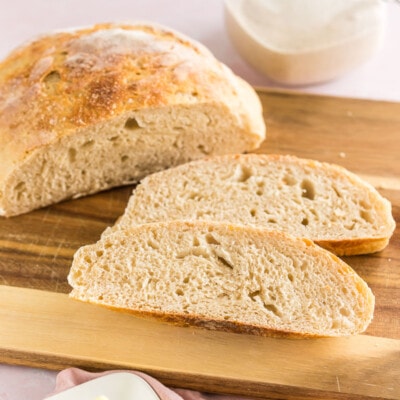
Sourdough Bread
Sourdough bread is better than ordinary bread in taste, texture, and nutrition. Follow this easy recipe to learn how to bake sourdough bread at home.
Servings: 12 slices
Calories: 186kcal
Equipment
- Mixing Bowl
- Dutch oven or deep casserole dish with lid
- Wire racks for cooling
Ingredients
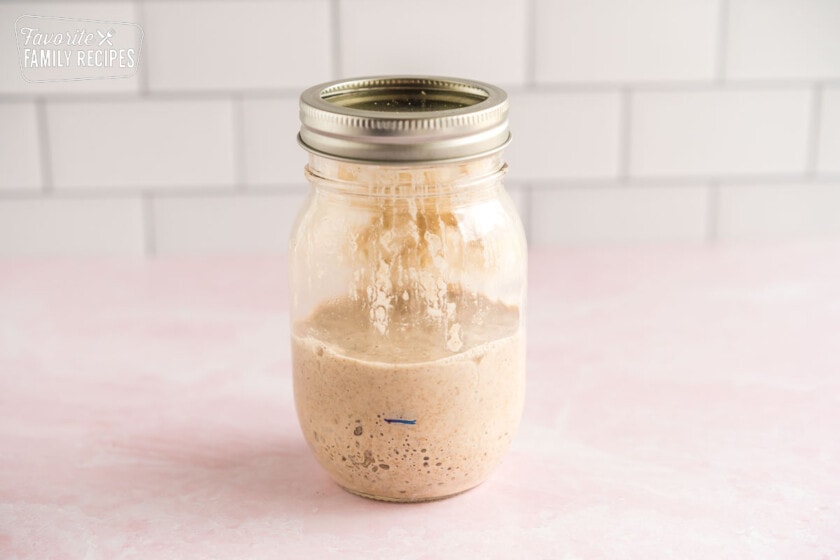
- 50 grams active, bubbly sourdough starter see post for details
- 400 milliliters warm water
- 600 grams all purpose flour
- 10 grams salt fine grain
Instructions
- Start with an active, bubbly starter. In a large mixing bowl, whisk together the starter and water. Add flour and mix with a dough whisk or wooden spoon until a dough forms. Cover with a dish towel and let the dough rest for 30 minutes.
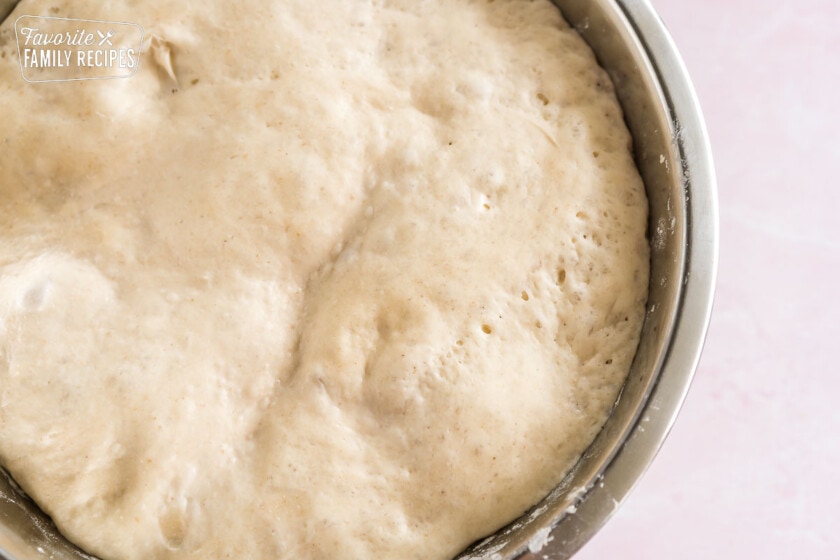
- Add salt to the dough and mix until fully incorporated. With wet hands, pull from one corner of the dough. Stretch it and fold it over into the middle. Try to trap as much air as you can. Rotate the bowl 45 degrees and repeat 8-10 times. Cover the bowl with a damp kitchen towel or plastic wrap and let sit at room temperature for 8-10 hours overnight. This is called bulk fermentation. You'll know the dough is fully risen when it is light and fluffy with lots of bubbles. It should more than double in size.
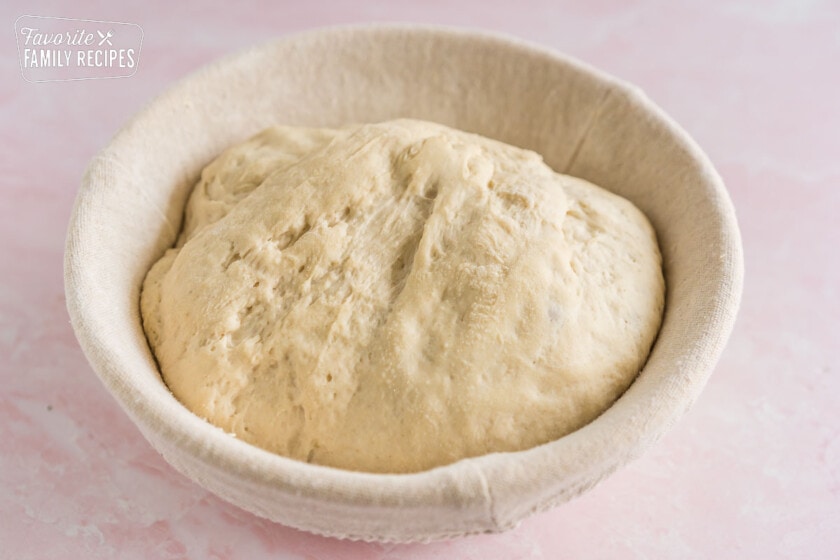
- Tip the dough out onto a lightly floured surface. It will stick to the bowl, but you can use your hands to ease it away. Repeat the pulling and folding from the previous step until a dough ball forms. The stretching and folding helps build strong, tall gluten strands. Place the dough ball into a floured proofing basket.
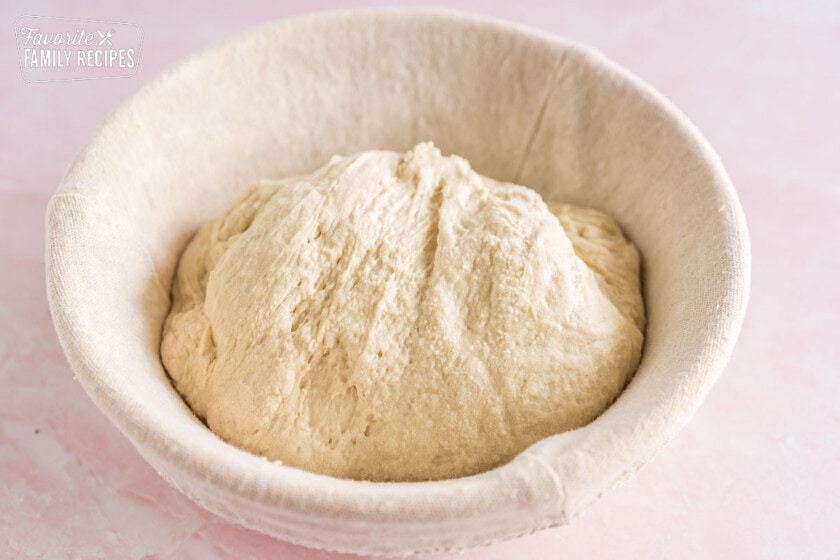
- Cover with a dish towel and let the dough rise for an hour. The dough should rise again and become soft and bubbly. Preheat the oven to 450 during this time.
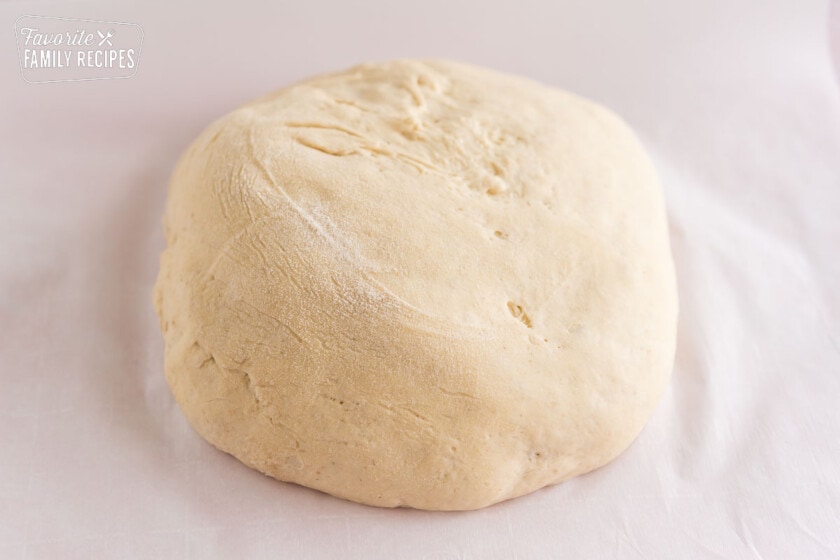
- Tip the dough out onto a piece of parchment paper. Place the parchment paper in the Dutch oven and make a few cuts in the top of the loaf with a lame, razor blade, or sharp knife.
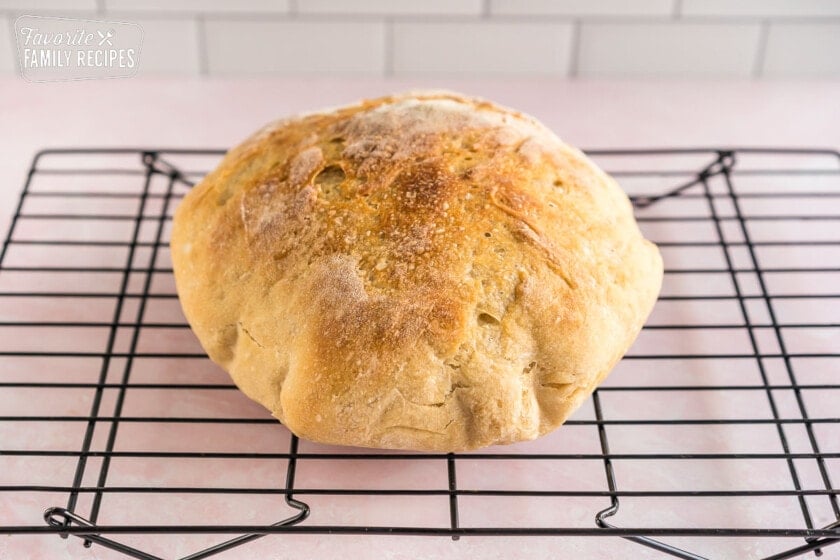
- Place the Dutch oven on the middle shelf in the oven and bake with the lid on for 20 minutes. Then, remove the lid and bake for 25 more minutes. You will know it is done when the crust is golden brown and when you knock on the bottom of the loaf, the inside sounds hollow. If it is not done after 25 minutes, place the loaf back in the oven directly on the oven shelf and bake for 5-10 more minutes. Remove from the pot or oven and cool on a wire rack for 1 hour.
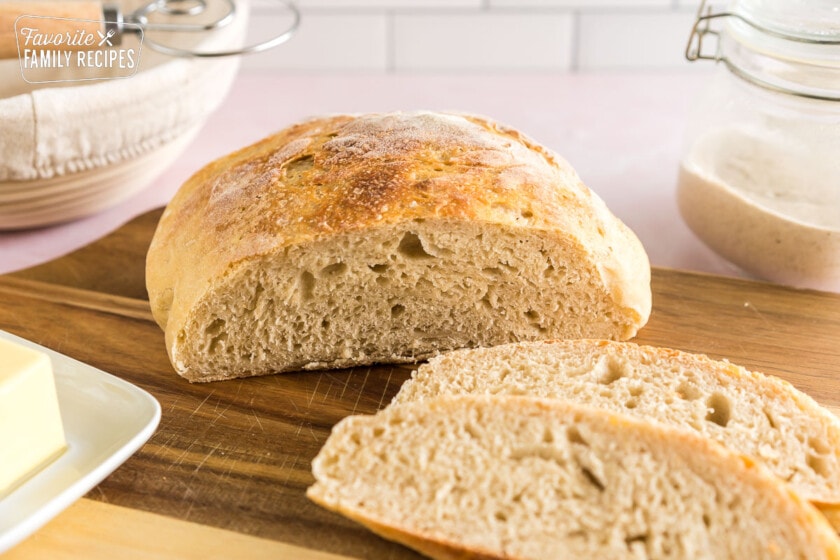
- Slice and serve! To store leftovers, wrap with plastic wrap. For long term storage, slice the bread and freeze in an airtight container.
Notes
- Every starter and loaf is a little different. Where you live, how warm or cold you keep your house, and time of year can all be a factor in the rising times of your starter and your loaves.
- The times listed in this sourdough bread recipe are approximate and based on my kitchen climate. Pay more attention to the description of how the starter and dough should look and feel.
- Accept that your first few loaves might be duds! It is okay! Try to enjoy the process of learning a new skill.
Nutrition
Calories: 186kcal | Carbohydrates: 39g | Protein: 5g | Fat: 1g | Saturated Fat: 0.1g | Polyunsaturated Fat: 0.2g | Monounsaturated Fat: 0.04g | Sodium: 326mg | Potassium: 54mg | Fiber: 1g | Sugar: 0.1g | Calcium: 9mg | Iron: 2mg