
We may earn a commission when you click on the affiliate links in this post.
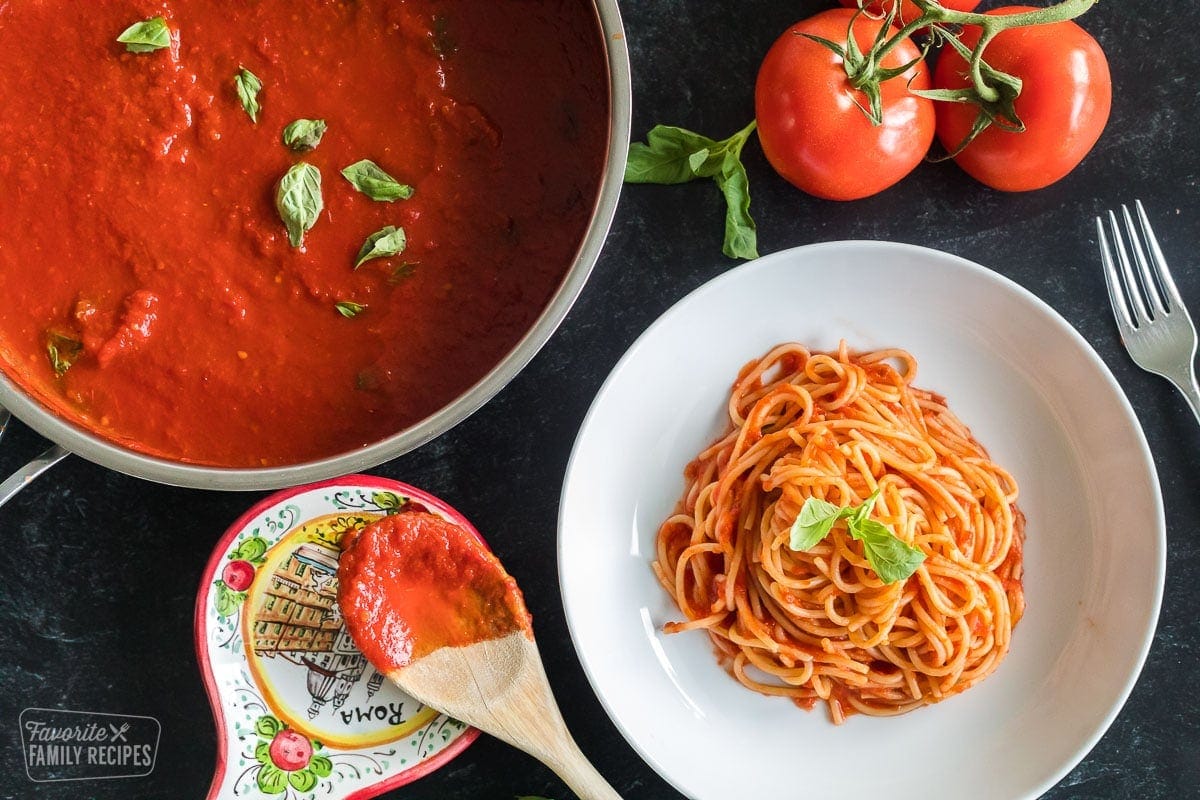
If you’re looking for an authentic Pomodoro Sauce recipe, this is the one we learned firsthand in Italy. It’s made with just a few simple ingredients, but the flavor is fresh, smooth, and completely different from typical jarred tomato sauce.
5 Star Reviews ⭐️⭐️⭐️⭐️⭐️
“A simple sauce that serves the purpose of pasta meals anytime anywhere!” – Vinnie
“I made for a gathering and it was a hit, everyone loved it! Will definitely make it again!” – Shadi
“Made this sauce for pasta night and it was excellent! Thanks for such easy and delicious recipe! I will be making again!” – Gina
The Italian Way to Make Tomato Sauce
Sugo di Pomodoro simply means “tomato sauce” in Italian, but it’s nothing like the tomato sauce most of us grew up with. The first time I tasted it in Italy, I was surprised by how fresh, light, and flavorful it was. It didn’t have heavy seasoning or a long ingredient list. Rather, just a few ingredients that came together in the most satisfying way. It’s honestly the best sauce I’ve ever tasted!
Over there, pomodoro sauce isn’t something you follow from a recipe card. It’s an art form. It’s something you learn by feel, by taste, and by tradition. This is the version we brought home with us, and it’s the one we make whenever we want a simple, authentic sauce for pasta, chicken parmesan, or an easy weeknight dinner. I hope you enjoy this authentic taste of Italy, and see how it can elevate your next pasta meal!
🩷 Erica
Table of Contents
- 5 Star Reviews ⭐️⭐️⭐️⭐️⭐️
- The Italian Way to Make Tomato Sauce
- What is Pomodoro Sauce?
- Ingredients in Italian Pomodoro Sauce
- How to Make Authentic Pomodoro Sauce
- Quick Troubleshooting Tips
- Best Tomatoes for Authentic Pomodoro Sauce (Fresh vs Canned)
- Can I use Pomodoro Sauce on Homemade Pizza?
- Frequently Asked Questions
- More Italian Favorites
- Pomodoro Sauce (Sugo di Pomodoro) Recipe
What is Pomodoro Sauce?
Pomodoro sauce is…
- simple. Just a few easy ingredients that you can find at most grocery stores.
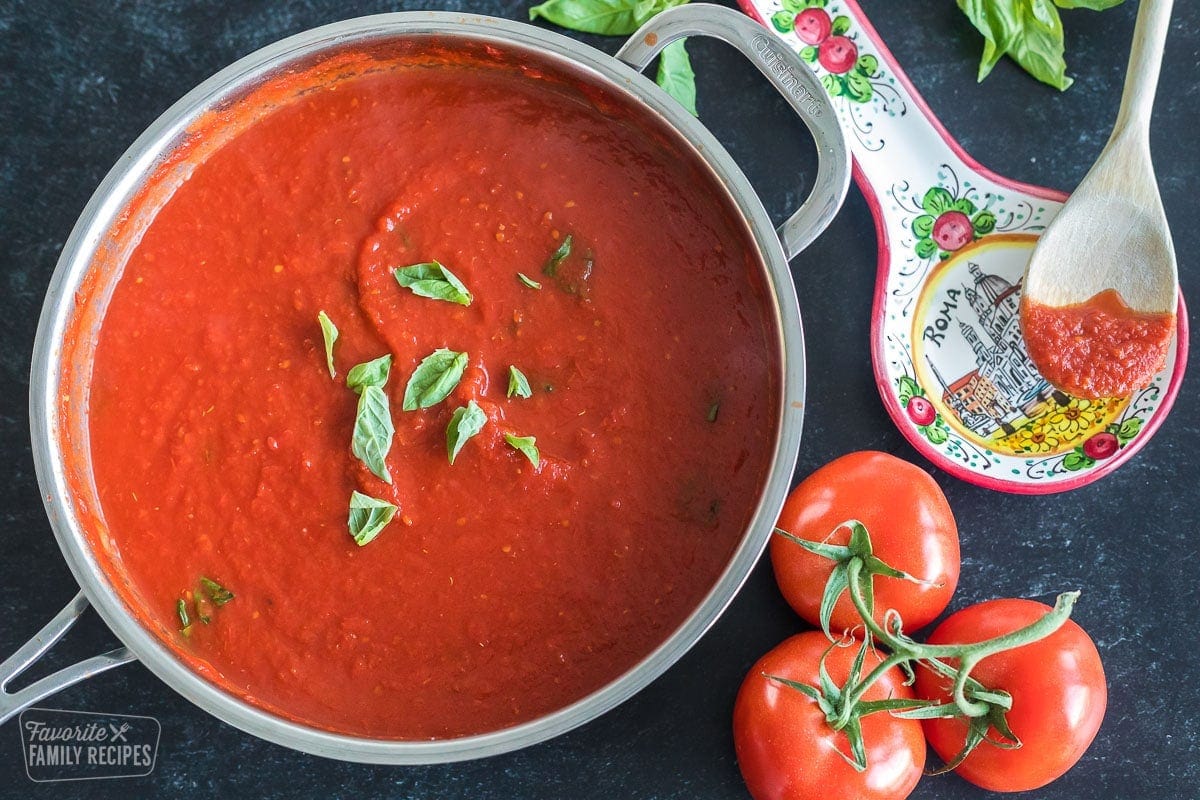
- smooth. The texture is smooth and saucy and will perfectly coat any pasta. The liquidity of this sauce is smooth, not too runny and not too thick.
- flavorful. Though the ingredients are simple, the flavor profile is bright and savory.
- light. Pasta al Pomodoro (pasta with tomatoes) is just that. It’s a quick, no frills, light pasta dish.
Pomodoro Sauce isn’t…
- complicated. With pomodoro sauce, less is MORE. You won’t need to add Italian seasoning, oregano, peppers, red peppers, red pepper flakes, thyme, fresh herbs or other spices to this delicate sauce.
- chunky. Ok I hate that word, but still. Coarsely chopped ingredients are better suited for marinara sauce, ragu, or bolognese.
- meaty. This sauce doesn’t need Italian sausage, ground beef or anything else. If you are looking for a meaty, robust pasta sauce, try our Meaty Bolognese sauce.
Ingredients in Italian Pomodoro Sauce
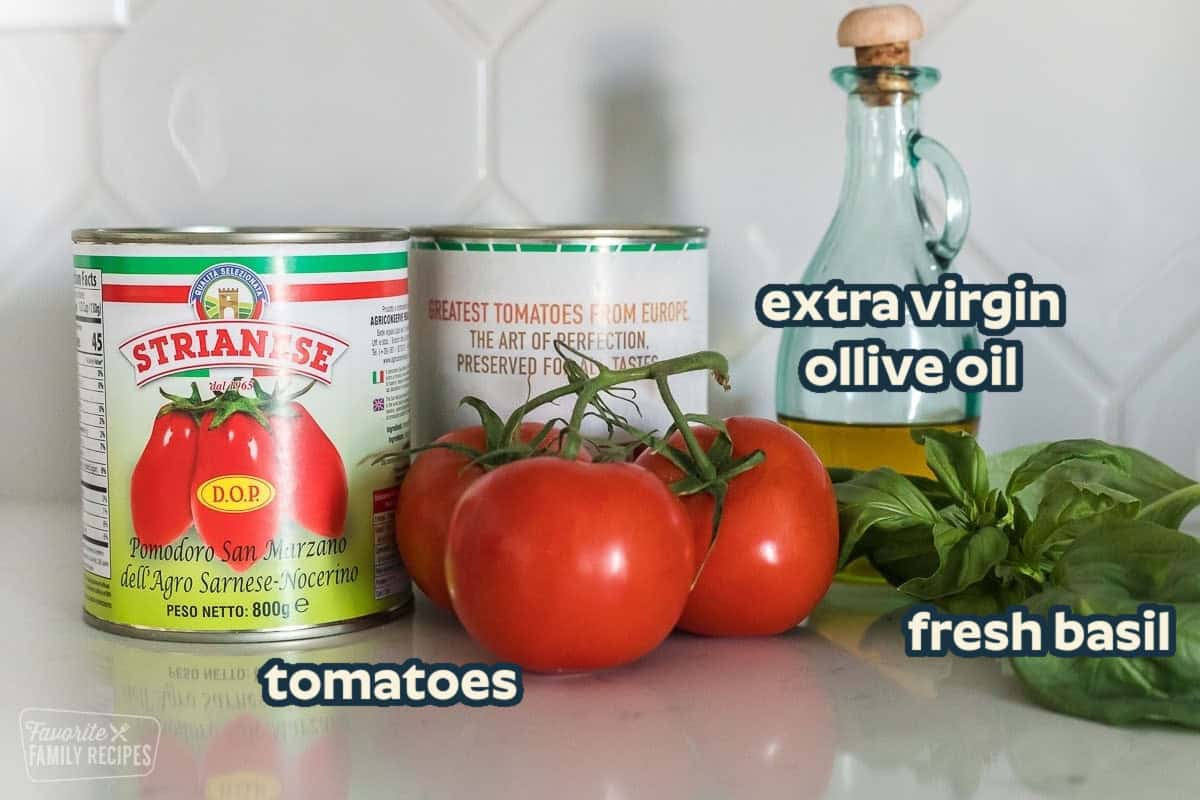
We learned how to make real, Italian pomodoro sauce from the chefs at the Accadamia MedEATerranea in Naples, Italy, as part of our tour with the Greatest Tomatoes From Europe. Here’s what you need:
- Extra Virgin Olive Oil – Use for cooking the garlic, also used to lightly drizzle over the top for extra flavor after cooking.
- Garlic – Infuses the sauce with delicious, bright flavor
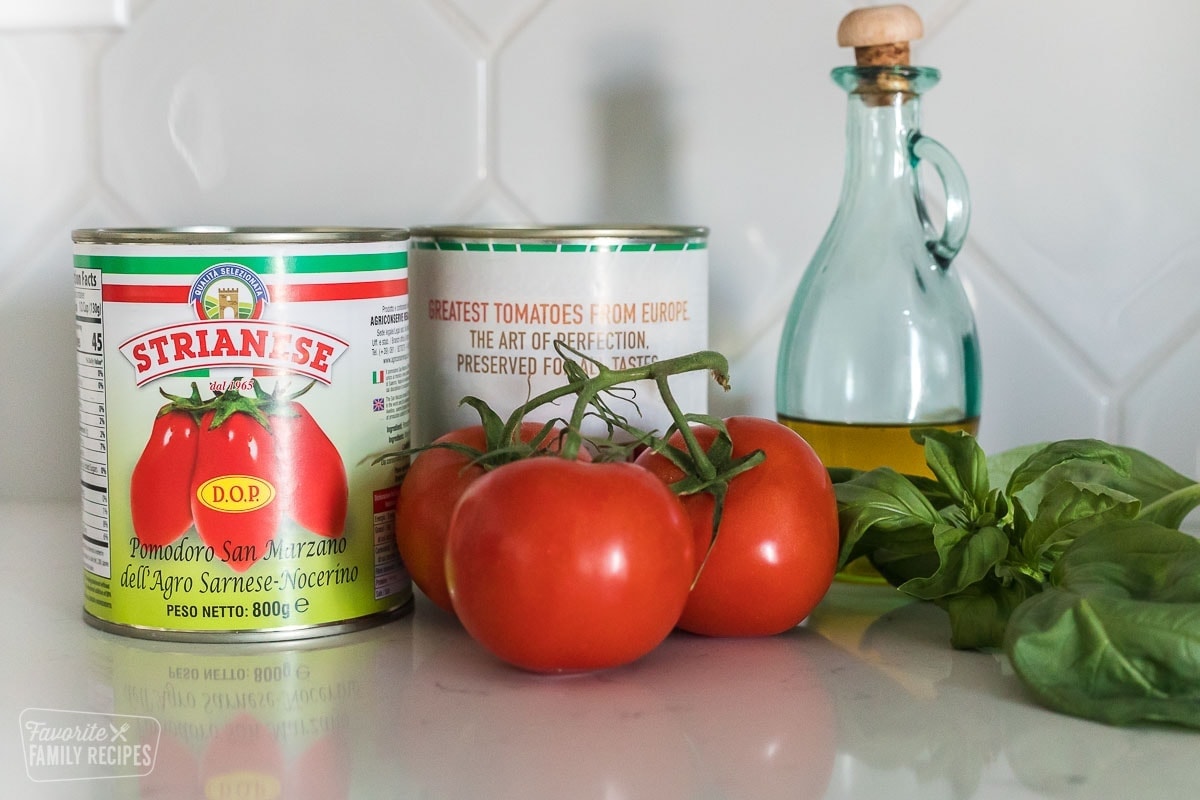
- Tomatoes – The main ingredient. The quality of your tomatoes (pomodori) can make or break this recipe. Don’t worry, I will elaborate below so you know how to get the best.
- Salt – Cuts the acidic taste of the tomatoes and brings out the true flavors
- Fresh Basil Leaves– Brings in the fresh, robust flavor that rounds out the sauce to perfection.
- Onions (optional) – adds extra flavor but is not required to make a true pomodoro sauce.

How to Make Authentic Pomodoro Sauce
- Start with the Garlic: Heat the olive oil in a large skillet over medium heat. Add the garlic and stir for about 30 seconds – you want it just barely golden, not brown.
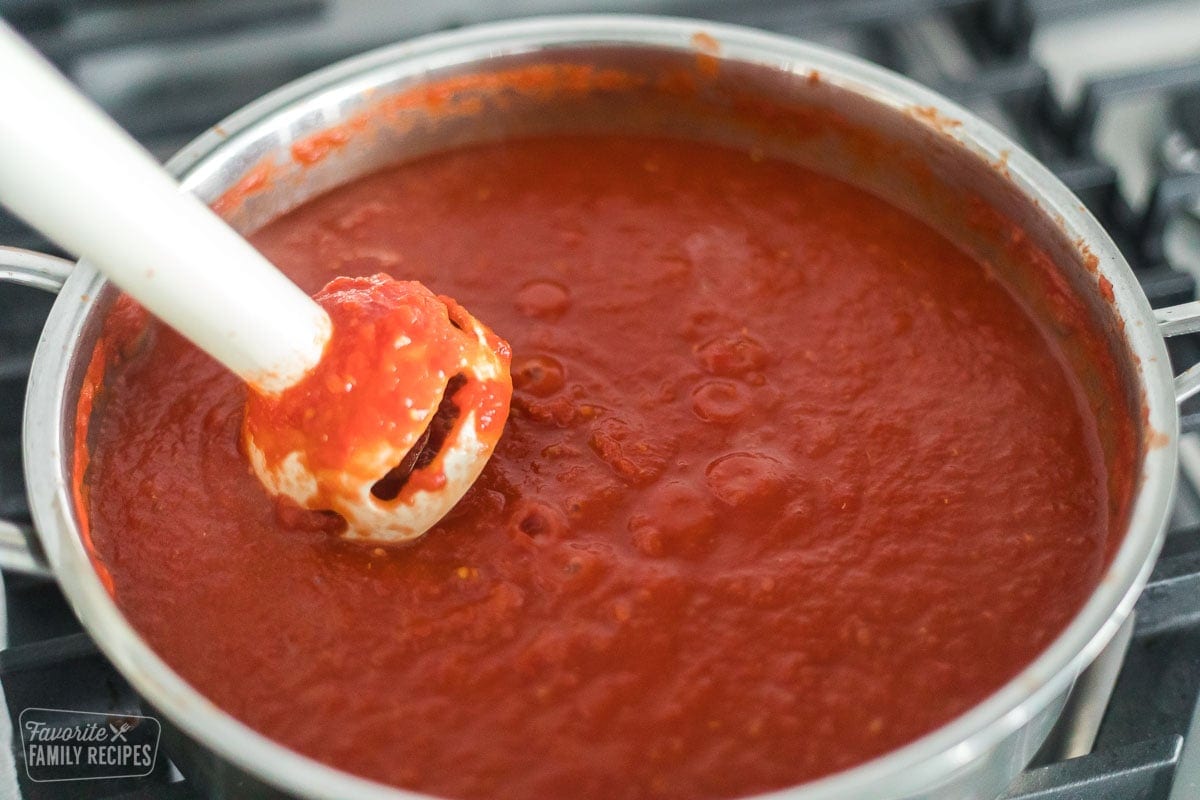
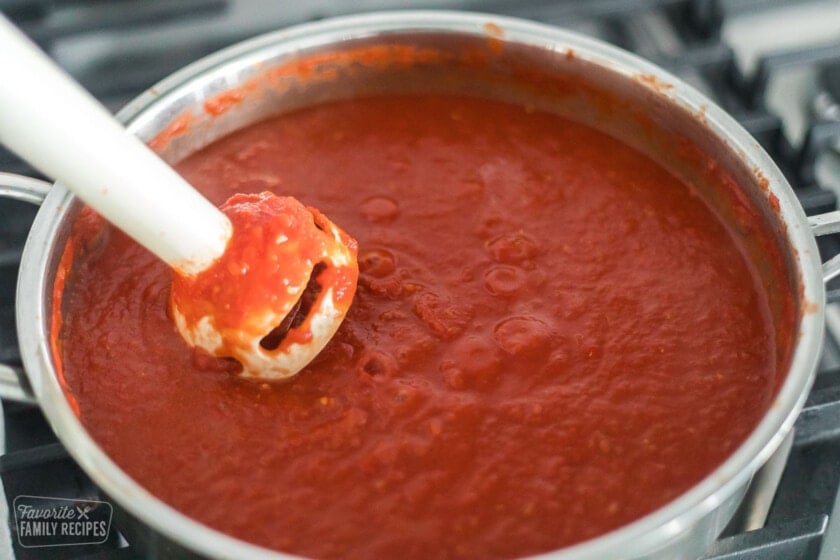
- Add Tomatoes and Simmer: Add the whole tomatoes carefully (they can splatter) and season with a little salt. Turn the heat down and let everything simmer uncovered for 30–40 minutes, until the tomatoes are completely soft and broken down. Blend smooth with an immersion blender.
- Finish With Basil and Salt: Tear the basil and stir it in. Add salt a little at a time, tasting as you go — you’re looking for the point where that sharp tomato acidity softens into something rich and balanced.
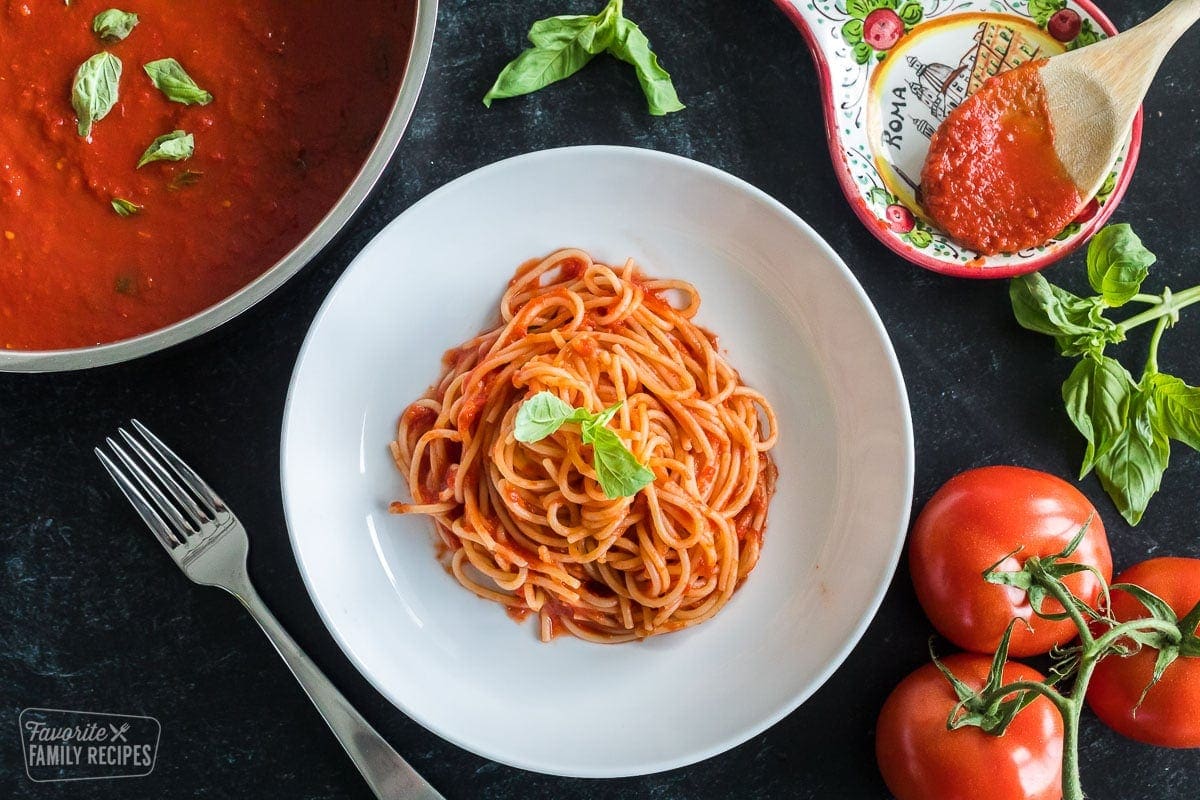
- Serve: Toss with pasta and serve. Or try it over homemade potato gnocchi!
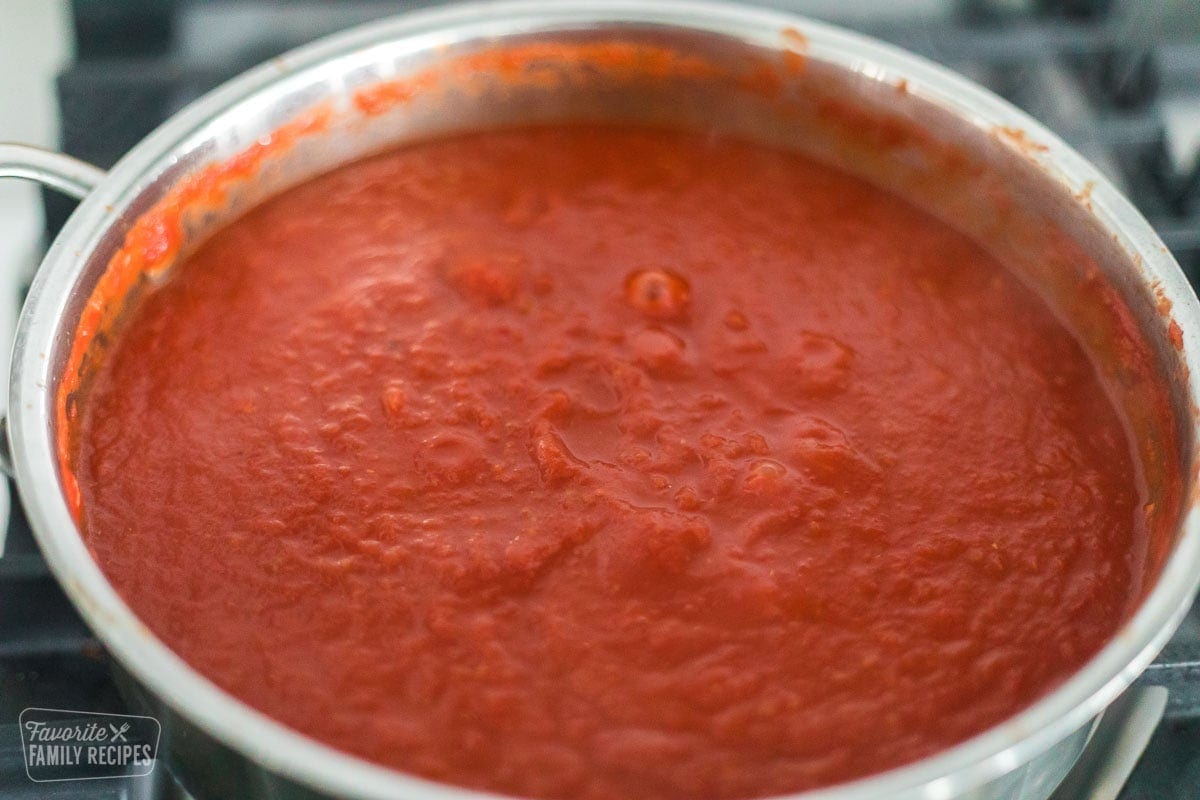
Tip:
Add salt all throughout the process. Add a little at the beginning and then continue to add, a little at a time, as the sauce cooks. Taste as you go and stop once you get it just right. It might take making it a few times but eventually you will get it down.
Quick Troubleshooting Tips
Even though pomodoro sauce is simple, a few small things can change the flavor or texture. Here’s how to fix the most common issues:
- Too acidic? Add a pinch of sugar or a small pat of butter, and make sure it’s salted properly.
- Too watery? Let it simmer uncovered a little longer to reduce. You might also try using a wider pan, so the moisture can evaporate more easily.
- Too thick? Stir in a splash of pasta water or warm water until it reaches your desired consistency.
- Bitter taste? Garlic likely cooked too long or browned – next time cook it just until fragrant.
- Too bland? Add salt gradually and finish with fresh basil and olive oil.
- Not smooth? Blend with an immersion blender until silky.
💡 Pro Tip
If something feels “off,” don’t panic! Pomodoro sauce is very forgiving. A little more simmering, a pinch of salt, or a drizzle of olive oil can bring everything back into balance.
Best Tomatoes for Authentic Pomodoro Sauce (Fresh vs Canned)
As mentioned above, this recipe is all about the tomatoes. You can’t just grab any ol’ can of whatever tomatoes you find on the shelf at the store and expect a good quality pomodoro sauce. Some care needs to be taken in finding the right ones. You have two choices here: Fresh or canned.
Fresh Tomatoes
If you want to use fresh tomatoes, make sure you are using a GOOD quality tomato. If not from your garden, opt for tomatoes from the farmer’s market. Try to get juicy, red plum tomatoes from a reputable market. Drop your whole tomatoes in boiling water then place in ice water to make the skins easier to remove. Cut tomatoes in half (remove seeds if desired) and cook according to the recipe below.
Canned Tomatoes
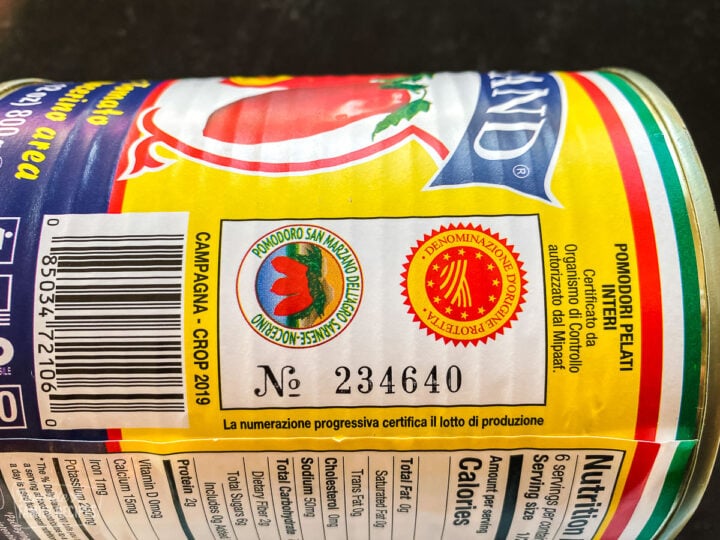
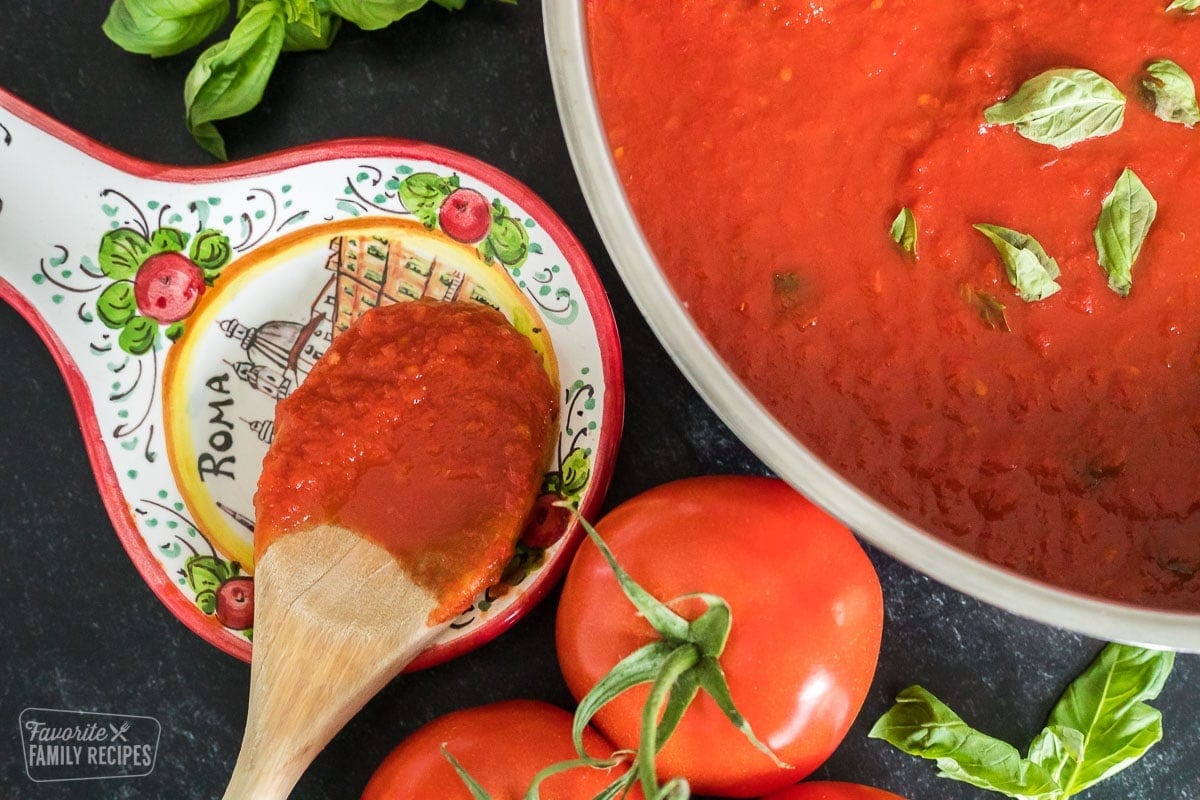
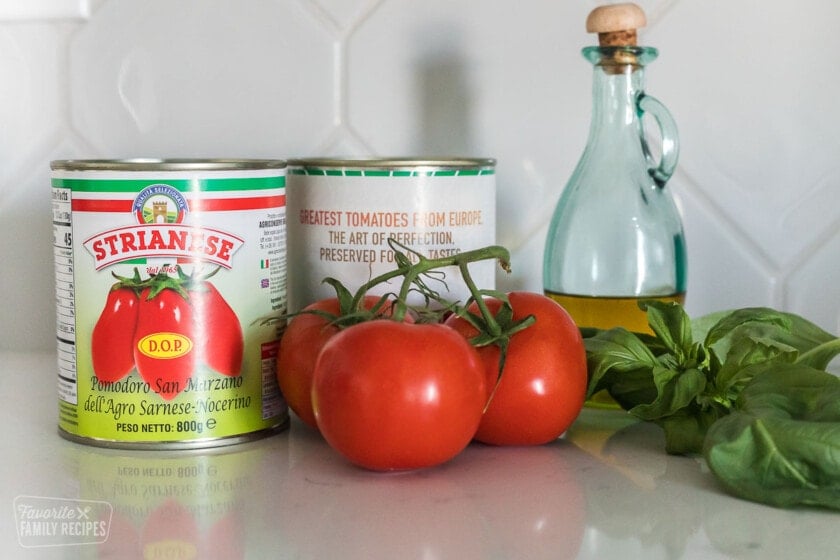
Canned tomatoes are undeniably the easiest way to go and you will pretty much get the same outcome as using fresh tomatoes. You can’t just use any canned tomatoes though. You will want to get imported tomatoes (Pomodoro di Pelati) from Italy. See my post about canned tomatoes from Italy to learn more about why this is critical to the best tasting sauce. Getting your tomatoes from Italy is a must. Get the peeled, WHOLE tomatoes. Not crushed. Not diced. Whole tomatoes only. DOP San Marzano tomatoes are the best and they can easily be identified at the store by the red DOP seal (think of it like the official “seal of approval” from Italy).
Can I use Pomodoro Sauce on Homemade Pizza?
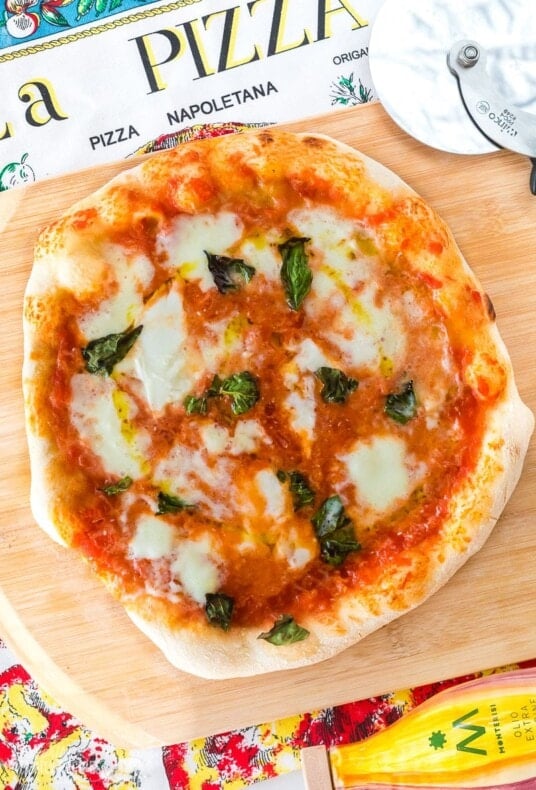
You can, but do yourself a favor and don’t. Real, Italian pizza sauce is its own thing and should not be cooked. See our Neapolitan Pizza recipe for everything you need to make an authentic Italian pizza sauce.
Fun Fact:
In Italy, parmesan cheese typically isn’t added over pasta with pomodoro sauce. Sometimes a little Parmigiano reggiano is stirred into the sauce but not over the top. That’s kind of an American thing. Do I still do it at home? Absolutely.
Frequently Asked Questions
The biggest difference between pomodoro sauce and marinara sauce is that pomodoro sauce is blended and smooth. Pomodoro sauce is thicker and coats noodles better. Marinara sauce can have added veggies and other ingredients. Because marinara sauce isn’t blended, it tends to be more runny. Both are considered to be “spaghetti sauce”, it just depends on the texture (and flavor) you are looking for.
This pomodoro sauce recipe has a fresh, simple tomato flavor. You’ll find a hint of sweetness from the tomatoes and savory garlic and basil flavor. So delicious!
Both sauces have similar ingredients, but very different textures. Marinara is more liquid and runnier. Pomodoro is smooth, but thicker in texture.
Store leftover pomodoro sauce in an airtight container in the refrigerator for up to 3 days. For longer storage, let the sauce cool completely and freeze it in a freezer-safe container or zip-top bag for up to 2 months. Thaw overnight in the fridge and reheat on the stovetop over low heat, stirring occasionally.
READ MORE: 10 Fun and Romantic Date Night at Home Ideas
More Italian Favorites
Because we love Italian food so much, we added an entire category of Italian recipes for you to try.

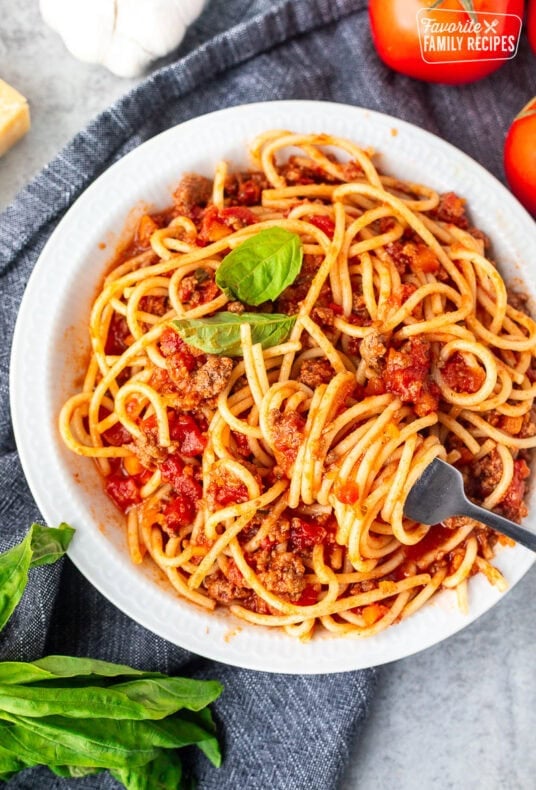
This is the pomodoro sauce we’ve been making ever since we brought it home from Italy, and it never disappoints. It’s simple, authentic, and perfect for just about any pasta night. If you give it a try, let us know how it turned out and don’t forget to leave a rating! 🍝
Pomodoro Sauce (Sugo di Pomodoro)
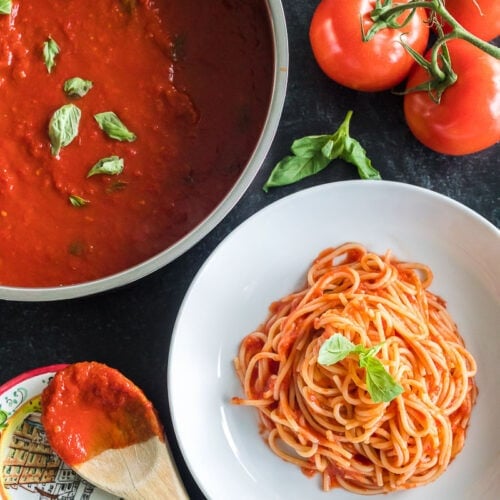
Video
Ingredients
- 3 tablespoons olive oil, extra virgin
- 5 cloves garlic, crushed
- 1 (28 oz) can San Marzano tomatoes, whole, peeled
- sea salt, to taste
- 10-12 fresh basil leaves, or to taste
Instructions
- Heat olive oil in a large skillet over medium heat. Add garlic and sauté for about 30 seconds or until garlic barely begins to become golden brown.

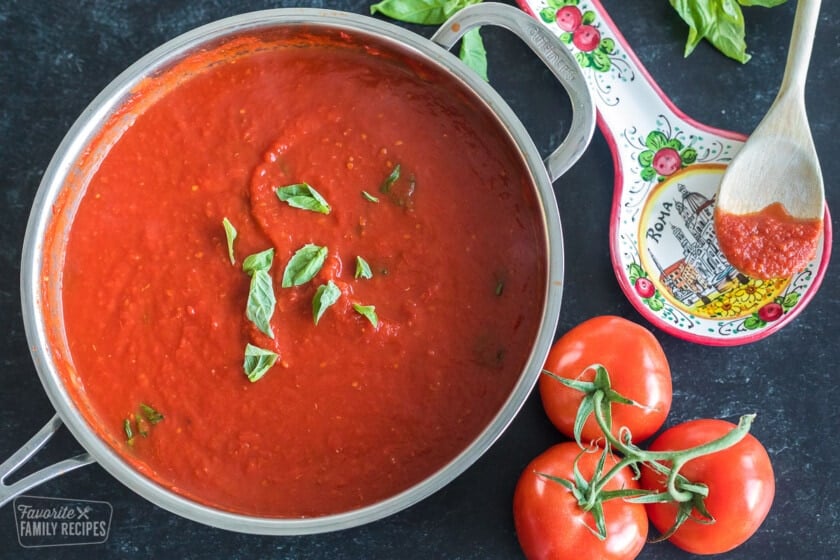
- Carefully add whole tomatoes and a little salt and lower the heat. Simmer, uncovered, for 30-40 minutes (or longer). When tomatoes are soft, use an immersion blender to blend tomatoes until smooth.
- Tear basil into smaller pieces and add to the sauce. Add more salt to taste. You want to add salt until it balances out the bright, acidic flavor of the tomatoes.
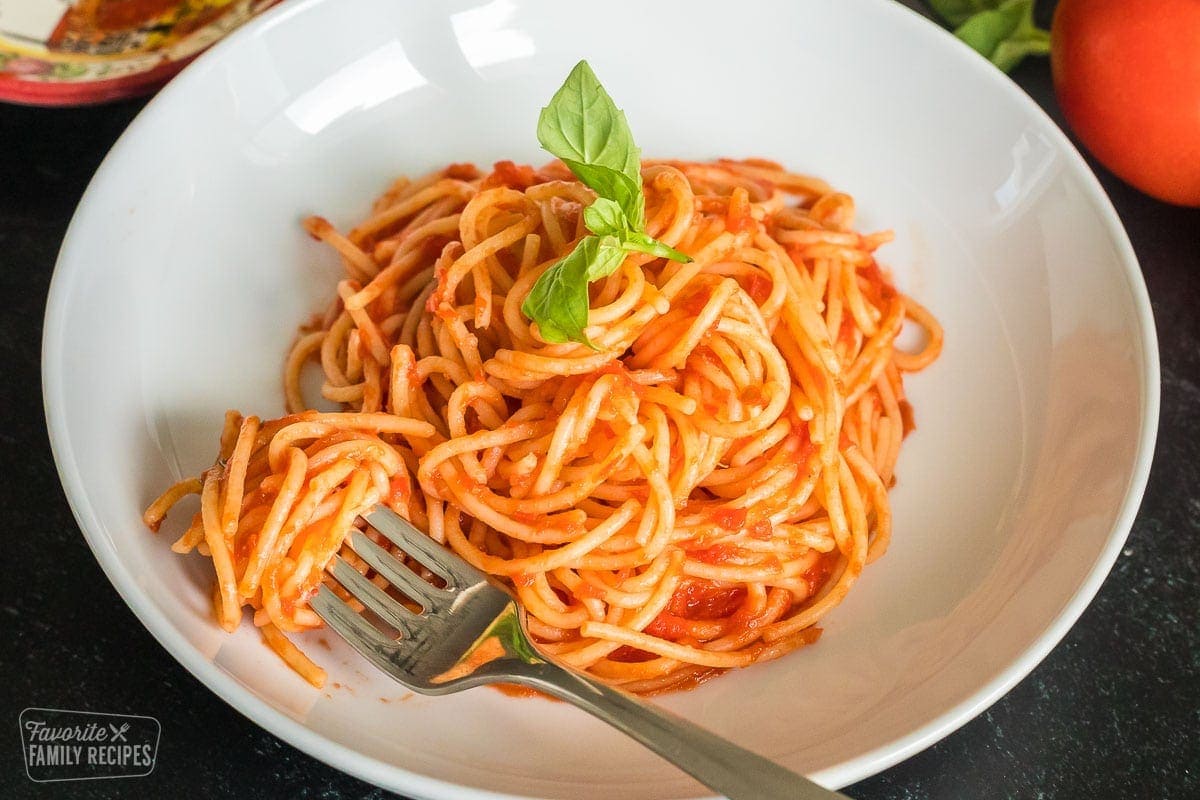
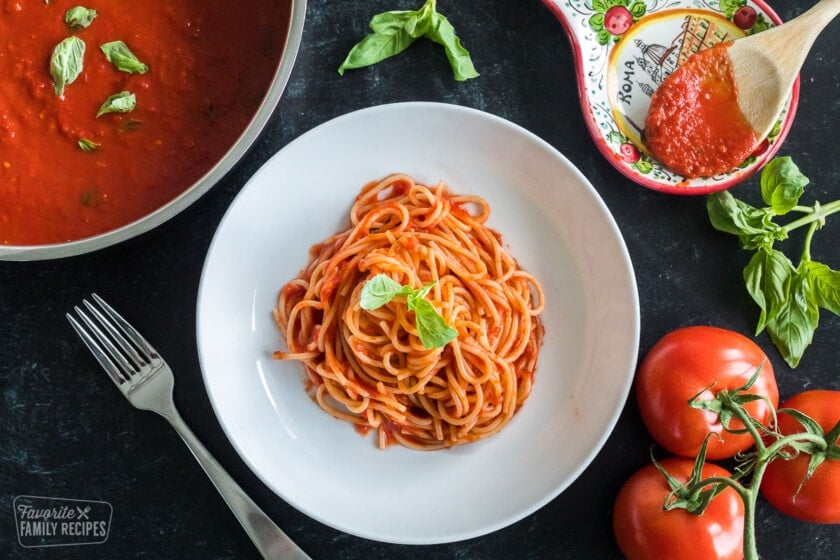
- Remove from heat and toss with your favorite pasta.
Notes
- In Italy, parmesan cheese typically isn’t added over pasta with pomodoro sauce. Sometimes a little Parmigiano reggiano is stirred into the sauce but not over the top. That’s kind of an American thing. Do I still do it at home? Absolutely.
- As mentioned above, this recipe is all about the tomatoes. You can’t just grab any ol’ can of whatever tomatoes you find on the shelf at the store and expect a good quality pomodoro sauce. Some care needs to be taken in finding the right ones. You have two choices here: Fresh or canned.
- Add salt all throughout the process. Add a little at the beginning and then continue to add, a little at a time, as the sauce cooks. Taste as you go and stop once you get it just right. It might take making it a few times but eventually you will get it down.
Nutrition
Nutrition information is automatically calculated, so should only be used as an approximation.
Love this recipe?
We want to hear from you! Please leave a review.

The thing people have to know is that there is no such thing as a “true” pomodoro sauce. It’s generally based on your preference. Like, for an example, I make mine with tomatoes, bay leaf(leaves (2)), carrot, onion, celery and white pepper and parsley and that’s it. Others add fennel seeds. You can also make it without onion or garlic or oregano or basil.
A Simple sauce that serves the Purpose of Pasta meals anytime anywhere!
I like to start with Vidalia onions chopped fine with extra virgin olive oil, adding small amounts (one or two ounces of red wine)
to the pan then the Crushed garlic for about a minute or two, Crushed tomatoes along with a few leaves of torn Basil with some dried Oregano(amount to taste) and simmer till everything is incorporated (Again to taste) till ready to use on the Pasta.
I can’t find how many fresh tomatoes to use? What kind? Did I miss this info somewhere? I have a bunch of romas from my garden. Thanks!
About 10-12 fresh tomatoes should do the trick!
I Made for a gathering and it was a hit, everyone loved it! Will definitely make it again!
Made this sauce for pasta night and it was excellent! Thanks for such easy and delicious recipe! I will be making again!