
We may earn a commission when you click on the affiliate links in this post.
Raclette is one of my favorite ways to bring a little taste of Switzerland home. You slowly melt raclette cheese until it is soft and melty, then pour it over warm potatoes, crusty bread, cured meats, pickles, vegetables, or whatever else sounds good. It is easy to make, fun to serve, and everyone gets to build their own plate exactly how they like it.

A Taste of Switzerland
Switzerland may just be my favorite place on earth. I love everything about it. From the people, to the scenery, to the incredible food. It just can’t be beat. The food there is fresh and real and there’s just something about it that speaks to my soul. Maybe it’s because there’s so much cheese, and if you know me at all, you will know that cheese is my love language. Call me crazy but I even love the cheese in Switzerland more than the chocolate. We just returned from a trip a few weeks ago and I am not even joking, I ate cheese with every. single. meal. I couldn’t get enough! That is why I love raclette so much. It’s something that I can make at home that can transport me straight back to Switzerland with just one bite. I’m telling you, if you haven’t tried raclette yet, now is the time! Oh and don’t forget to try my other authentic Swiss favs including Swiss Cheese Pies (aka Chäschüechli) and Rösti!
🩷Erica

What is Raclette?

Raclette is both a type of Swiss semi-hard cheese and also a traditional Swiss dish originating from the Alpine regions of Switzerland and France. The cheese itself has a creamy, slightly nutty flavor and melts easily. The rind is edible but most prefer to remove it before melting because it is quite strong and pungent. It is almost an acquired taste so if it is your first time having it, I would suggest removing the rind.
In the traditional raclette dish, the cheese is heated (traditionally by a fire directly from the cheese wheel or nowadays with a raclette grill) and then scraped onto boiled potatoes, bread, and other accompaniments like pickles, onions, and cured meats. I especially love using it to make Raclette Sandwiches. The name “raclette” comes from the French word racler, meaning “to scrape,” referring to how the melted cheese is scraped off the wheel. Since most people don’t have a giant wheel of raclette cheese at home to heat and scrape, it’s much easier to melt individual slices in small cheese pans (like the one pictured below). This is a perfect solution for home kitchens, and you’ll still get the same result: hot, ooey, gooey melted cheese to pour over just about anything.
Ingredients You’ll Need

- Raclette cheese – Look for a wedge or pre-sliced raclette in a specialty cheese section. Trader Joe’s sometimes carries it seasonally, and I’ve also found good imported cheeses at Costco. Many traditional rinds are edible, but check the package. If yours is edible but tastes too strong, trim it before melting.
- Butter – This is completely optional, but a light coating can help the melted cheese slide out of the pan more easily.
- Potatoes and bread – Baby potatoes, small Yukon Gold potatoes, and sliced baguette are all great bases for the melted cheese.
- Pickles and onions – Cornichons and small pickled onions give you a little acidity to balance all that rich cheese.
- Cured meats – Prosciutto, salami, ham, and pepperoni are all easy options to put out on a raclette board.
- Vegetables – I like asparagus, mushrooms, baby corn, peppers, broccoli, cauliflower, and cherry tomatoes. Cook any vegetables that need cooking before you start melting the cheese.
How to Make Raclette

- First and foremost, get all your accompaniments ready before you start melting the cheese. When everything is ready to go, slice the cheese and place it in a raclette pan (or a small nonstick skillet). If you want the cheese to slide off even easier, lightly brush the pan with butter.

- Melt the cheese slowly. Use the candle flame that comes with the pan or set the pan on a flat-top griddle over low heat (this melts it the most evenly). If you’re using a skillet, don’t put it over direct heat. Treat it just like a raclette pan and warm it on the griddle.

- Let the cheese melt slowly. Heating it too fast can cause it to separate and lose that smooth, gooey texture.

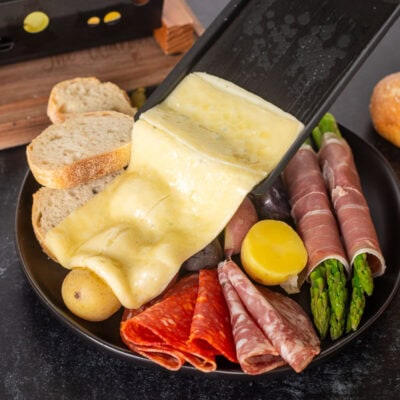
- When fully melted, gently slide the cheese over baby potatoes, pickles, cold cuts, or any of your favorite raclette toppings. You can also slide it onto your favorite burger or hot sandwich!
Raclette Cheese Substitutes

Raclette is worth using when you can find it, but you can still make a good melted-cheese dinner with something else. Just know that the flavor won’t be quite the same.
- Gruyère or Appenzeller: These are my two favorite substitutes. Both have a more pronounced Swiss cheese flavor and melt well.
- Emmentaler, Comté, or Jarlsberg: Good alternatives when you want a similar style of cheese, with somewhat different flavors.
- Gouda or Havarti: Milder options that melt nicely, especially if you are serving someone who doesn’t love a stronger cheese.
Best Ways To Melt Raclette Cheese
Raclette Grill
I will admit, having a raclette grill is probably best melting experience overall. The cheese will melt from the top giving it more of that traditional bubbly top layer and you will be able to heat more servings at a time. It is also great for raclette parties because you can keep foods warm on the griddle while you are melting the cheese underneath. However, the whole grills are bulky and take up a lot of storage space when not in use which I don’t love. It’s a big appliance and not as easy to set up.
Mini Candle-lit Raclette Grill
Little raclette grilling sets (like the one pictured above) are traditional and create a fun ambiance. However, they just aren’t practical for more than one or two people at a time. It’s a great idea for a romantic date-night in or for Valentine’s Day but not ideal for a family dinner. The cheese takes longer to melt but romantic, candlelight dinners aren’t supposed to be rushed. The grill kit itself is more compact so it’s super easy to store, so that’s a plus.
Cheese Melt Pans and Electric Griddle
This is my preferred method. I’ve tried all of these methods at home, and after eating raclette in Switzerland, the individual pans on my electric griddle are the method I like most. The cheese melts evenly, everyone gets their own pan, and I don’t have to store another huge appliance. I bought a bunch of raclette pans on Amazon which was way cheaper than buying a raclette grill or individual candle-lit kits. I simply heat my own electric griddle and place the pans on the top to melt the cheese.
This method is also great because you can easily control the heat. It’s nice having the individual pans too, in case you want to use an outdoor grill for heating. The pans fold up small and take up hardly any space. They kind of stack together and can be wedged into my cabinet. The only con is that mine aren’t oven-safe (there may be some that are out there that are) so I don’t have the option of the melting in the oven to get a bubbly top. This is just a minor inconvenience though and I can live without it.
Non-Stick Skillet
You can also use a small non-stick skillet to melt the cheese. This method is great if you don’t want to go through the trouble of buying anything new. You can just use what you have on-hand. Place the slices in a non-stick skillet and heat gently on a griddle (not over direct stovetop heat). If you have an oven-safe non-stick skillet you can place it in the oven and broil until bubbly on the top. The only real downside is that the cheese doesn’t slide out of the pan as easily because it is circular. You may have a more difficult time spreading the cheese over the plate, but it’s definitely doable!
Recipe Tips
- Keep the heat low. Raclette should melt slowly. Too much heat can cause the cheese to become oily and separate. If the cheese starts to look oily instead of creamy, take it off the heat. For the next pan, lower the temperature and remove it as soon as it melts.
- Don’t pile thick layers of cheese into one little pan. A single layer melts more evenly and is easier to slide out.
- Use a wooden scraper or a utensil that won’t damage a nonstick pan when you transfer the cheese to your plate.
- Have everything else ready before melting. The cheese tastes best straight out of the pan, so don’t wait until the last minute to cook your potatoes or slice your bread.
- Keep the potatoes warm. Hot potatoes help the cheese stay melty longer once it hits the plate.
- Serve the cheese immediately. Don’t melt a bunch of pans ahead of time. Raclette is meant to be melted and eaten a little at a time.
- Use cheese you actually like. If possible, taste the raclette before buying a big piece. Some varieties are mild and creamy while others have a stronger flavor.
What to Serve with Raclette

Raclette is similar to fondue in that you provide lots of bite-sized options for serving but instead of dipping the different food items in the cheese, you pour the cheese over the top. Serve the accompaniments all together on a large board or serve in separate bowls. Family and guests can choose what they want and put it all on their own plates before dousing it all with cheese. Here are some traditional serving ideas:
Traditional Accompaniments
- Baby potatoes (aka “Gschwellti” in Switzerland)
- Cured meats (like salami, pepperoni, ham, prosciutto, etc.)
- Cornichons (tiny dill pickles)
- Crusty breads (like French bread)
- Cocktail onions
- Baby corn or corn on the cob
- Sliced cherry tomatoes
More Accompaniment Ideas
- bite-sized cooked meats (chicken, steak, meatballs, shrimp, smoked sausage, etc.)
- asparagus (I love it with prosciutto wrapped asparagus)
- Roasted vegetables (root vegetables, onion, peppers, broccoli, cauliflower, etc.)
- Sautéed mushrooms (so good)
Making a Swiss Raclette Dinner
When we make raclette for dinner we serve it kind of like a charcuterie. We just put everything out on a large charcuterie board or in bowls and everyone takes what they want and pours the melted cheese over the top of their own plates. This way of serving is easy to scale if you are wanting to do a raclette dinner party (much like a fondue party). When serving for my family, we each have our own raclette pan and place it on a griddle over low heat to melt. We put the griddle in the middle of the table and while the cheese is melting we serve up our individual plates.


More Dinner Ideas
You can also serve raclette over burgers, sandwiches, omelettes, short pasta (like macaroni), Rösti… really anything that you can imagine slathered in melted cheese. Please tell me in the comments what you love putting raclette on!
Pictured: the best burger I have ever eaten in my entire life, and that is saying something. It is from the Riffelalp Resort above Zermatt. Made from all the freshest ingredients from Switzerland and the melted raclette cheese just takes it to the next level.
Frequently Asked Questions
If raclette is the main meal, plan on about 7 to 9 ounces of cheese per adult. “Raclette Suisse” recommends roughly the same amount of potatoes per person. If you are putting out lots of meats, vegetables, and other foods, you may not need quite as much.
Both are Swiss meals centered around melted cheese, but they are served differently. With fondue, you dip pieces of bread and other foods into a pot of melted cheese. With raclette, the cheese is melted by itself and then poured or scraped over the food on your plate.
Many traditional raclette cheeses have an edible rind, and in Switzerland it is often left on or lightly scraped before melting. However, I personally don’t prefer it. Either way, always check the package because rinds can vary. If yours is edible but you find the flavor too strong, it is completely fine to trim it off.
It probably got too hot or stayed under the heat too long. Raclette melts best slowly over low heat. Pull the pan away from the heat as soon as the cheese is fully melted.
More Swiss Recipes


Have you tried this raclette recipe? I’d love to hear what you think! Leave a comment and let me know how it turned out for you. Don’t forget to snap a photo and tag us on Instagram @favoritefamilyrecipes. 📸🧀
Easy Raclette Recipe
Video
Ingredients
- 32 ounces Raclette cheese
- butter, optional
Traditional Serving Ideas
- 2 pounds baby potatoes, boiled or roasted
- 8 ounces cured meats, salami, ham, prosciutto, pepperoni, etc.
- 1 cup cornichons
- 1 baguette, or crusty bread, sliced
- 1 cup cocktail onions
- additional vegetables and accompaniments as desired, see ideas above
Instructions
- First and foremost, get all your accompaniments ready before you start melting the cheese.When everything is ready, slice cheese and place in raclette melting pan. To help the cheese slide out of the pan better, you can brush a little butter onto the pan before adding the cheese, but many raclette pans are non-stick so it may not be necessary. You can also just place the cheese slices directly in a small non-stick skillet.

- Melt over candle flame (if provided with raclette pan), or place the pan on a flat-top griddle over low heat (I have found this way melts more evenly).If you are using a skillet, don't put the skillet over direct heat. Do as you would if you had a raclette pan and place it on the griddle to heat. This will allow you to heat it slowly.
- Heat slowly until the cheese melts. Heating the cheese too quickly will make the cheese separate and it won't have the desired melty texture.
- When cheese is melted, gently slide it out of the pan over your favorite bite-sized foods such as baby potatoes, pickles, cold cuts, or anything else you love slathered in cheese.


Equipment
- Raclette grill or melting pan (optional)
Notes
- For a full Raclette dinner, plan on about 7 to 8 ounces of Raclette cheese per adult.
- Melt the cheese very slowly over low heat so it stays smooth and creamy instead of separating.
- Baby potatoes, cornichons, pickled onions, and crusty bread are classic Swiss Raclette accompaniments but you can also use cooked meatballs, smoked sausage, asparagus, green beans, or any other roasted veggies you love!
- No Raclette grill? Individual Raclette pans on an electric griddle or a small nonstick skillet work great too.
Nutrition
Nutrition information is automatically calculated, so should only be used as an approximation.
Love this recipe?
We want to hear from you! Please leave a review.

What a delicious recipe! It’s like I got to visit Europe 👏🏻 thx
So glad you liked it!! Thanks for the 5-stars!