
We may earn a commission when you click on the affiliate links in this post.
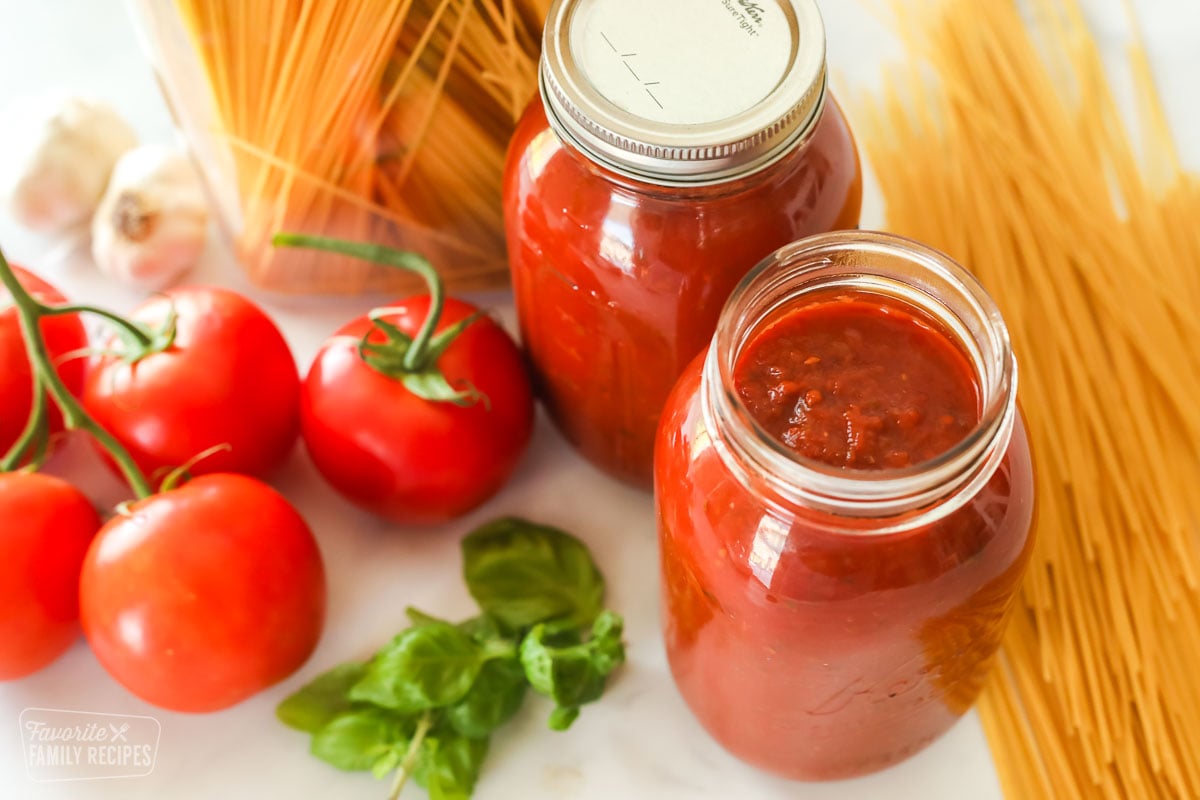
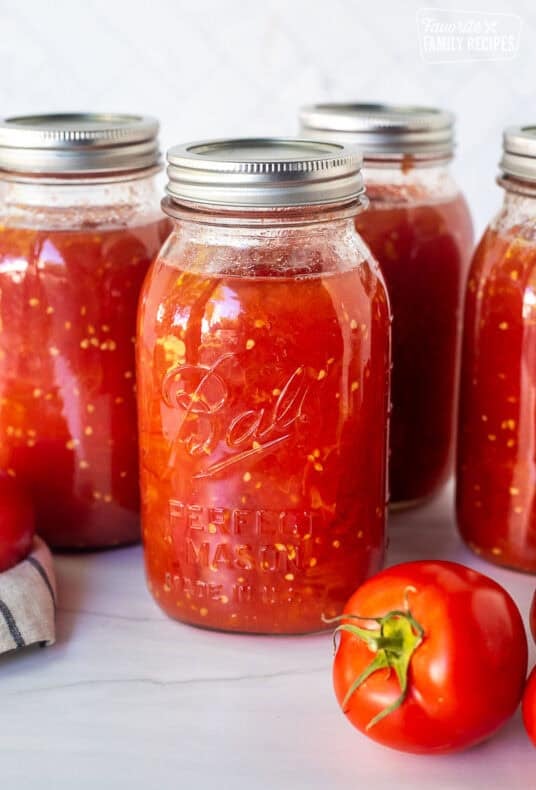
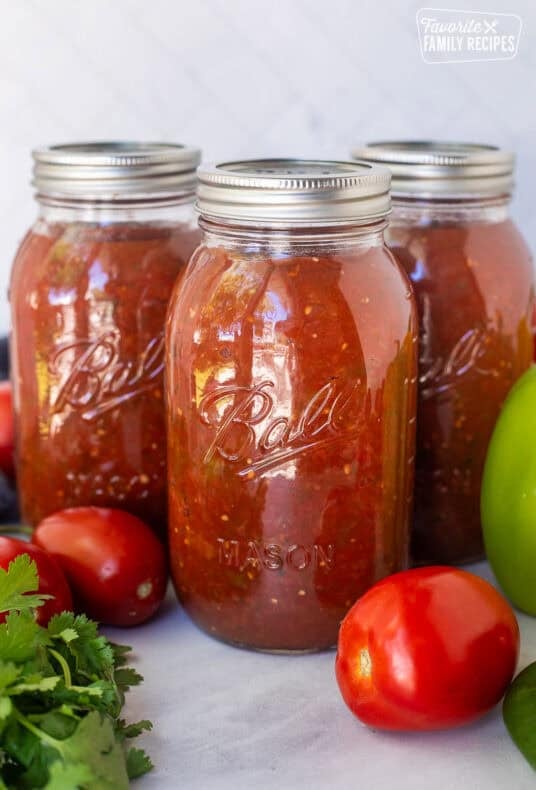
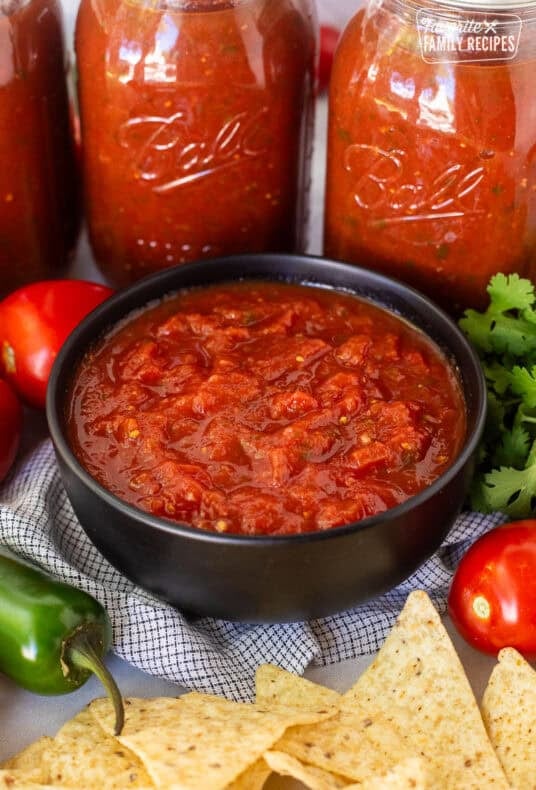
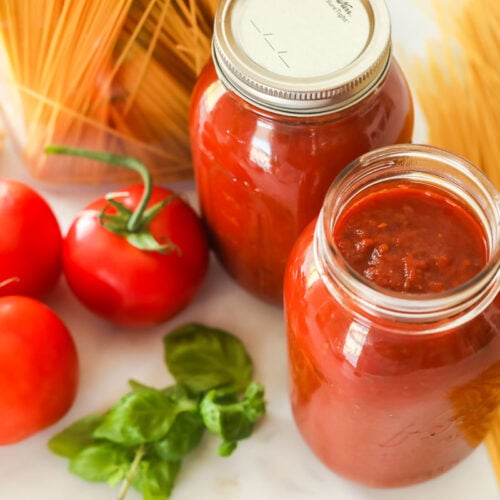
This Canned Spaghetti Sauce Recipe is one of my favorite ways to use up a big batch of fresh garden tomatoes. It is rich, savory, thick enough to cling to pasta, and so much better than anything I can buy at the store. I love having jars of homemade spaghetti sauce on the pantry shelf because it makes dinner feel half done before I even start.
5 Star Reviews ⭐️⭐️⭐️⭐️⭐️
“Best sauce ever. I use it in my rigatoni bake for potlucks, and I received tons of compliments and requests for the recipe. My children do not want spaghetti unless I use this sauce.” – Jennifer
“I tried this recipe for the first time last summer using all ingredients from my garden. This recipe was to die for! The worst part was I only made 9 quarts and should have made more.” – Kristina
“I have been using this recipe for several batches. It is so good everyone loves it. Thank you for sharing.” – Jole
Why I Love This Canned Spaghetti Sauce
We are a little tomato-crazy in our family, and this recipe is one of the big reasons why. Every year when the garden starts producing more tomatoes than we can eat fresh, I start thinking about canned spaghetti sauce. There is just something so satisfying about lining up those jars and knowing I have homemade sauce ready for busy nights, lasagna, soups, casseroles, and quick pasta dinners.
This recipe has also become a family favorite because it has passed the Dad test. My dad loves Italian food and is very picky about spaghetti sauce. It has to have the right balance of tomato flavor, seasoning, sweetness, and richness. When we served this sauce at family dinner, he loved it so much that he used a spoon to get every last bit off his plate. That is about the best review I could ask for.
🩷 Erica
Table of Contents
- 5 Star Reviews ⭐️⭐️⭐️⭐️⭐️
- Why I Love This Canned Spaghetti Sauce
- Ingredients You’ll Need
- Ingredient Additions and Substitutions
- How to Make Canned Spaghetti Sauce
- Altitude Adjustments
- Recipe Tips
- Frequently Asked Questions
- Make Ahead and Storage
- Our Family History with Tomatoes
- Acidity Testing for Canned Spaghetti Sauce
- Water Bath Canning vs Pressure Canning
- Where to Find Canning Jars and Cookers
- Pairing Ideas
- More Canning Recipes
- Canned Spaghetti Sauce Recipe
Ingredients You’ll Need
- Tomatoes: Fresh garden tomatoes are best. I have used Roma, Celebrity, Early Girl, Park’s Whopper, San Marzano, Beefsteak, and even a few cherry tomatoes mixed in.
- Onions and bell peppers: These add body and flavor to the sauce. Red bell peppers add a little sweetness, and green bell pepper gives it a classic savory flavor.
- Tomato paste: This helps thicken the sauce and gives it a deeper tomato flavor.
- Soy sauce: It sounds a little strange in spaghetti sauce, but it deepens the savory tomato flavor. Use gluten-free soy sauce if needed.
- Worcestershire sauce: This adds richness and a little meaty flavor without adding meat.
- Brown sugar: A little sweetness balances the acidity of the tomatoes.
- Garlic: Fresh garlic gives the sauce the best flavor.
- Spices: Dried oregano, dried basil, red pepper flakes, salt, and bay leaves give the sauce that classic homemade spaghetti sauce taste.
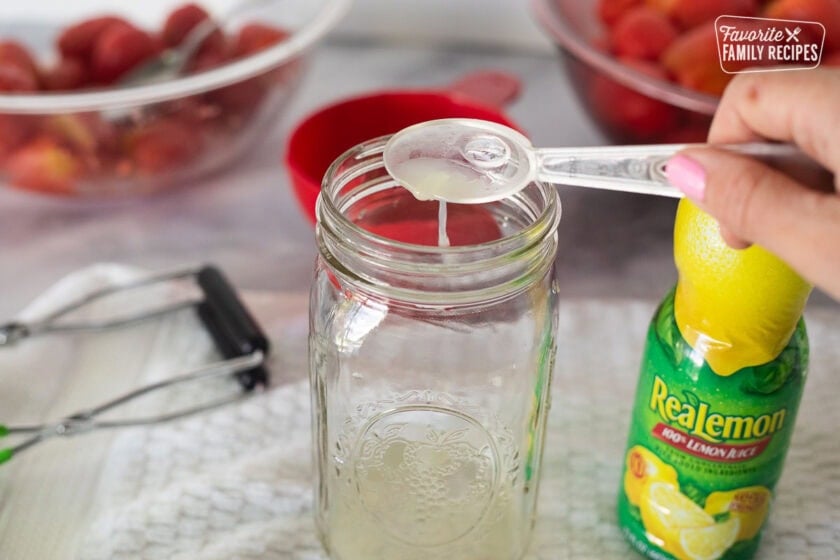
- Bottled lemon juice: This is added directly to the jars for water bath or steam canning. Bottled lemon juice is recommended because the acidity is consistent. The National Center for Home Food Preservation recommends 2 tablespoons bottled lemon juice or ½ teaspoon citric acid per quart of tomatoes, and 1 tablespoon bottled lemon juice or ¼ teaspoon citric acid per pint.
Ingredient Additions and Substitutions
Canning spaghetti sauce is different from making a regular pot of sauce for dinner. With a fresh sauce, you can add a handful of this and a little more of that. With canning, you need to be much more careful because changing ingredients can affect acidity, thickness, and processing safety.
- Sugar and salt: These can be adjusted to taste. Start with the recipe amount, taste as the sauce simmers, and adjust a little at a time.
- Soy sauce: Use gluten-free soy sauce if you need this canned spaghetti sauce recipe to be gluten-free.
- Citric acid: You can use citric acid instead of bottled lemon juice. Use ½ teaspoon citric acid per quart jar or ¼ teaspoon per pint jar.
- Tomato varieties: A mix of paste tomatoes and juicy garden tomatoes works really well. Roma and San Marzano tomatoes make a thicker sauce, while larger garden tomatoes add fresh flavor.
- Frozen tomatoes: Thaw the tomatoes and include the liquid they release when measuring the 25 pounds. Do not drain them before weighing. Frozen tomatoes release more liquid as they thaw, so the sauce may look watery at first, but it will cook down as it simmers.
- Fresh herbs: For water bath canning, stick with the dried herbs in the recipe because that is how the recipe has been tested. If you want fresh basil, parsley, mushrooms, extra garlic, or meat, add those after opening the jar.
How to Make Canned Spaghetti Sauce
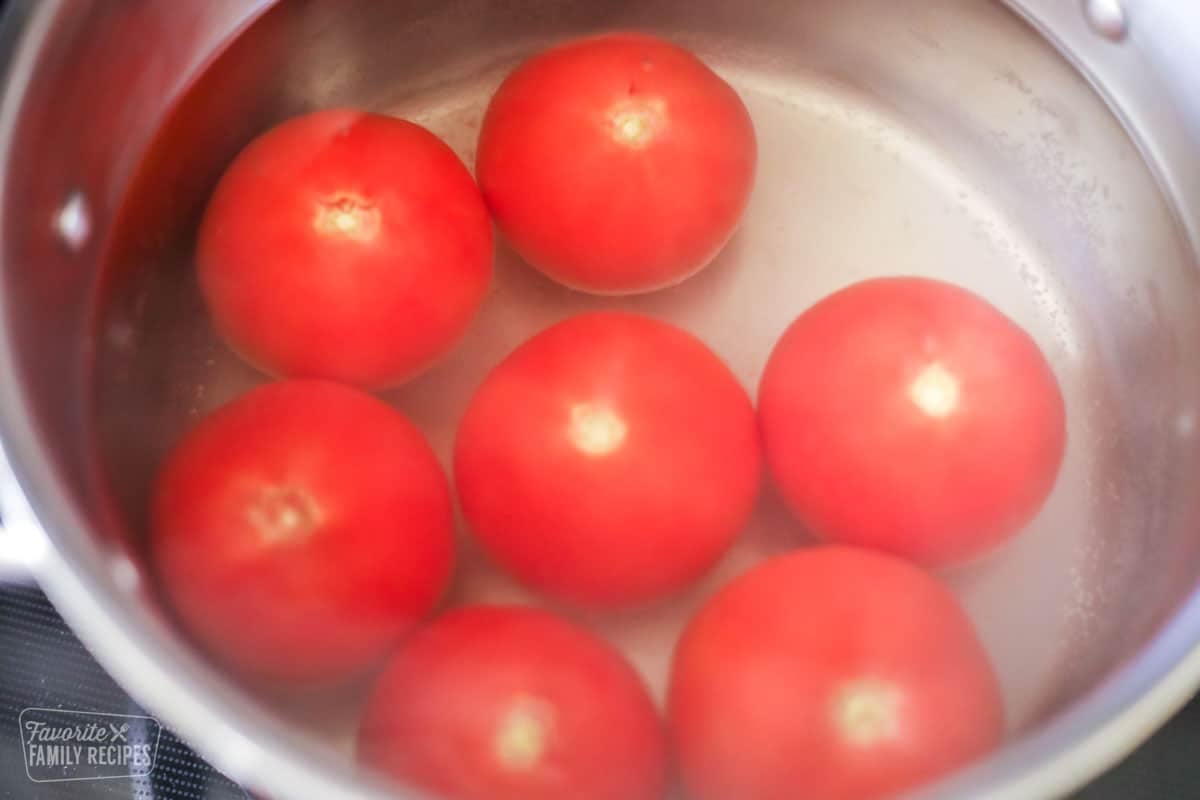
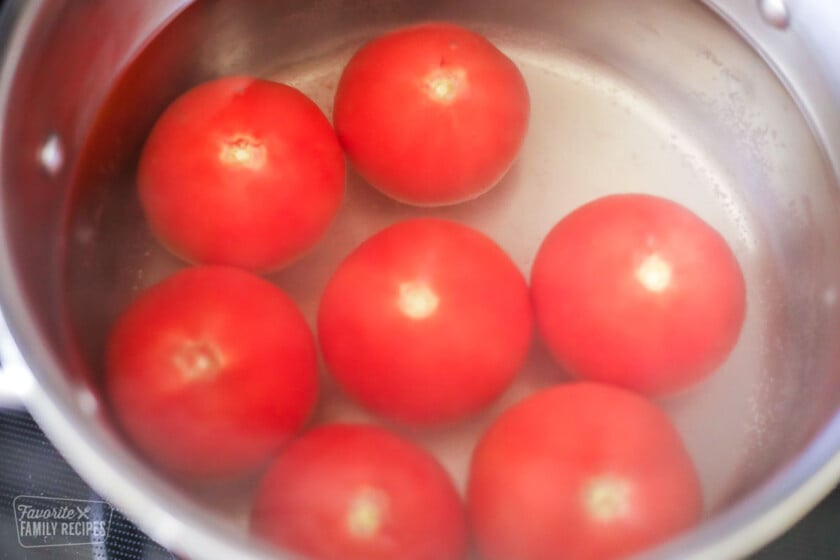
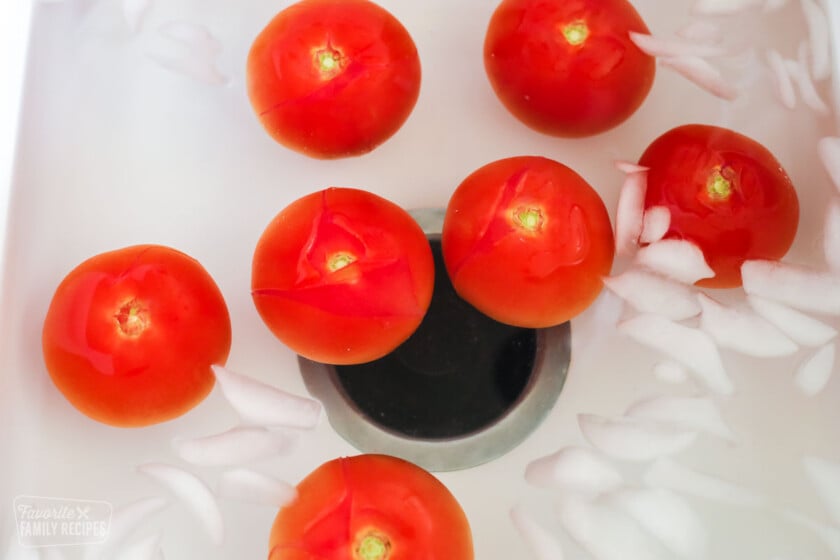
- Peel the tomatoes. Bring a large pot of water to a boil and fill a large bowl with ice water. Add the tomatoes to the boiling water for 1 to 2 minutes, or until the skins begin to split. Move them to the ice water, then peel and quarter the tomatoes over a large bowl so you save all the juices.

- Prepare the vegetables. Pulse the onions and bell peppers in a food processor until finely chopped. You can sauté them first in a little oil with a pinch of salt for extra flavor, or add them straight to the sauce.
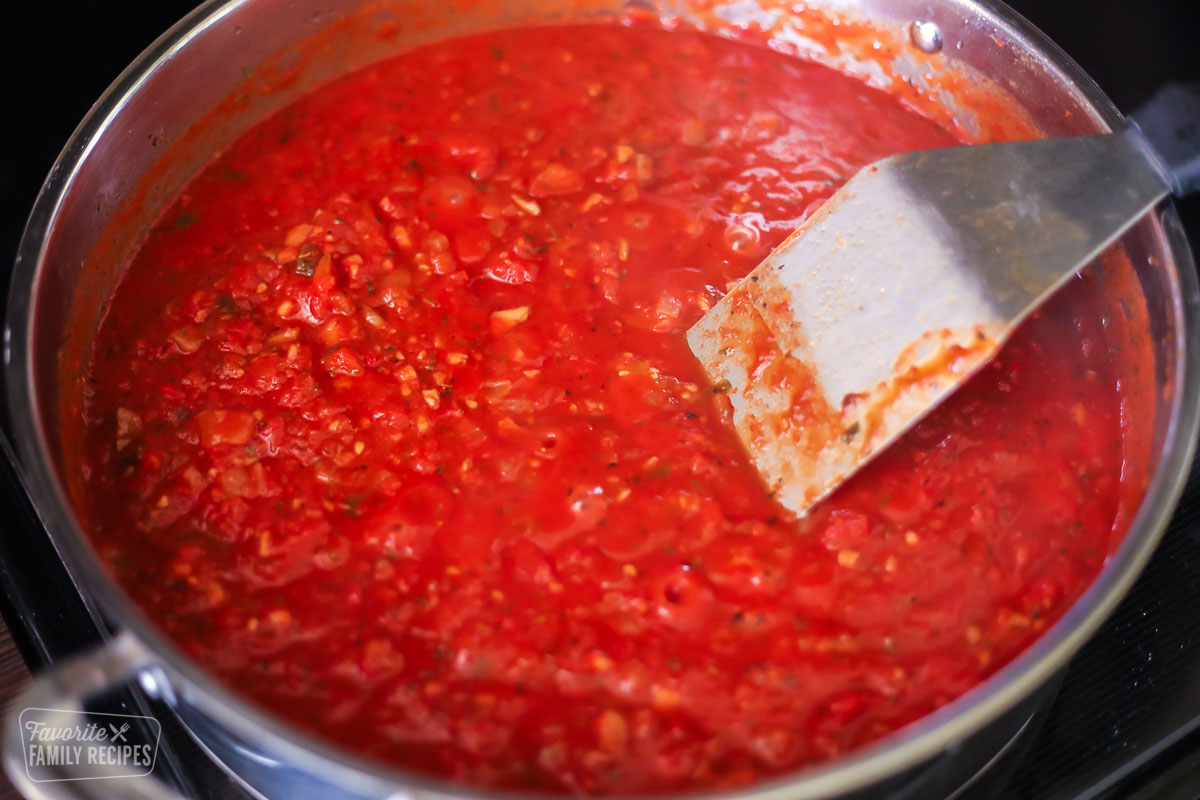
- Simmer the sauce. Add the tomatoes, chopped vegetables, tomato paste, soy sauce, Worcestershire sauce, brown sugar, garlic, salt, oregano, basil, red pepper flakes, and bay leaves to a large stockpot. Bring to a boil, then reduce the heat and simmer uncovered for 4 to 5 hours, stirring often so the sauce does not scorch.
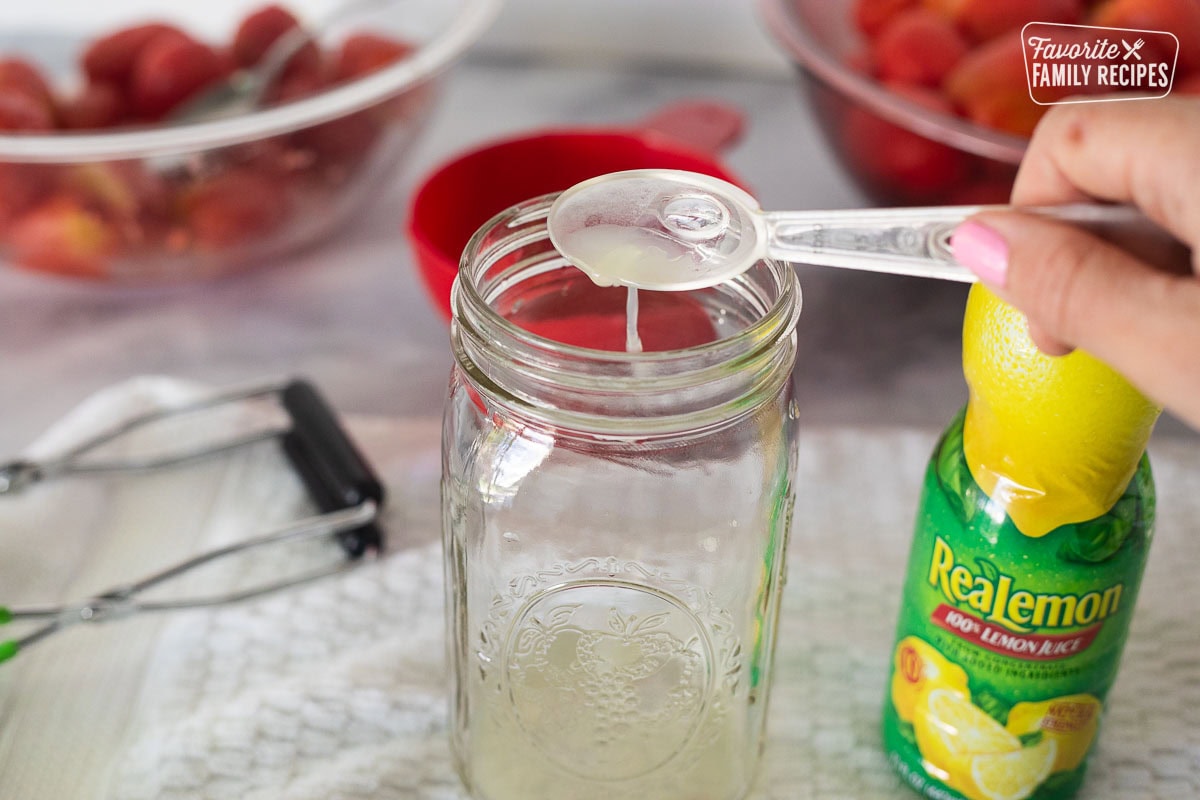
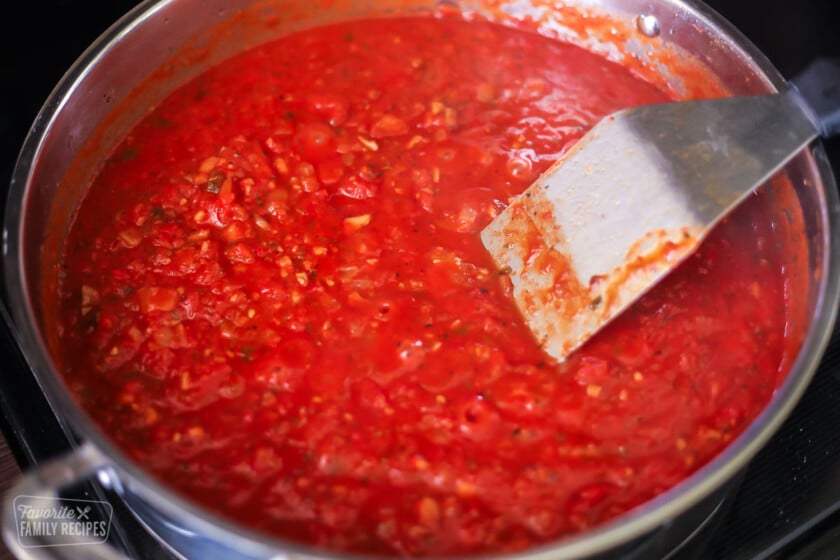
- Blend and prepare the jars. Remove the bay leaves. Use an immersion blender if you want a smoother sauce, or leave it chunkier if that is how you like it. Add bottled lemon juice or citric acid to each hot jar before filling.
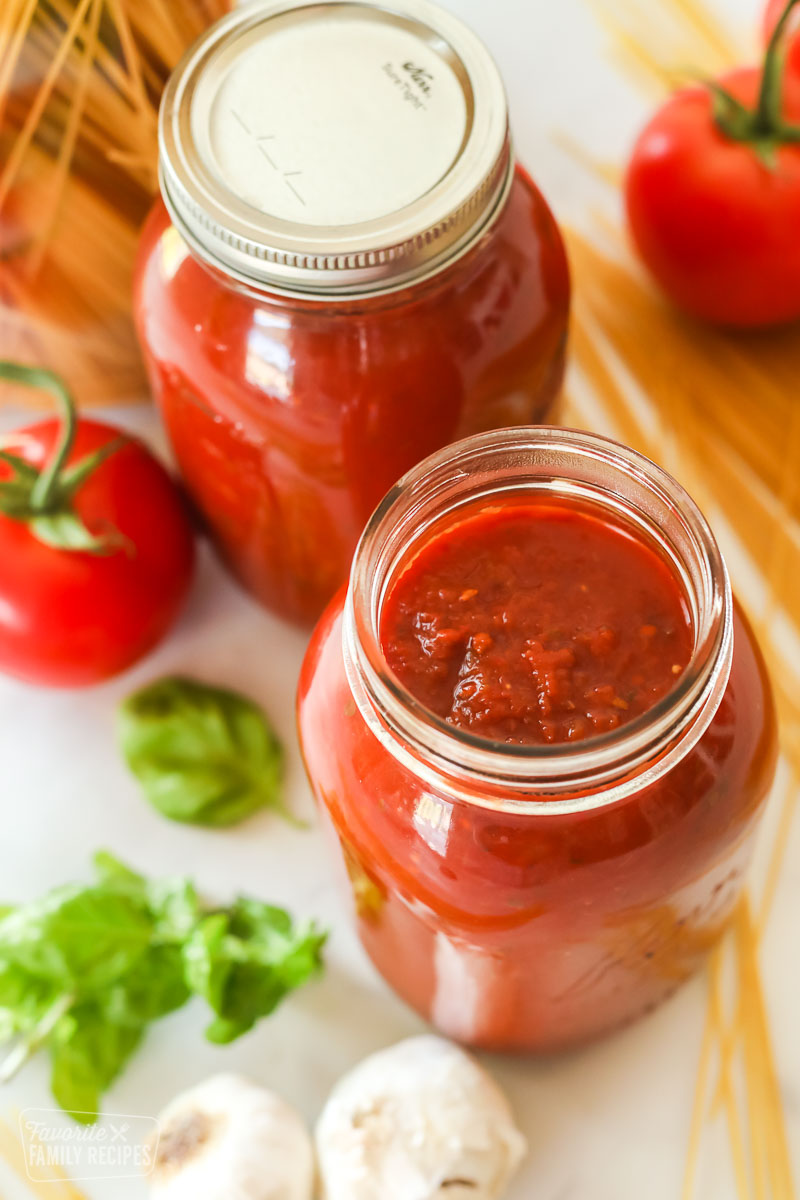
- Fill the jars. Ladle the hot sauce into hot jars, leaving ½ inch headspace. Remove air bubbles, wipe the rims clean, and add the lids and rings.
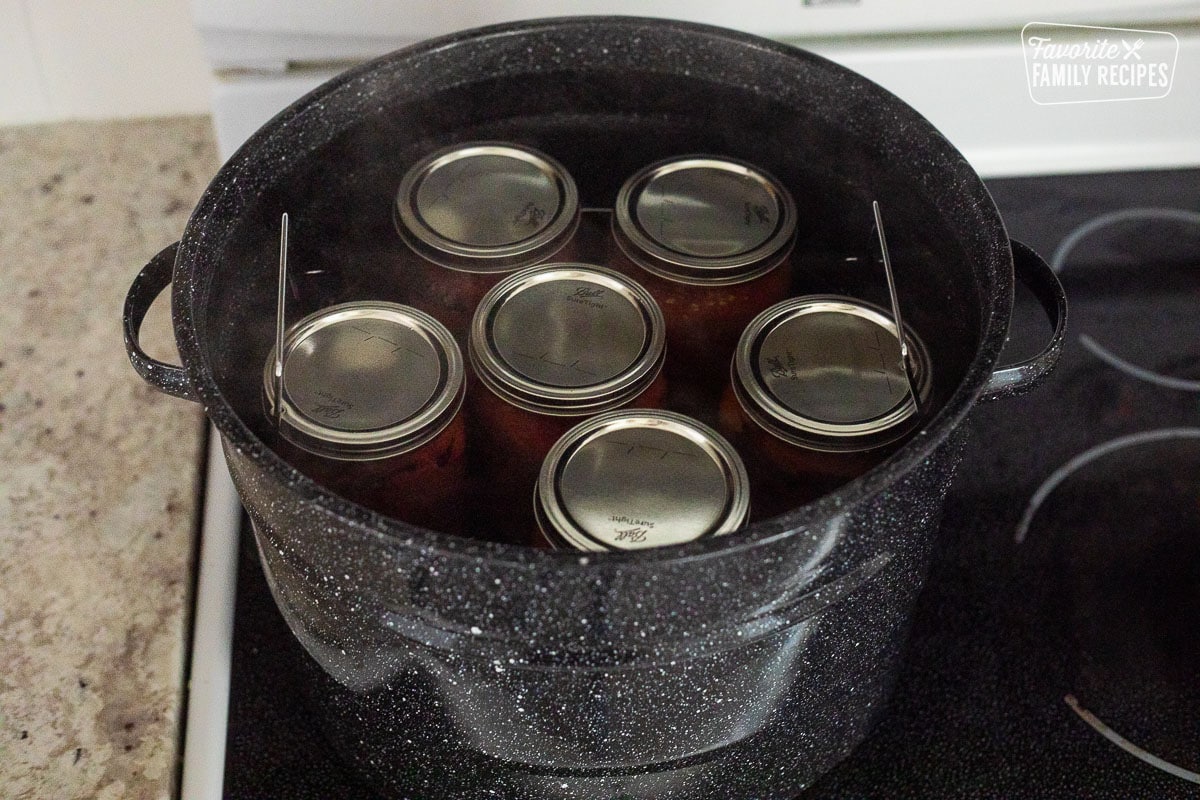
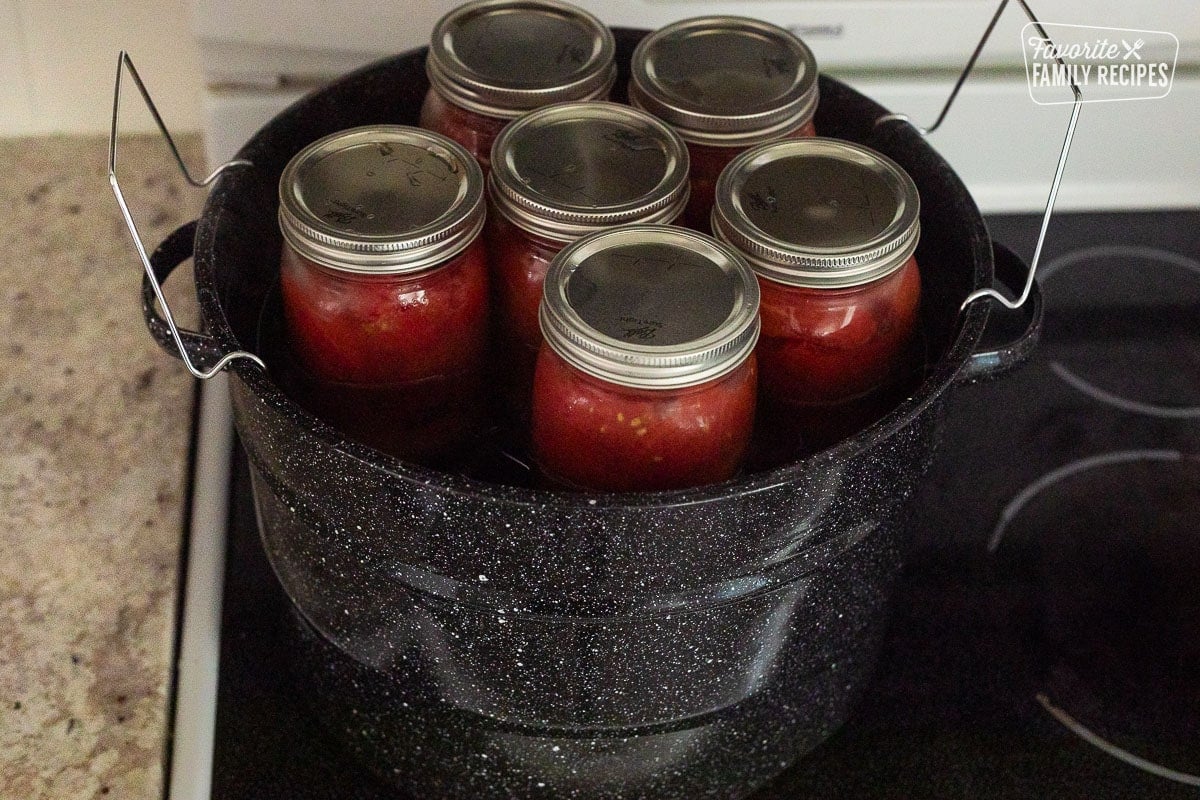
- Process and cool. Process the jars using the times in the recipe card. When processing is finished, let the jars cool undisturbed for 12 to 24 hours, then check the seals, label the jars, and store them in a cool, dark place.
Altitude Adjustments
Process for 40 minutes in a boiling-water canner for altitudes of 1,000 feet or less. For altitudes up to 3,000 feet, add 5 minutes; 6,000 feet, add 10 minutes; 8,000 feet, add 15 minutes; 10,000 feet, add 20 minutes.
Recipe Tips
- Weigh the tomatoes before peeling. That is how we measure them for this recipe.
- Use hot sauce and hot jars. Hot sauce going into hot jars helps prevent cracking.
- Do not skip the bottled lemon juice for water bath canning. Add it directly to each jar, not to the whole pot of sauce.
- Include the pepper juice. If liquid comes out when you pulse the bell peppers, add it to the sauce.
- Stir often while simmering. Tomatoes can scorch on the bottom of the pot, especially once the sauce starts to thicken.
- Use an electric roaster carefully. It can work for cooking down a large batch, but I would not leave it unattended overnight. Stir it often and watch for burning.
- Thicken by simmering longer. The final yield can change depending on how juicy your tomatoes are and how long the sauce reduces.
- Use an immersion blender for smooth sauce. For chunkier sauce, pulse the vegetables less and skip the blending.
- Do not over-tighten the rings. Fingertip tight is enough.
- Check every seal. Any jar that does not seal should be refrigerated and used soon or reprocessed with a new lid.
Frequently Asked Questions
Do not, I repeat, do NOT skip this step if you are water bath or steam canning. Stick a reminder note on your jars or tie a ribbon on your finger so you don’t forget. You absolutely can not safely water bath or steam can tomatoes without bringing up the acidity first. If you forget to add the lemon juice you will need to open the jars, add the juice, replace with new lids, and reprocess.
We recommend following the processing method in the recipe card. Do not use pressure-canning times from a different recipe, since safe processing times depend on the exact ingredients, proportions, jar size, pressure, and altitude. If you prefer to pressure can spaghetti sauce, use a recipe specifically tested for pressure canning, such as one from the National Center for Home Food Preservation.
Fresh garden tomatoes are always the best choice. I’ve had great results with Roma, Celebrity, Early Girl, Park’s Whopper, San Marzano, and Beefsteak varieties. And when I have extras, I even toss in a handful of cherry tomatoes!
The number of tomatoes in 25 pounds really depends on the variety and size of the tomatoes. If you’re using smaller varieties like Roma or plum tomatoes, you’ll get about 70–80 tomatoes in 25 pounds. For medium-sized tomatoes, it’s closer to 55–65, and for large beefsteak tomatoes, you can expect around 35–40. So in general, 25 pounds of tomatoes will give you somewhere between 35 and 80 tomatoes, depending on the size.
Do not add ground beef or sausage to this recipe if you are canning it. If you want meat sauce, add cooked meat after opening the jar, freeze the sauce instead of canning it, or follow a tested pressure-canning recipe specifically written for spaghetti sauce with meat.
Be really careful when adding or omitting ingredients to a canning recipe. You are usually fine adding spices but when it comes to adding fresh mushrooms, celery, parsley, thyme or meat it could throw off the acidity levels, thus making unsafe for canning. When it comes to canning it’s best to stick with a tried and tested recipe and don’t deviate.
For best quality, use home-canned spaghetti sauce within 1 year. Store sealed jars in a cool, dark place. If a jar loses its seal, leaks, bulges, smells off, or looks moldy, throw it away.
Absolutely! This spaghetti sauce recipe freezes beautifully and lasts for several months in freezer bags or freezer-safe containers. Just make sure to thaw the sauce completely in the refrigerator before re-heating. If you DO want to add more random ingredients like ground beef or extra veggies, freezing is a good way to go if you are worried about acidity levels.
It can be. The ingredient to watch is soy sauce, so use a gluten-free soy sauce or coconut aminos if needed. Also check your Worcestershire sauce label.
I always peel the tomatoes and remove the rough stem area but they don’t need to be seeded. If you prefer to remove the seeds you certainly can. If you decide to leave the skins on, it won’t change the acidity but it will change the texture.
If you can get it to all fit, sure! Just simmer in the Crock Pot with the lid off until it reaches your desired thickness.
Yes, please adjust the sugar and salt to your personal liking. It will not affect the acidity so taste as you go and adjust in small amounts.
The amount of jars this recipe yields really depends on the water content of the tomatoes and how long you reduce the sauce. You can get more or less than what the recipe says depending on how thick you make it.
The easiest way is to just let it simmer until it thickens. You can also add tomato paste to thicken if needed.
If you like it more chunky, you can just roughly chop the tomatoes and veggies instead of blending.
YES. You can use ½ teaspoon of citric acid instead of lemon juice. Citric acid is more concentrated so you will need less. I like using lemon juice because it’s cheaper and more accessible but either one works.
I do not recommend swapping dried herbs for fresh herbs if you are water bath canning this recipe, unless the recipe has been tested that way. Add fresh basil, parsley, or other herbs after opening the jar.
We weigh our tomatoes before peeling.
Yes, frozen tomatoes work. Thaw them first and drain off extra water before making the sauce. This helps the sauce thicken faster and keeps it from tasting watery.
Yes, you can halve the recipe. Keep the same amount of bottled lemon juice or citric acid per jar. For quarts, use 2 tablespoons bottled lemon juice or ½ teaspoon citric acid per jar. For pints, use 1 tablespoon bottled lemon juice or ¼ teaspoon citric acid per jar.
Pint jars can be processed for 40 minutes in a boiling-water bath at 1,000 feet elevation or below. Be sure to adjust the processing time for your elevation, and add 1 tablespoon of bottled lemon juice to each pint jar before filling.
For higher elevations: 45 minutes at 1,001–3,000 feet, 50 minutes at 3,001–6,000 feet, 55 minutes at 6,001–8,000 feet, and 60 minutes at 8,001–10,000 feet.
Yes, you may still need the lemon juice even when pressure canning. Pressure canning does not automatically eliminate the need for added acid in tomato recipes. However, we don’t recommend pressure canning this particular recipe unless you are following a tested pressure-canning recipe and its instructions exactly. If the tested recipe calls for bottled lemon juice or citric acid, be sure to include it.
Make Ahead and Storage
- Make ahead: You can wash and sort the tomatoes the day before. You can also chop the onions and peppers ahead of time and refrigerate them until you are ready to make the sauce.
- Using frozen tomatoes: If you freeze tomatoes as they ripen, thaw them in a strainer over a large bowl or pot so extra water can drain away before cooking.
- Shelf storage: Store sealed jars in a cool, dark place. I like to use home-canned sauce within a year for best quality.
- After opening: Refrigerate opened jars and use them within a few days.
- Freezing instead of canning: This sauce freezes well. Let it cool, portion it into freezer-safe containers or bags, and freeze for several months. Freezing is also the best option if you want to add extra vegetables or meat without worrying about canning safety.
Our Family History with Tomatoes
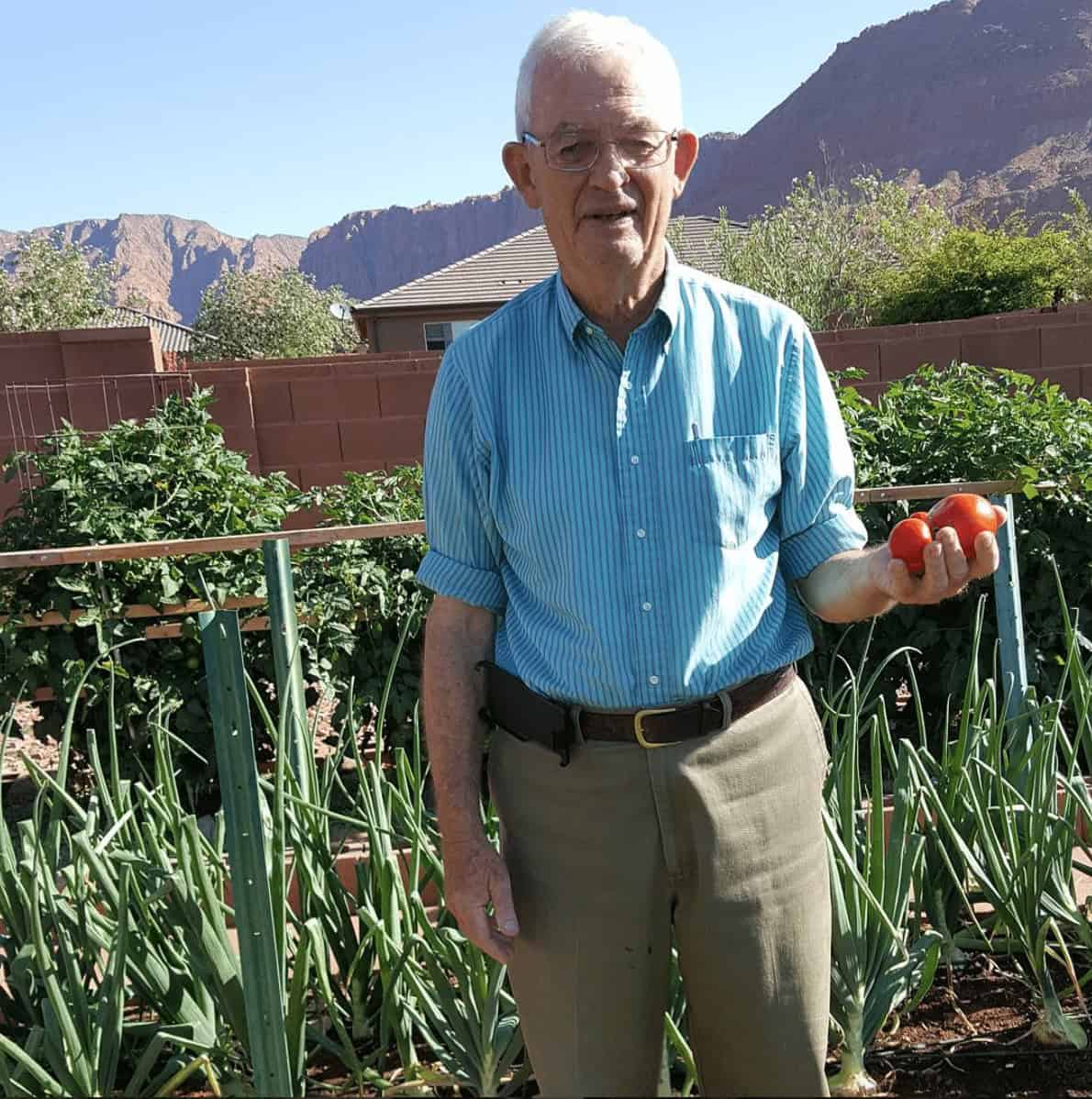
Growing tomatoes has always been a family thing for us. Our Uncle Larry is one of the best gardeners I know. He has studied gardening, taught gardening, and somehow seems to know every trick for getting plants to grow. We joke that he has ten green thumbs. He shared so many of his garden tips with our mom, and she has always grown a beautiful garden too. See our full guide for growing tomatoes.
Tomatoes are one of those things that connect our family year after year. We compare what varieties we planted, how the crop is doing, what we have canned, and what we still need to make. Some of my favorite memories are from the kitchen with baskets of tomatoes on the counter and a huge pot of sauce simmering on the stove.
This canned spaghetti sauce recipe came from that tradition. We have tweaked it over the years, tested it, made it for family dinners, and served it to my very picky Italian-food-loving dad. When he approved it, we knew we had a keeper.
Acidity Testing for Canned Spaghetti Sauce
Tomatoes can be tricky for canning because their acidity can vary by variety, ripeness, and growing conditions. The CDC classifies low-acid foods as foods with a pH higher than 4.6, and low-acid foods need special care because they are the foods most often linked with botulism in home canning.
We have tested this recipe for safe water bath canning nine times, exactly as written, and it has consistently tested in the safe range, between 3.7 and 4.2 pH. A pH of 4.6 or lower is considered the key cutoff for high-acid foods. We have used Roma tomatoes, Celebrity, Park’s Whopper, and other red garden varieties with success. Even with that testing, it is still important to follow the recipe as written, use bottled lemon juice or citric acid in each jar for water bath canning, and follow trusted Home Food Preservation Guidelines.
Water Bath Canning vs Pressure Canning
Water Bath Canning is the method I use when I make this canned spaghetti sauce recipe as written with bottled lemon juice added to each jar. It works for high-acid foods or properly acidified foods. A boiling-water canner needs enough water to cover the tops of the jars, and the water needs to stay boiling for the full processing time.
Pressure Canning uses higher temperatures than water bath canning and is required for low-acid foods like meat, vegetables, and sauces with meat. Some tested tomato recipes also include pressure-canning instructions, but that does not mean you can freely change the recipe.
This recipe is written for the processing method in the recipe card below, not pressure canning. Pressure-canning times are specific to the exact ingredients, proportions, jar size, pressure, and altitude of a tested recipe.
If you want to pressure can spaghetti sauce, use a recipe specifically tested for pressure canning, such as the National Center for Home Food Preservation recipe, and follow it exactly.
Where to Find Canning Jars and Cookers
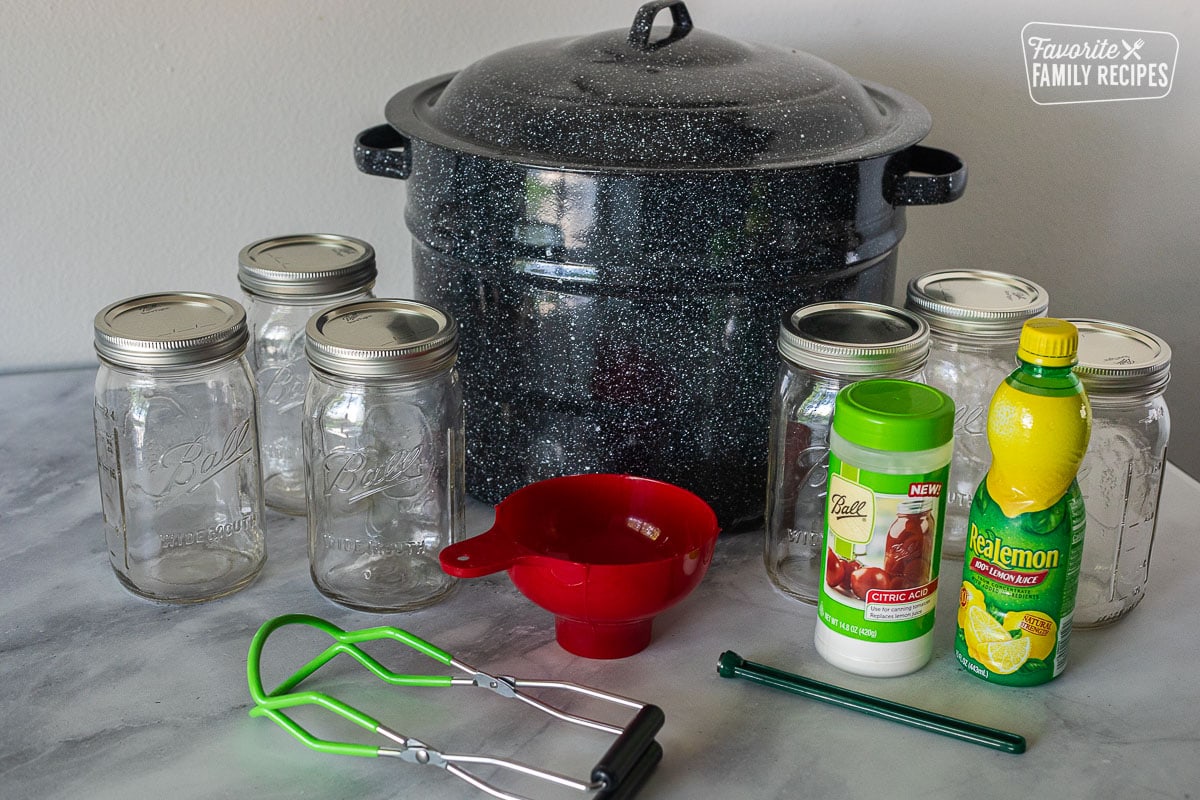
You can usually find canning jars at grocery stores, Walmart, Target, farm supply stores, hardware stores, and online. I like 1-quart canning jars from Ball for spaghetti sauce because one jar is a great amount for pasta night, lasagna, or a casserole. Pint jars are nice for smaller meals, pizza sauce, or recipes that only need a little sauce.
A few things to remember:
- Use jars made for home canning.
- Check jars for chips or cracks before filling.
- Use new lids each time for canning.
- Rings can be reused as long as they are not rusty or bent.
- If you find jars secondhand, inspect them carefully and buy new lids.
- You can use these jars for other recipes like canning fresh tomatoes, canning peaches, or canning pears.
Pairing Ideas
This canned spaghetti sauce is perfect over spaghetti, but I use it for so much more than pasta night. It is great in Lasagna with Cottage Cheese, Chicken Parmesan Stuffed Shells, Easy Chicken Cacciatore, Baked Ziti, Pasta e Fagioli Soup, Minestrone, and any recipe that calls for jarred marinara or spaghetti sauce. You can also simmer it a little longer after opening a jar and use it as pizza sauce. Any of these Italian dishes are amazing with our Homemade Breadsticks or Garlic Bread.
More Canning Recipes
- Canning Homemade Tomato Juice
- How to Can Peaches
- How to Can Pears
- Pickled Beets
- Virginia Chunk Sweet Pickles
- Jalapeño Jelly
This Canned Spaghetti Sauce Recipe is one of the best ways to turn fresh garden tomatoes into something you will use all year long. It is rich, savory, family-tested, and so convenient to have on the pantry shelf. Be sure to read through the tips and FAQs before you start, especially if you are new to canning spaghetti sauce.
Still have a question? Check the comments because we have answered lots of canning questions there over the years. If you do not see what you need, leave a comment and I will do my best to help. And if you make this recipe, please leave a rating and let me know how it turned out! 💛🍅🍝
Canned Spaghetti Sauce Recipe
Video
Ingredients
- 25 pounds tomatoes, (Any garden variety. I have used Roma, Celebrity, Whopper, Early Girl, Beefsteak, San Marzano, and even handfuls of cherry tomatoes)
- 5 medium onions, (about 7-8 cups chopped)
- 4 red bell peppers
- 1 green bell pepper
- 4 (6oz) cans tomato paste
- 1/4 cup soy sauce, Sounds weird, but trust us, it deepens the tomato flavor like you won’t believe!
- 3 tablespoons Worcestershire sauce
- 2/3 cup brown sugar, packed
- 1/4 cup canning salt, also called pickling salt
- 10 cloves garlic, chopped or minced
- 3 tablespoons oregano, dried
- 3 tablespoons basil, dried
- 2 teaspoons red pepper flakes
- 2 bay leaves
- 1 1/4 cups lemon juice, for adding small amounts to each jar
Instructions
- Fill a large pot or Dutch oven halfway with water and bring it to a boil. Working in batches, add tomatoes and boil for 1 to 2 minutes, or until the skins begin to split.
- Remove the tomatoes with a slotted spoon and place them in an ice water bath. Peel and quarter the tomatoes over a large bowl so you save the juices. Remove the tough stem area. The tomatoes do not need to be seeded.
- In a food processor, pulse the onions and bell peppers in batches until finely chopped. For extra flavor, you can sauté the peppers and onions in a little oil with a pinch of salt before adding them to the sauce.

- In a large stockpot, combine the tomatoes, onion and pepper mixture, tomato paste, soy sauce, Worcestershire sauce, brown sugar, salt, garlic, oregano, basil, red pepper flakes, and bay leaves.
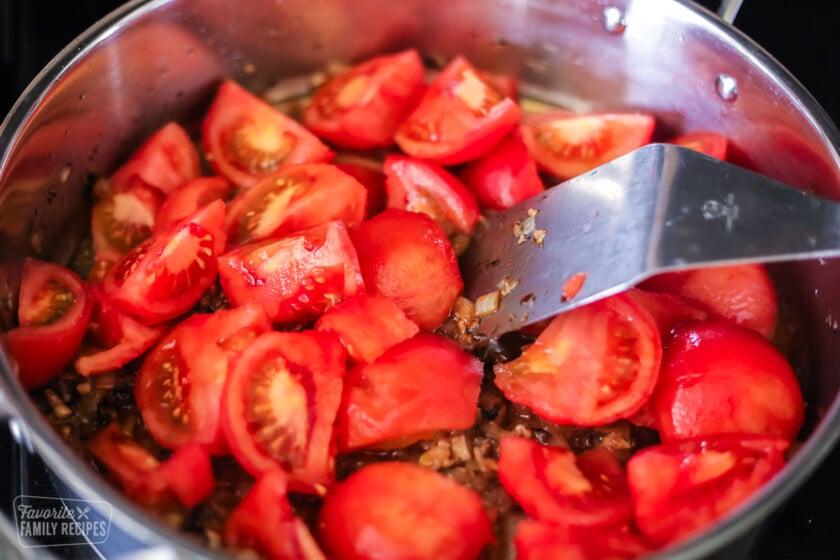
- Bring to a boil. Reduce heat and simmer uncovered for 4 to 5 hours, stirring every 15 minutes or so to prevent scorching. Remove and discard the bay leaves. For a smoother sauce, use an immersion blender to blend until smooth.
- Add 2 tablespoons bottled lemon juice to each hot quart jar, or 1 tablespoon bottled lemon juice to each hot pint jar. Ladle hot sauce into hot jars, leaving ½ inch headspace. Remove air bubbles, wipe rims clean, and add lids and rings.Do not forget the lemon juice! If you forget to add the lemon juice you will need to open the jars, add the juice, replace with new lids, and reprocess.
For Water Bath Canning:
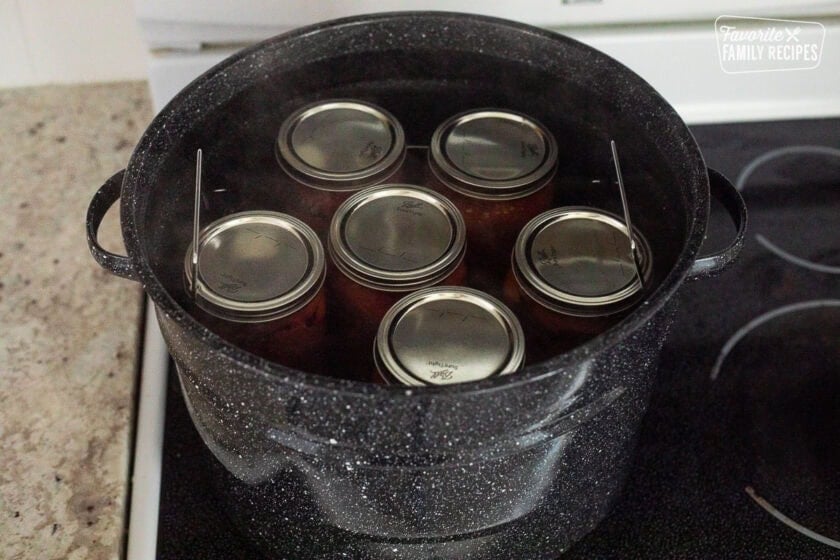
- Process quart jars for 40 minutes in a boiling-water canner for altitudes of 1,000 feet or less. Adjust processing time for higher altitudes:1,001 to 3,000 feet: add 5 minutes3,001 to 6,000 feet: add 10 minutes6,001 to 8,000 feet: add 15 minutes8,001 to 10,000 feet: add 20 minutes
Notes
- This recipe usually makes 9 to 10 quart jars, but yield can vary depending on the water content of your tomatoes and how long you simmer the sauce.
- Weigh tomatoes before peeling.
- Add bottled lemon juice or citric acid directly to each jar, not to the pot of sauce.
- If using citric acid instead of bottled lemon juice, use ½ teaspoon per quart jar or ¼ teaspoon per pint jar.
- Do not skip the acid for water bath or steam canning.
- Do not add meat if you are water bath canning this recipe.
- Do not increase the onions, peppers, garlic, or other low-acid ingredients for canning.
- Frozen tomatoes can be used. Thaw and drain them first for a thicker sauce.
- Stir the sauce often while simmering so it does not burn on the bottom.
- Store sealed jars in a cool, dark place and use within a year for best quality.
- Refrigerate any jar that does not seal and use it soon.
- To learn more about our tips and tricks for growing tomatoes, see our full guide.
- This spaghetti sauce recipe freezes beautifully and lasts for several months in freezer bags or freezer-safe containers.
Nutrition
Nutrition information is automatically calculated, so should only be used as an approximation.
Love this recipe?
We want to hear from you! Please leave a review.

Have you done this with cans of diced tomatoes? Is it basically the same? We are well past canning season in WI.
We haven’t done it with diced tomatoes– It would probably work just fine if you could figure out the right tomato to diced tomato ratios!
Erica – this recipe looks great. I don’t have a pot large enough for all the tomatoes. Would a Nesco work? If so, what temp would you set it to?
We have never used a Nesco roaster for cooking down tomatoes before. If you use it for simmering a lot, you may be fine, I just do’t know what to recommend as far as a temp goes. Sorry I wasn’t much help with this one!
It says cook time is 1 hour, but then it says to simmer for 4 to 5 hours?
You want to reduce it for as long as you can… 1 hour is the minimum. 4-5 hours is suggested. Hope this helps!
Finished making a whole batch. First time I have done it from scratch with fresh tomatoes. AND IT WAS AWESOME!!! Even my daughter who usually is very picky and doesn’t eat spaghetti loved it! I did freeze instead of can and the second week it was just as good after defrosting. thanks!!!
Erica, sorry another question…at what point do u do the immersion blender? No where on the recipe did I see that, but I could have missed it. Also does garlic just gets thrown in as a whole clove or do u mince it?
You use it right at the end after it has simmered for a few hours. You do it right before funneling into the jars. Hope this helps!
I am not finding anything about this in the recipe itself. What am I missing? I don’t even know what an immersion blender is..
Here is a link to an immersion blender: http://amzn.to/1Jg8qpM
Oh, and definitely mince the garlic.. I will put that on the recipe!
Can I add tomato, peppers and onion cut up into very small pieces in sauce after it is blended? Before canning.
What kind of tomatoes would you say would be best to use?
We used big boys and early girls but Romas would work great! Really, any tomato would be fine. You just want to use nice, juicy tomatoes if you can!
Is “red bell pepper flakes” the same thing as crushed red pepper (the spicy pepper)?
haha yes, that was a typo on my part. I changed it on the recipe. It is correct now 🙂
I just finished my spaghetti sauce. It is delicious!! Mine sauce is quite thin and so I am wondering if I should have let it simmer longer. Anyway just wondering if I added too many tomatoes or if it is just a thinner sauce. Thank you so much for sharing it!!
If you want to thicken it up you can add more tomato paste.. it could have been watery tomatoes or it needed more time to simmer. Could be a number of reasons but tomato paste should fix that 🙂
Do you remove the seeds?
I didn’t but you sure can! I honestly don’t even notice them in the sauce
For us, the seeds actually add flavor and a little more texture. Thank you for the recipe. Jill
Do you leave tomatoes whole?
You put them in the boiling water whole, yes. You take the skins off and cut them up after they are boiled and plunged in the water bath.
I have read it a few times now and looks awesome! But… am I missing something? It says to process the green peppers and onions- I don’t see where it says what to do w/ the red bell peppers? Is it supposed to be both bell peppers there?
Also- for us canning dummies 😉 is it saying to pour the hot sauce into hot jars? How do you recommend getting the jars hot- soaking in hot water..? Sorry to ask probably a super basic questions- but this looks amazing and I’d love to make some- but want to do it right and not waste so much!
You can definitely heat them in water. What I will usually do is run the jars by themselves in the dishwasher and get them out right when the load is done so they are nice and hot. I will take them out of the dishwasher, dry them off, and pour the sauce in. You are right about the peppers, both red and green are processed. I will get that right on the recipe 🙂 Thanks for the catch!
Do you cut up the tomatoes any smaller than in quarters?
You definitely can… because you use an immersion blender it all gets blended together anyway. If you have huge tomatoes you can definitely cut them up more!
How long would I process if I do pints instead of quarts?
You would process the same amount of time, even if they are in pints. Technically you could probably take a minute or two off but I like to be on the safe side when it comes to canning 🙂
If you were to pressure can it, at what lb pressure and for how long?
I haven’t done this in a pressure canner (I don’t even own a pressure canner). You might want to look for a similar recipe online that is specifically for pressure canning and go off of that. Sorry I’m not of much help here– I just don’t want to point you in the wrong direction since I don’t do pressure canning!
If I am using pints. Do I just add 1 tablespoon of lemon juice jar?
Yes, that should be just fine 🙂 I think 2 would be too much for a pint.
Like your new picture, very nice…. Love your blog, come here often.
Do you have this recipe in a smaller version? I really want to try it before I make such a large amount. Like your father, I am picky about spaghetti sauce.
Probably the best thing to do would be to quarter the original recipe. Are you wanting to can the recipe or just try it out or freeze it?
I was just wondering the same thing. I have very little freezer space and would rather just make smaller portions that I’ll use within a month or so.
Can I use fresh basil? I have a lovely, healthy plant and hardly ever get to use it. If so, will i need to dry it first in the oven?
If you are using fresh basil and freezing it you should be fine using fresh! No drying necessary 🙂 Hope this helps!
I already chopped and pureed my tomatoes before finding this recipe and I didn’t peel them. Can I still use for this recipe without my tomatoes being peeled?
Yes, of course! You may just want to cook it down longer so those skins aren’t tough. You should be totally fine.
How much does this make?
It makes 9-10 quarts
Hmmm….I just made this and got 14 quarts. I was careful to weigh the tomatoes before and after boiling them. Perhaps the difference was the size of my onions. I used five of the ginormous sized ones that are just under a pound a piece.
Way awesome that you got more than you were expecting! There could be several reasons for this. The sauce may not have simmered down as much or bigger onions (as you suggested). Hope this helps!
I don’t believe my eyes when I saw your ad on FB today. I’ve been looking for a good homemade sauce recipe. Today, I went to the market and got 25 lbs. of tomatoes, but really couldn’t find a good recipe until I saw your’s … now all I gotta do is get started …. Thanks so much for this recipe and I’ve faved your blog for future recipes.
haha sounds like we posted just in time! Glad we could help and excited that you are a new follower! 😀
Does this sauce taste ok if frozen?
Yes it will still taste great frozen 🙂
How is freezing sauce a better method then open kettle canning?
It’s not necessarily “better”.. some might like doing it better that way because it is easier.
Hello Erica!! Our mutual friend, Jean W. introduced me to your blog. I’m so excited to explore it more and get to know a local foodie! 🙂
Natasha! I can’t wait to hang out with you and get to know you better, I love meeting new blogger friends!
This sauce is delicious. Made exactly as is. Will definitely make again
Has this recipe been tested for canning safety to make sure the acidity level is sufficient to prevent botulism?
This recipe was based off of several recipes, including Taste of Home and Ball Canning. This is what one of the sources said: “Anything canned in a boiling water bath needs to be high acid (for the science minded types, this means that it has to have a pH of 4.5 or below). This is because botulism cannot grow in high acid environments. However, tomatoes are in the grey zone, typically having a pH right around 4.5. Because of this, tomatoes need to be acidified when canned, so that the acid levels are pushed into the safe zone and the pH becomes something lower than 4.5. That’s why all other good instructions for canning whole tomatoes includes two tablespoons of bottled lemon juice per jar (you can also use citric acid if you prefer).”
If you are still worried about it you can pressure can it or just freeze it.
Hopefully this helps clear things up!
Ok, just to be clear- do you add the 1 1/4 c. Lemon juice to the sauce? OR – Do you put 2 tablespoons into the jar just before putting the sauce into the jar?
Sorry, just want to do it right!
You put it directly into the jars… 🙂
Make sure your lemon juice is heated up!! I lost 3 jars before I realized!!! =(
The lemon juice doesn’t need to be heated… it will heat up in the jars when you process them. Where have you heard that the lemon juice needs to be heated??
I think Tori meant adding cold lemon juice from the fridge into heated jars can cause them to break.
It is such a small amount of lemon juice per jar… I don’t think it will break the jar. I never had any problems with it. I hope this helps!
That’s exactly what I meant Barry. I had taken my lemon juice out of the fridge and put 2 tbsp into each jar… on my 5th jar I heard that dreaded “tink” and on inspection I had broken 3 out of the 5 jars (they were brand new so it wasn’t from just age). Anyway, the remainder of the jars I had omitted the lemon juice because I didn’t want to break anymore jars and it turned out great! We survived and this was seriously the BEST sauce we have ever had. So here we are getting ready for another year of harvesting and canning! Thanks for the recipe!!! (It was so worth those broken jars!!) =)
So glad you like the recipe and I am glad you survived– though we recommend the lemon juice, we are glad it worked out ok for you without it 🙂
I’m using quarts do I use only 1 tblspoon? Per jar?
I’m a bit confused, Cook time: 1 hour, Processing 40 min. Total time: 2 hours. But in the directions, # 5. Simmer uncovered for 4-5 hours.
Thanks for letting us know, that is just a typo. We will get that fixed!
Does the lemon juice change the flavor of the sauce?
No, it doesn’t. I promise the spaghetti sauce won’t be sour 😉
In the instructions I’m going by it doesn’t say how exactly the red bell peppers are prepared or incorporated.
You find this in step 3 of the recipe when it refers to the peppers. This is for all the peppers, including the red bell peppers. Hope this helps!
How long would you process in a steam canner?
You would do it pretty much the same– I would maybe add like 5 more minutes to the time so it has a little more time to cook through.
Hello I made this recipe, I absolutely love it. I made a third of the quantity due not sure how it would turn out. Tastes better than canned sauce. Cannot wait to make some more.
Do you use dried herbs or fresh?
This will be my third year making this recipie it lasts us about 6 months with 200lbs tomatoes but we eat this sauce 3-4 times a week never any spoiled cans sits great gets better the longer it sits am looking forward to canning 400 lbs tomatoes this year to keep up with our families sauce needs
And our family members coming to visit always ask to have the sauce or if we have an extra can lol we use it all summer in our homemade pizza cooker to make pizza as well and anywhere else pasta sauce can be used ……
The reason I make my own is the commercially produced sauce is way too sweet. I never add sugar to spaghetti sauce.
Steam canning takes the same amount of time as water bath canning. You just don’t have to use all that water so it makes the process go faster.