
We may earn a commission when you click on the affiliate links in this post.
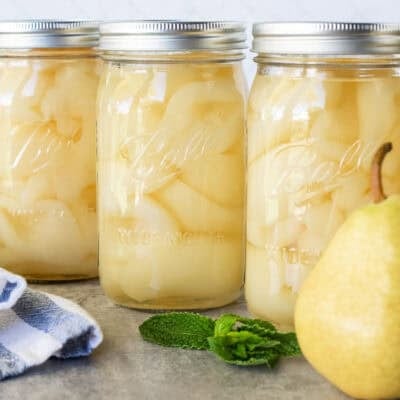
Canning Pears is one of my favorite ways to preserve the sweet flavor of fresh pears for the months ahead. This step-by-step guide shows you how to can pears using a hot-pack method and a boiling-water canner, with clear processing times for every elevation.

Why I Love Canning Pears
For as long as I can remember, fall has meant canning season in our family. We go into full sticky-kitchen, canning-supplies-everywhere mode, preserving everything from canned peaches and whole tomatoes to canned spaghetti sauce and homemade salsa.
Pears are one of my favorite fruits to can because they hold their shape well, taste naturally sweet, and are so useful once they are on the pantry shelf. This recipe uses a hot pack, which helps the pears heat evenly, reduces floating, and gives them a better texture than a raw pack. Opening a jar in the middle of winter feels like bringing a little bit of fall back into the kitchen.
New to canning? Start with our Canning 101 post and Water Bath Canning guide. They walk through the entire process, from preparing jars to checking seals and safely storing your finished jars.
Happy canning!
🩷 Erica
Table of Contents
- Why I Love Canning Pears
- Supplies You’ll Need
- Ingredients You’ll Need
- Ingredient Additions and Substitutions
- Best Pears for Canning
- How to Can Pears
- Elevation Adjustments
- Syrup Options
- Canning Safety
- Recipe Tips
- Frequently Asked Questions
- Troubleshooting
- Make Ahead and Storage
- Pairing Ideas
- More Canning Recipes
- Canning Pears Recipe
Supplies You’ll Need
- Boiling-water canner with a rack: The canner needs to be deep enough for the water to cover the filled jars by at least 1 to 2 inches.
- Quart or pint canning jars: Check each jar for cracks, chips, or rough spots around the rim.
- Canning lids and screw bands: Use new flat lids and clean bands that are free from rust or damage.
- Jar lifter: This allows you to lift the hot jars straight up without tipping them.
- Canning funnel: A wide-mouth funnel makes it easier to pack the pears and pour in the hot syrup.
- Bubble remover and headspace tool: Use a plastic or silicone utensil rather than a sharp metal knife.
- Large stockpot: You will need a pot large enough to heat the syrup and pears together.
- Large bowl: Use this for the ascorbic acid and water solution.
- Vegetable peeler and knife: A sharp peeler makes preparing a large batch of pears much easier.
- Melon baller or small measuring spoon: Either one works well for removing the core and blossom end.
- Slotted spoon and ladle: Use the spoon for transferring pears and the ladle for adding syrup.
- Clean towels: Place the processed jars on a towel to protect them from sudden temperature changes.
Because the jars are processed for at least 20 minutes, they do not need to be pre-sterilized. They should still be washed thoroughly, rinsed, and kept hot until they are filled.
Ingredients You’ll Need
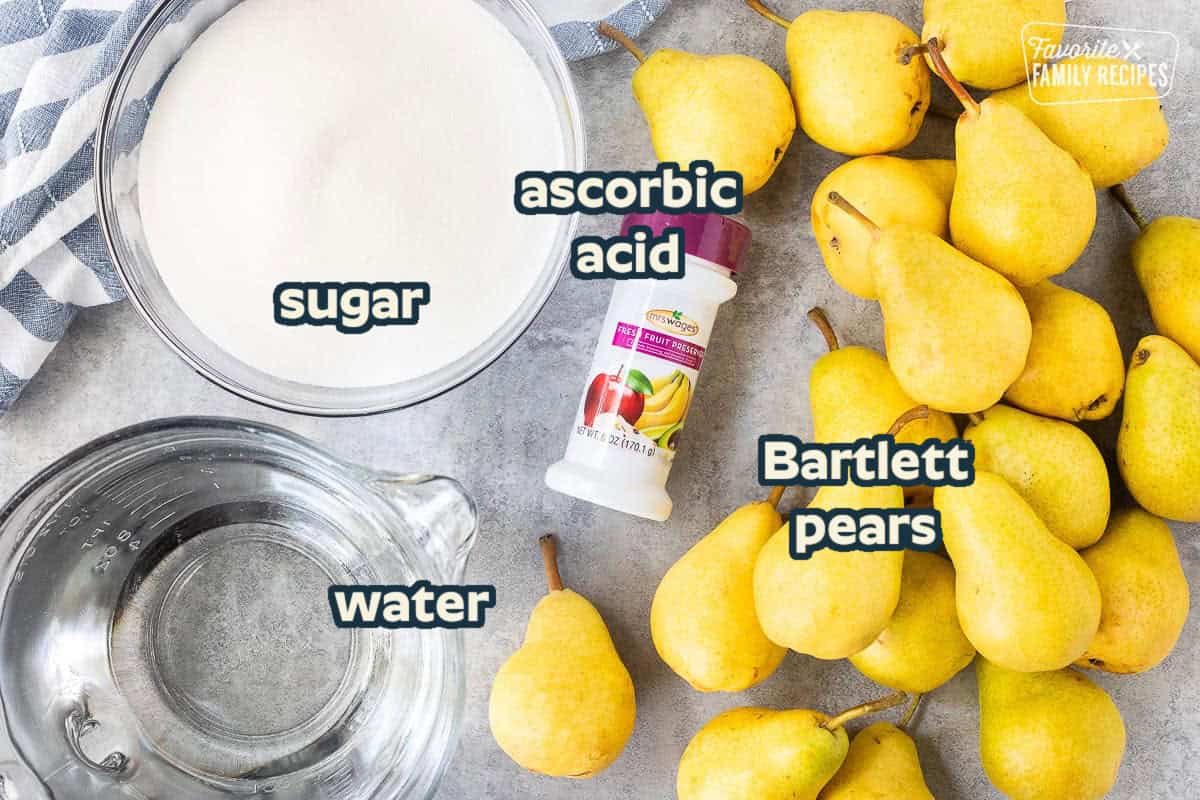
- Bartlett pears: Choose mature, ripe pears that give slightly near the stem but are still firm enough to hold their shape.
- Ascorbic acid and water: This solution keeps the peeled pears from browning while you finish preparing the batch.
- Granulated sugar and water: These are heated together to make the syrup used for cooking and packing the pears.
Ingredient Additions and Substitutions
The recipe card below keeps the original ingredients and quantities, but there are a few tested options you may want to know about.
- Different European pear varieties: Bartlett pears are my first choice, but Bosc, Seckel, Anjou, Comice, Nelis, and Forelle pears may also be preserved. Their final texture and flavor will vary.
- Commercial fruit preserver: You can use a commercial fruit preserver made with ascorbic acid. Follow the quantity printed on the package because concentrations vary between brands.
- Packing liquid: Pears may be canned in sugar syrup, apple juice, white grape juice, or water. Sugar is not required for canning safety, but it helps the pears keep their color, shape, and flavor.
- Sugar substitutes: Do not substitute an artificial sweetener directly for the sugar in this recipe. Use a tested no-sugar canning method or can the pears in water or unsweetened juice instead.
- Asian pears: Do not substitute Asian pears in this recipe without acidifying each jar. Asian pears require a separate, tested process because they may not be acidic enough for regular boiling-water canning.
- Spiced pears: Rather than adding unmeasured spices to this recipe, use a tested spiced pear or pear pickle recipe developed for home canning.
Best Pears for Canning
Bartlett pears are my favorite pears for canning. They have a classic pear flavor, are easy to peel, and soften without immediately falling apart. Bosc and Seckel pears also can well, while Anjou and Comice pears may be used depending on the texture you prefer.
The most important thing is to use pears that are ripe but still firm. Underripe pears can be hard and bland after processing, while overripe pears may become soft or break apart.
Most European pears ripen best after they are picked. Leave firm pears at room temperature and check them each day. To test ripeness, gently press the neck of the pear near the stem with your thumb. It should give slightly without feeling soft through the middle. Bartlett pears also change from green to yellow as they ripen, but varieties such as Anjou may stay green.
If your pears were just picked, there is no set number of days you must wait. Temperature, variety, and maturity all affect how quickly they ripen. Let the pears sit at room temperature and can them when the neck begins to give gently under pressure.
How to Can Pears
This recipe uses a hot pack, which means the pears are heated in the syrup before they go into the jars. The National Center for Home Food Preservation recommends hot packing because raw-packed pears tend to be lower in quality.

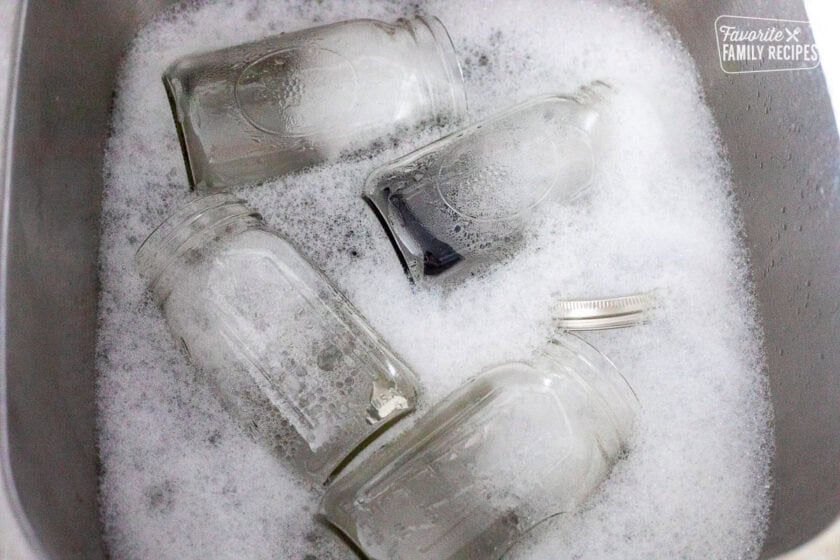
- Prepare the canner and jars. Wash your jars, lids, bands, and tools. Fill the boiling-water canner about halfway with water and begin heating it. Keep the clean jars hot until you are ready to fill them.

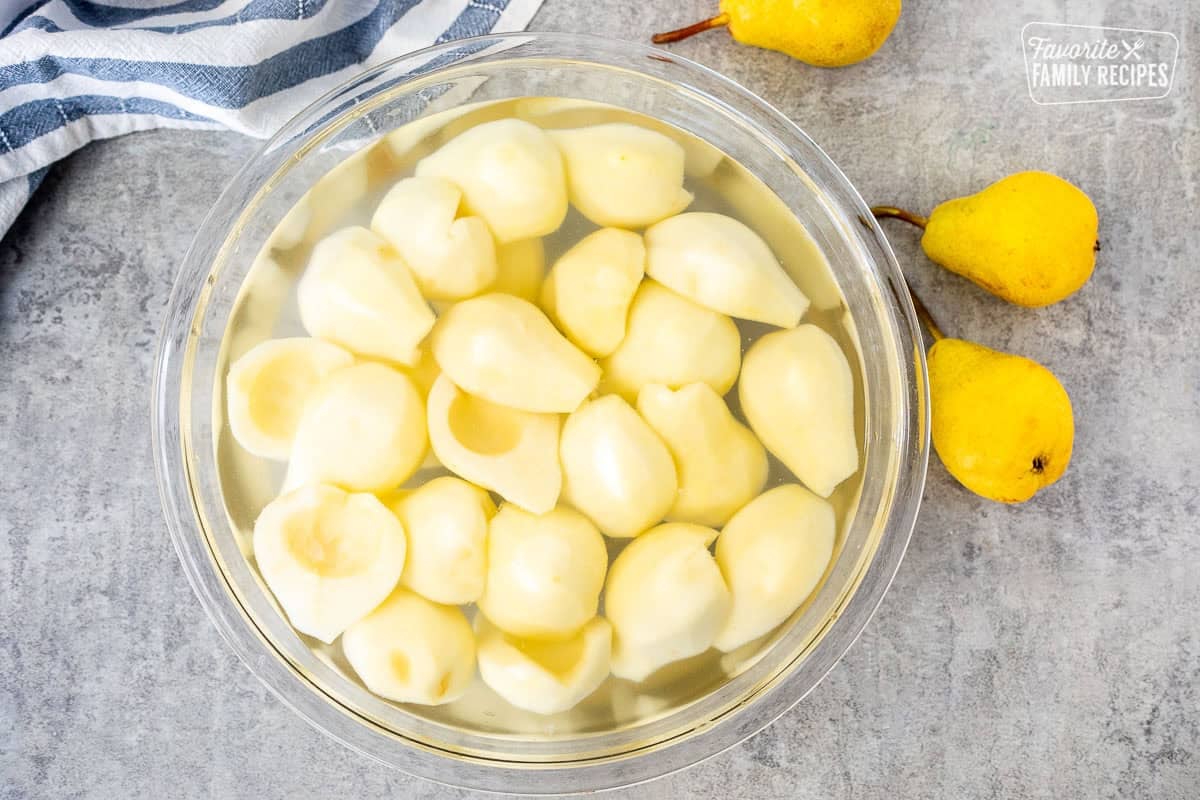
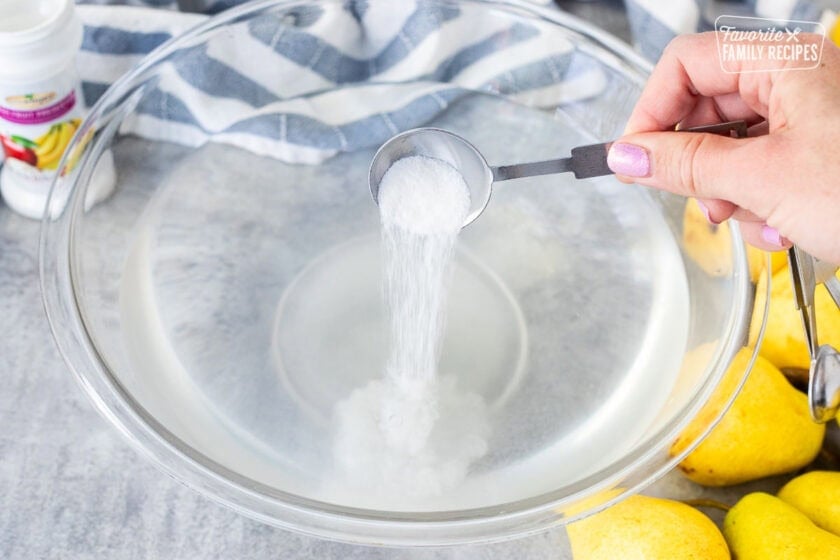
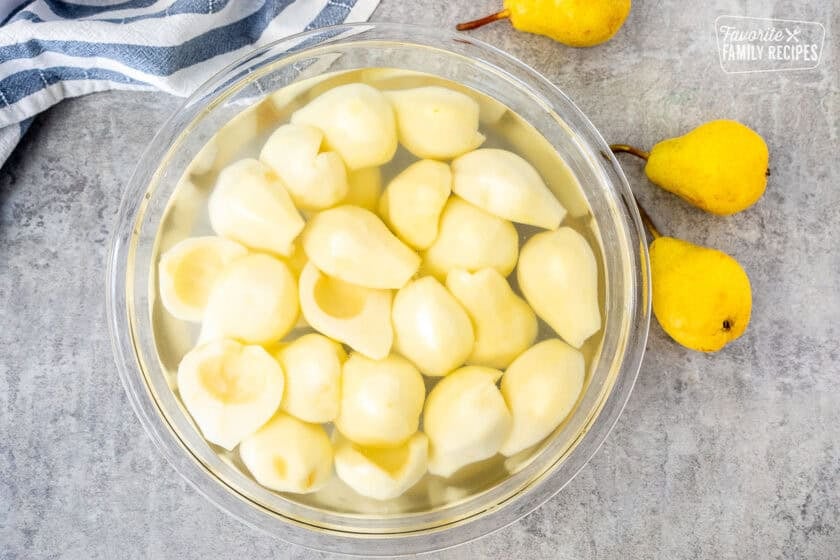
- Make the ascorbic acid solution. Combine the water and ascorbic acid in a large bowl. This solution helps keep the peeled pears from turning brown while you prepare the rest of the batch.

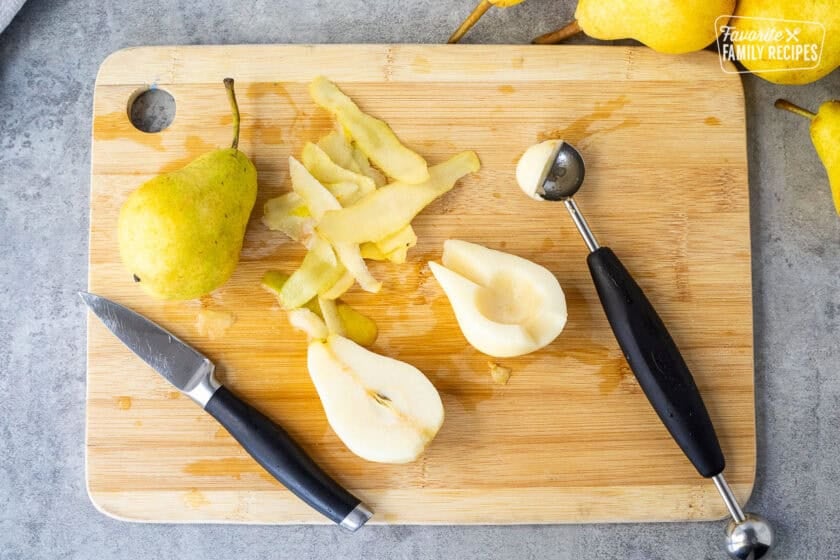
- Prepare the pears. Wash and peel the pears, cut them lengthwise into halves, and remove the cores and blossom ends with a melon baller or spoon. Place each prepared pear into the ascorbic acid solution as you work.
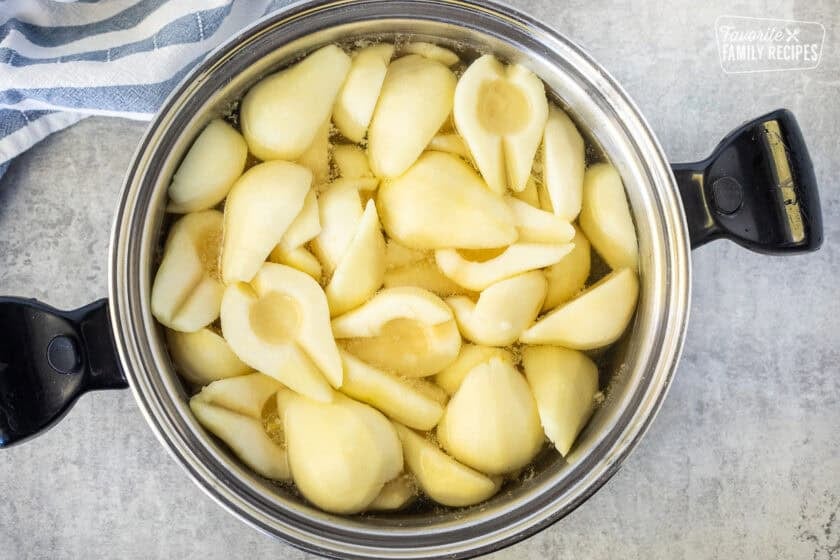
- Make the syrup. Combine the syrup water and sugar in a large stockpot. Bring it to a boil, stirring until the sugar completely dissolves.
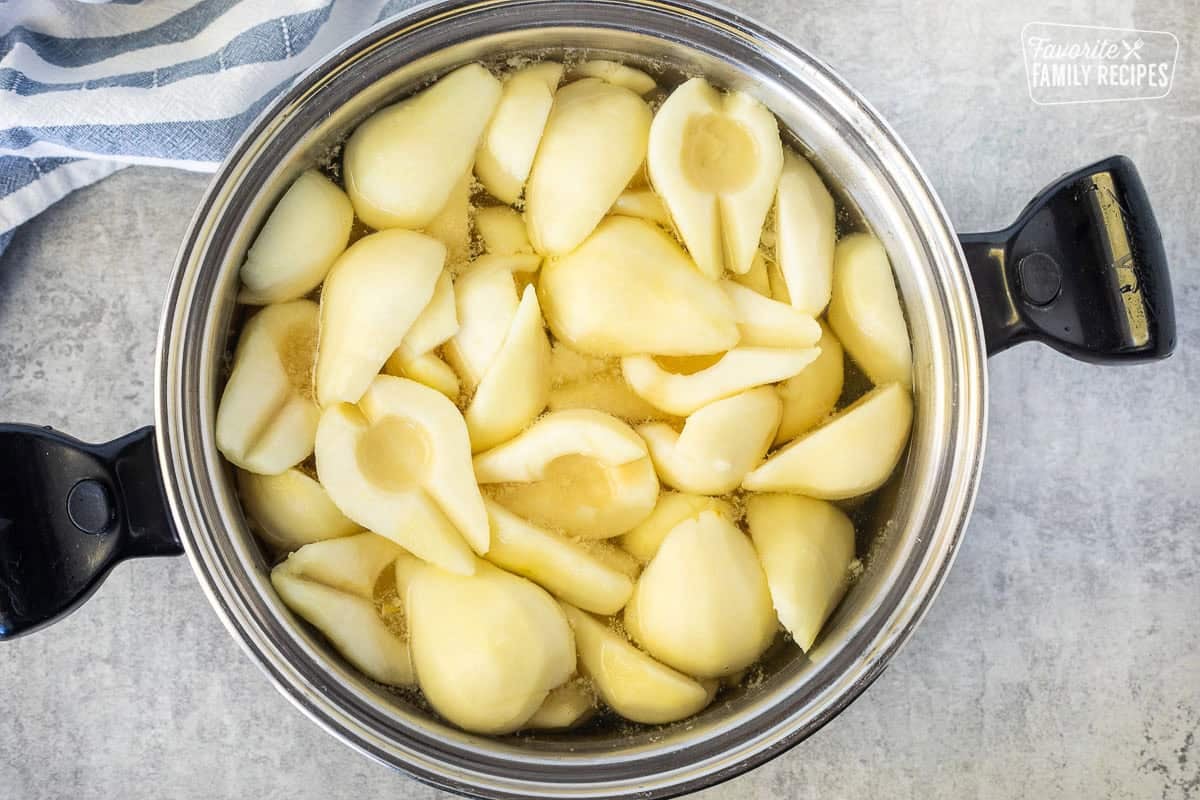
- Heat the pears. Drain the pears and carefully add them to the boiling syrup. Bring the syrup back to a boil and gently boil the pears for 4 to 5 minutes.

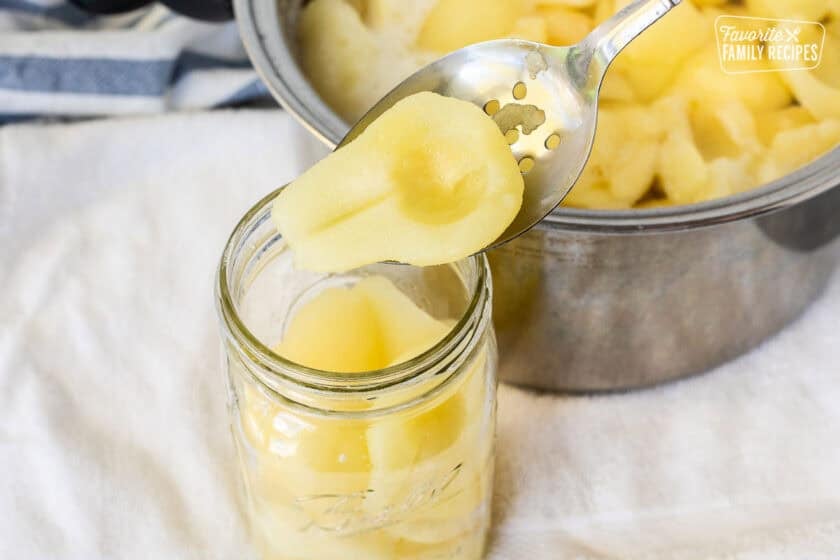
- Fill the jars. Use a slotted spoon to pack the hot pears into one hot jar at a time. Ladle the boiling syrup over the pears, leaving ½ inch of headspace. Remove trapped air bubbles, check the headspace again, and add more syrup if needed. Wipe the rim, center the lid, and tighten the band until fingertip tight.
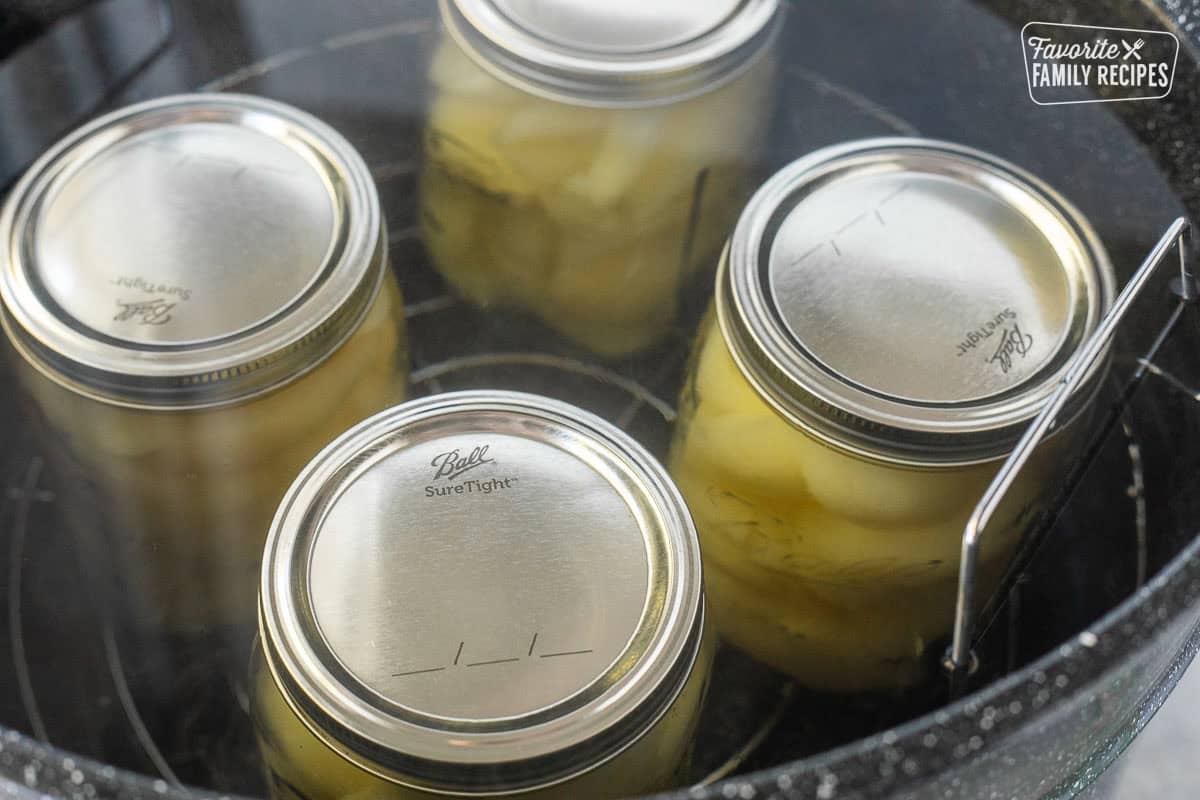
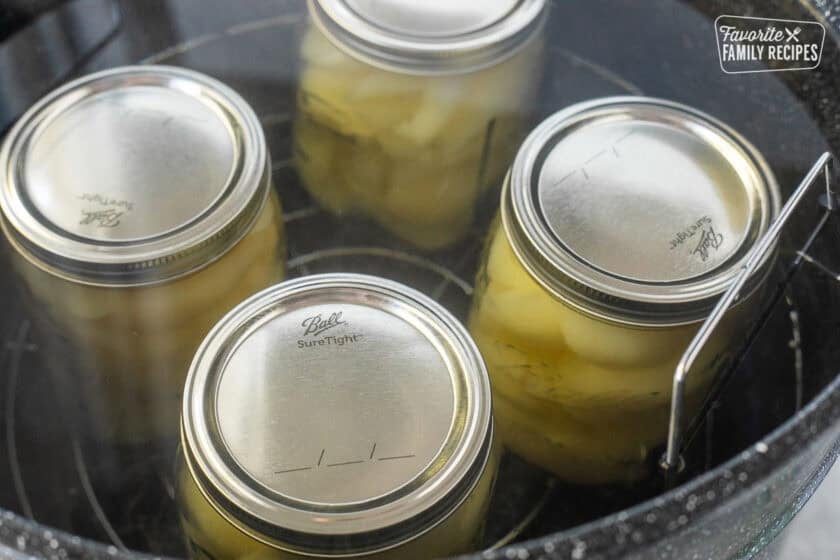
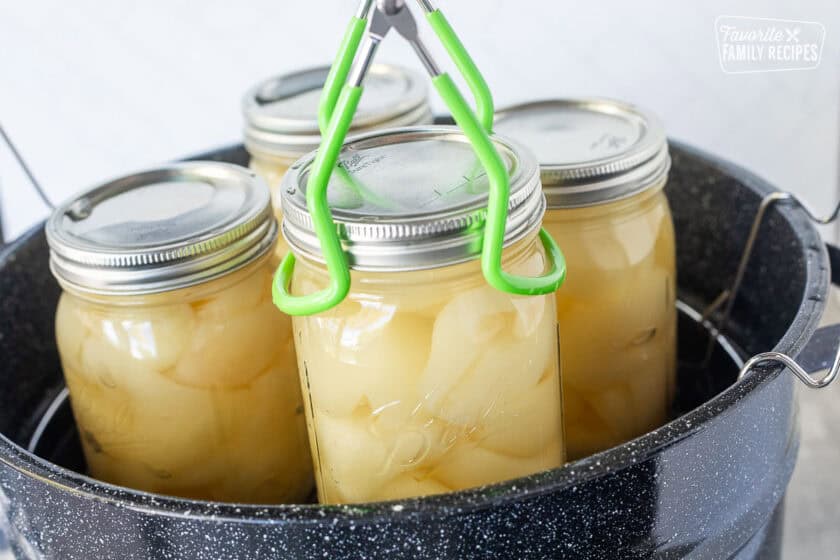
- Process the jars. Lower the jars into the boiling-water canner. The water should cover the jars by 1 to 2 inches. Cover the canner, return the water to a full rolling boil, and then begin timing. Process according to the jar size and elevation chart below.

- Cool and check the seals. Turn off the heat, remove the canner lid, and let the jars rest in the water for 5 minutes. Lift the jars straight up and place them on a towel. Do not tighten the bands or press the lids. Cool undisturbed for 12 to 24 hours, then check the seals, remove the bands, wash the jars, label them, and store them.
Elevation Adjustments
Water boils at a lower temperature at higher elevations, so additional processing time is required. Always determine your elevation before beginning.
Hot-Pack Processing Times
| Elevation | Pint Jars | Quart Jars |
|---|---|---|
| 0 to 1,000 feet | 20 minutes | 25 minutes |
| 1,001 to 3,000 feet | 25 minutes | 30 minutes |
| 3,001 to 6,000 feet | 30 minutes | 35 minutes |
| Above 6,000 feet | 35 minutes | 40 minutes |
Do not begin counting the processing time until the water has returned to a full rolling boil. If the water stops boiling at any time during processing, bring it back to a boil and restart the entire processing time. These times come from the National Center for Home Food Preservation’s tested pear instructions.
Syrup Options
This recipe uses a sweet syrup that helps the pears retain their color, flavor, and texture. Sugar is not what makes the pears safe to can, so you may choose a lighter syrup, fruit juice, or water when following the same tested preparation and processing instructions.
Lighter syrup:
- 8 cups water
- 2 ½ cups granulated sugar
Recipe syrup:
- 8 cups water
- 4 cups granulated sugar
Heavier syrup:
- 8 cups water
- 5 ½ cups granulated sugar
You may also use unsweetened apple juice, unsweetened white grape juice, or water as the packing liquid. Pears canned in water are safe when processed correctly, but they may have a softer texture, lighter flavor, and more color loss during storage.

Canning Safety
This pear recipe is based on the tested hot-pack method for European pears. Follow the preparation, headspace, jar size, and processing time exactly.
- Use regular European pears such as Bartlett, Bosc, Seckel, or Anjou.
- Do not use this method for Asian pears without the required bottled lemon juice and separate tested instructions.
- Peel the pears and remove the entire core and blossom end.
- Heat the pears in the packing liquid for approximately 5 minutes.
- Leave ½ inch of headspace in every jar.
- Use only pint or quart jars because processing times have not been established for larger jars.
- Keep the jars covered with at least 1 inch of boiling water throughout processing.
- Adjust the processing time for your elevation.
- Let the jars cool undisturbed for 12 to 24 hours before checking the seals.
- Store jars without the screw bands so a failed seal is easier to notice.
- Never taste food from a leaking, unsealed, bulging, moldy, or otherwise questionable jar.
Regular European pears are acidic enough for boiling-water canning when the tested process is followed. Asian pears are different and must be acidified with bottled lemon juice before canning.
For a full explanation of safe home-canning practices, visit our Canning 101 and Water Bath Canning guides. You can also find research-based preservation information through Utah State University Extension and the National Center for Home Food Preservation.
Recipe Tips
- Work with firm, ripe fruit. The neck of the pear should give slightly when pressed, but the middle should still feel firm.
- Ripen pears in stages. If some pears are ready before the others, can the ripe ones first and let the remaining pears continue ripening.
- Keep peeled pears submerged. Place each pear in the ascorbic acid solution immediately after peeling and coring.
- Work in manageable batches. Do not drain all the pears until the syrup is ready for them.
- Use a hot pack. Simmering the pears before filling the jars helps reduce floating and improves the final texture.
- Pack the fruit closely without crushing it. Place pear halves cavity-side down when possible to fit more fruit into each jar.
- Measure the headspace after removing bubbles. Air bubbles can change the liquid level inside the jar.
- Keep everything hot. Hot fruit and syrup should go into hot jars before being lowered into hot canner water.
- Tighten bands only fingertip tight. Overtightening may prevent air from escaping during processing.
- Lift jars straight up. Tilting a hot jar can allow syrup to enter the sealing area.
- Do not press the lids. Give the jars 12 to 24 hours to seal and cool before testing them.
- Remove the bands before storage. Wash away any syrup residue and store the clean jars with the bands removed.

Frequently Asked Questions
Yes. Sugar helps canned pears maintain their color, flavor, and firm texture, but it is not required for safety. Pears can be hot packed in water, apple juice, or white grape juice and processed using the same tested times.
Regular European pears, including Bartlett, Bosc, Seckel, and Anjou, do not require added lemon juice when you follow the tested pear-canning instructions. Asian pears must be acidified with bottled lemon juice and require a separate tested method.
There is no exact number of days because the timing depends on the variety and room temperature. Leave the pears at room temperature and check the neck near the stem each day. When it gives slightly to gentle pressure, the pear is ready to can.
Yes. Tested home-canning instructions call for washing and peeling the pears before halving and coring them. Leaving the peel on may affect the texture, heat penetration, and quality of the finished fruit.
Pears can be halved or cut into smaller uniform pieces. Cutting large pears into quarters or thick slices can make them easier to pack. Avoid very thin slices because they may become overly soft during heating and processing.
Tested pressure-canning instructions are available, but this recipe uses a boiling-water canner. Do not make your own pressure or timing conversions. Follow the official pressure-canning table from the National Center for Home Food Preservation if you choose that method.
The amount varies depending on the pear size and how they are cut and packed. You will generally fit more sliced or quartered pears into a jar than large pear halves. This recipe uses approximately 30 to 36 medium pears and yields about 4 to 5 quarts.
Troubleshooting
- The pears are floating at the top of the jar: Fruit contains air and may float, especially if it is packed loosely or is not heated long enough. Use firm, ripe pears, follow the hot-pack instructions, remove air bubbles, and pack the fruit closely without crushing it. Floating alone does not make a properly processed and sealed jar unsafe.
- The pears turned brown: Browning usually happens when peeled fruit is exposed to air. Mix the ascorbic acid solution before peeling and keep the pears fully submerged until they are added to the syrup.
- The pears are too soft or mushy: The pears were probably overripe, cut too thin, or cooked too long before processing. Use ripe but firm pears and limit the hot-pack cooking time to about 5 minutes.
- The syrup looks cloudy: Cloudiness can come from overripe fruit, sugar that was not completely dissolved, starch from damaged fruit, minerals in the water, or spoilage. Do not use the jar if the cloudiness is accompanied by rising bubbles, leaking, mold, a broken seal, or an unusual odor.
- Liquid leaked out during processing: This is called siphoning. It can happen when the headspace is incorrect, air bubbles remain in the jar, the canner boils too violently, or jars are removed immediately after processing. Turn off the heat and let the jars rest in the uncovered canner for 5 minutes before removing them.
- Some pears are above the syrup after processing: Do not open a sealed jar just to add more liquid. If the jar was processed correctly and remains sealed, it can be stored, although fruit above the liquid may darken. Use that jar sooner than the others.
- A jar did not seal: If you notice the failed seal within 24 hours and the original recipe was followed correctly, reheat the pears and syrup, place them in a clean jar, apply a new lid, and repeat the complete processing time. You may also refrigerate the unsealed jar and use it within one week.
- A jar cracked in the canner: Sudden temperature changes, damaged jars, or jars sitting directly on the bottom of the pot can cause breakage. Use a canning rack, inspect every jar, and keep the jars, pears, syrup, and canner water at similar hot temperatures.
- The lid buckled: The band may have been tightened too firmly, or the jar may have been overfilled. Buckled lids are not considered safely sealed. Refrigerate the jar or reprocess it within 24 hours with a new lid.

Make Ahead and Storage
If the pears are not ripe when you bring them home, leave them at room temperature until the neck near the stem gives slightly when pressed. A paper bag can speed up ripening. Once the pears are ripe, refrigerate them to slow further softening until you are ready to can.
After processing, leave the jars undisturbed for 12 to 24 hours. Check the seals, remove the screw bands, wash and dry the jars, and label each one with the date.
Store sealed jars in a cool, dark, dry place away from direct sunlight, heat, and freezing temperatures. For best flavor, color, and texture, use home-canned pears within one year. USDA storage guidance lists approximately 12 months for home-canned foods.
Before opening, check the jar for a tight seal, leaking, mold, bubbles, discoloration, or an unusual appearance. Discard any questionable jar without tasting the contents.
After opening, refrigerate the pears in a covered container and use them within one week.
Pairing Ideas
Serve canned pears chilled as a simple side dish, or spoon them over yogurt parfaits and homemade granola for breakfast. They also taste great alongside grilled pork chops or drained and added to a Harvest Pear Salad. For dessert, serve them over vanilla ice cream with cinnamon, whipped cream, or a sprinkle of granola.
More Canning Recipes
- Canning Homemade Tomato Juice
- Canned Spaghetti Sauce
- Canned Salsa
- Chunky Salsa Recipe for Canning
- How to Can Diced Tomatoes
- How to Can Whole Tomatoes
Did you try Canning Pears for the first time, or is this already part of your fall canning routine? Leave a comment and a star rating below. I would love to hear how your pears turned out! 🍐💛
Canning Pears Recipe
Ingredients
- 18 pounds Bartlett pears, (about 30-36 medium-sized pears)
- 1 gallon water, (to keep pears from browning)
- 1 teaspoon ascorbic acid powder, (this is different from citric acid)
- 8 cups water
- 4 cups granulated sugar
Instructions
- Wash the canning jars, lids, bands, and tools in hot, soapy water and rinse well. Check the jars for cracks or chips. Fill a boiling-water canner about halfway with water and begin heating it. Keep the clean jars hot until you are ready to fill them.

- Combine 1 gallon of water and 1 level teaspoon of ascorbic acid powder in a large bowl. Stir until the powder dissolves. This solution will help keep the peeled pears from turning brown.
- Wash and peel the pears. Cut each pear lengthwise into halves, then remove the core and blossom end with a melon baller or small spoon.
- Place each prepared pear half into the ascorbic acid solution as you work. Combine 8 cups of water and 4 cups of granulated sugar in a large stockpot. Bring the mixture to a boil, stirring occasionally until the sugar has completely dissolved.
- Drain the pears and carefully add them to the boiling syrup. Return the syrup to a boil, then gently boil the pears for 4 to 5 minutes.
- Use a slotted spoon to pack the hot pears into one hot jar at a time. Ladle the boiling syrup over the pears, leaving ½ inch of headspace. Remove trapped air bubbles, check the headspace again, and add more syrup if needed. Wipe the jar rim, center the lid, and tighten the band until fingertip tight.
- Place the filled jars on the rack in the boiling-water canner. The water should cover the jars by 1 to 2 inches. Cover the canner and return the water to a full rolling boil before beginning the processing time. Process pint jars for 20 minutes and quart jars for 25 minutes at elevations up to 1,000 feet, adding time as directed in the elevation chart.
- Turn off the heat, remove the canner lid, and let the jars rest in the water for 5 minutes. Lift the jars straight up with a jar lifter and place them upright on the counter. Let them cool undisturbed for 12 to 24 hours. Check the seals, remove the bands, wash and label the jars, and store them in a cool, dark, dry place.
Equipment
- Boiling-water canner with rack
- Pint or quart canning jars with lids and bands
- jar lifter
- Canning funnel
- Bubble remover and headspace tool
- Large Stockpot
Notes
- Pint jars: Process for 20 minutes at elevations up to 1,000 feet, 25 minutes at 1,001 to 3,000 feet, 30 minutes at 3,001 to 6,000 feet, and 35 minutes above 6,000 feet.
- Quart jars: Process for 25 minutes at elevations up to 1,000 feet, 30 minutes at 1,001 to 3,000 feet, 35 minutes at 3,001 to 6,000 feet, and 40 minutes above 6,000 feet.
- Choose ripe pears that give slightly near the stem but are still firm through the middle.
- This recipe is for regular European pears such as Bartlett. Asian pears require added bottled lemon juice and separate tested instructions.
- Keep peeled pears in the ascorbic acid solution to prevent browning.
- This recipe uses a hot pack. Heat the pears in the boiling syrup for 4 to 5 minutes before filling the jars.
- Leave ½ inch of headspace in each jar.
- Begin timing only after the water returns to a full rolling boil.
- Keep the jars covered by 1 to 2 inches of water throughout processing.
- After processing, turn off the heat, remove the canner lid, and wait 5 minutes before lifting out the jars.
- Cool jars undisturbed for 12 to 24 hours before checking the seals.
- If a jar does not seal, refrigerate it and use it within one week or safely reprocess it within 24 hours using a new lid.
- Store sealed jars without their screw bands in a cool, dark, dry location.
- For best quality, use home-canned pears within one year.
- Prep and cooking times are estimates. The total time will vary depending on pear size, ripeness, peeling time, jar size, and elevation.
Nutrition
Nutrition information is automatically calculated, so should only be used as an approximation.
Love this recipe?
We want to hear from you! Please leave a review.

I am wondering how long after picking the pears do you wait before canning them? I live in southern Idaho and just picked half the pears on my tree and I’m not sure how long to wait so they are not over or under ripe. How long do you usually wait?
I like to go by when they are the perfect ripeness for eating as a good measure.
Thank you for the recipe. We love the pears.love making and eating them.😋🥰
You are so welcome! It’s almost pear canning season, can’t wait!