
We may earn a commission when you click on the affiliate links in this post.
Learning how to can whole tomatoes is one of the easiest ways to preserve a big tomato harvest. This simple raw-pack method keeps the tomatoes versatile, so you can use them later for soups, sauces, chili, casseroles, and all kinds of family dinners.
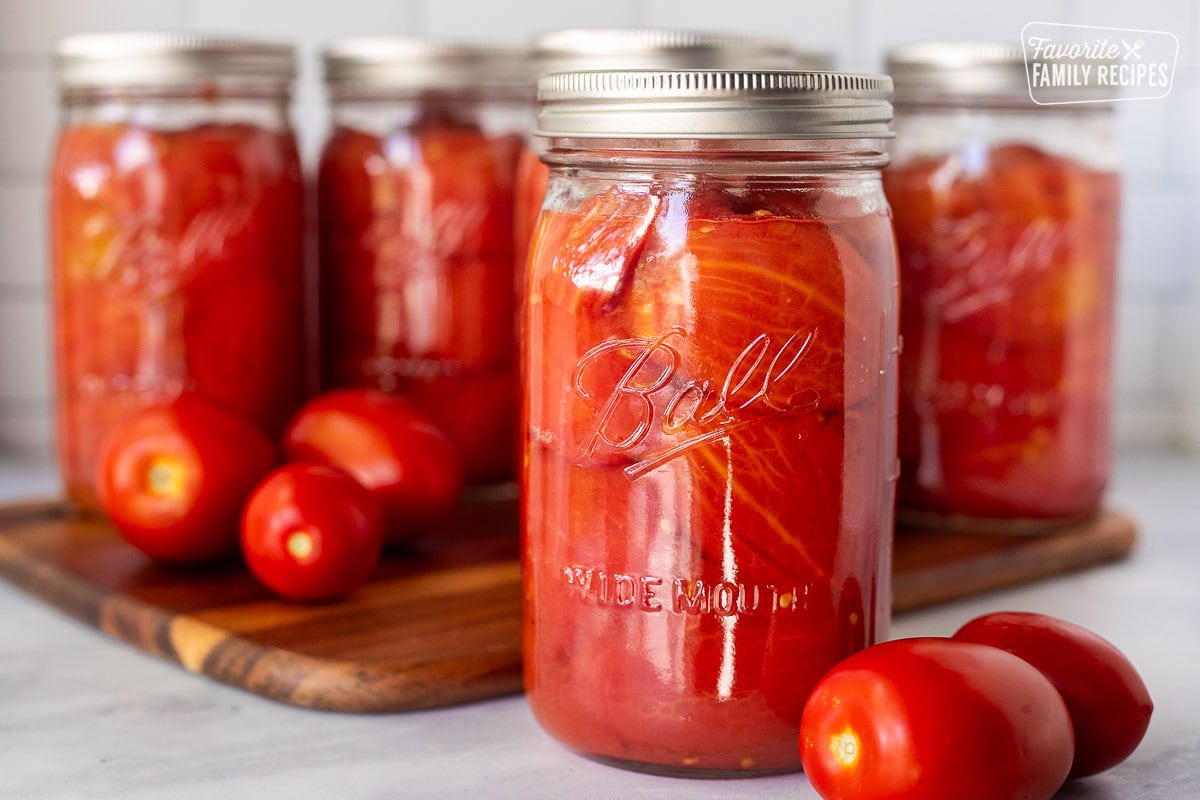
5 Star Reviews ⭐️⭐️⭐️⭐️⭐️
“Thank you for your tips on how to can whole tomatoes. It works and had excellent results!” – Natasha
“This was such a help with all my yard tomatoes! Such great step-by-steps!” – Casey
“This is so simple and easy to follow! Looking forward to using this in the future!” – Sha
Why I Love Canning Whole Tomatoes
Our family has grown and canned garden tomatoes for as long as I can remember. We make canned salsa, canned spaghetti sauce, canned diced tomatoes, and homemade tomato juice, but canning whole tomatoes is one of the easiest ways to preserve a lot of tomatoes without spending all day chopping or cooking them down. If you are new to growing tomatoes, check out our easy guide for growing the BEST tomatoes.
I also love how versatile they are. Once I open a jar, I can crush the tomatoes for sauce, blend them for soup, chop them for chili, or simmer them with herbs for an easy marinara. Roma tomatoes are my favorite because they are meaty, fit easily into jars, and hold their shape well, but you can use other firm tomato varieties too.
🩷 Heidi
Table of Contents
- 5 Star Reviews ⭐️⭐️⭐️⭐️⭐️
- Why I Love Canning Whole Tomatoes
- Best Tomatoes for Canning
- How Many Tomatoes Do I Need?
- Equipment You’ll Need
- Ingredients You’ll Need
- Ingredient Additions and Substitutions
- How to Peel and Prep Tomatoes for Canning
- Canning Whole Tomatoes Step by Step
- Processing Times by Elevation
- Raw Pack vs. Hot Pack Tomatoes
- Canning Safety
- Recipe Tips
- Frequently Asked Questions
- Troubleshooting
- Make Ahead and Storage
- Pairing Ideas
- More Canning Recipes
- How to Can Whole Tomatoes Recipe
Best Tomatoes for Canning
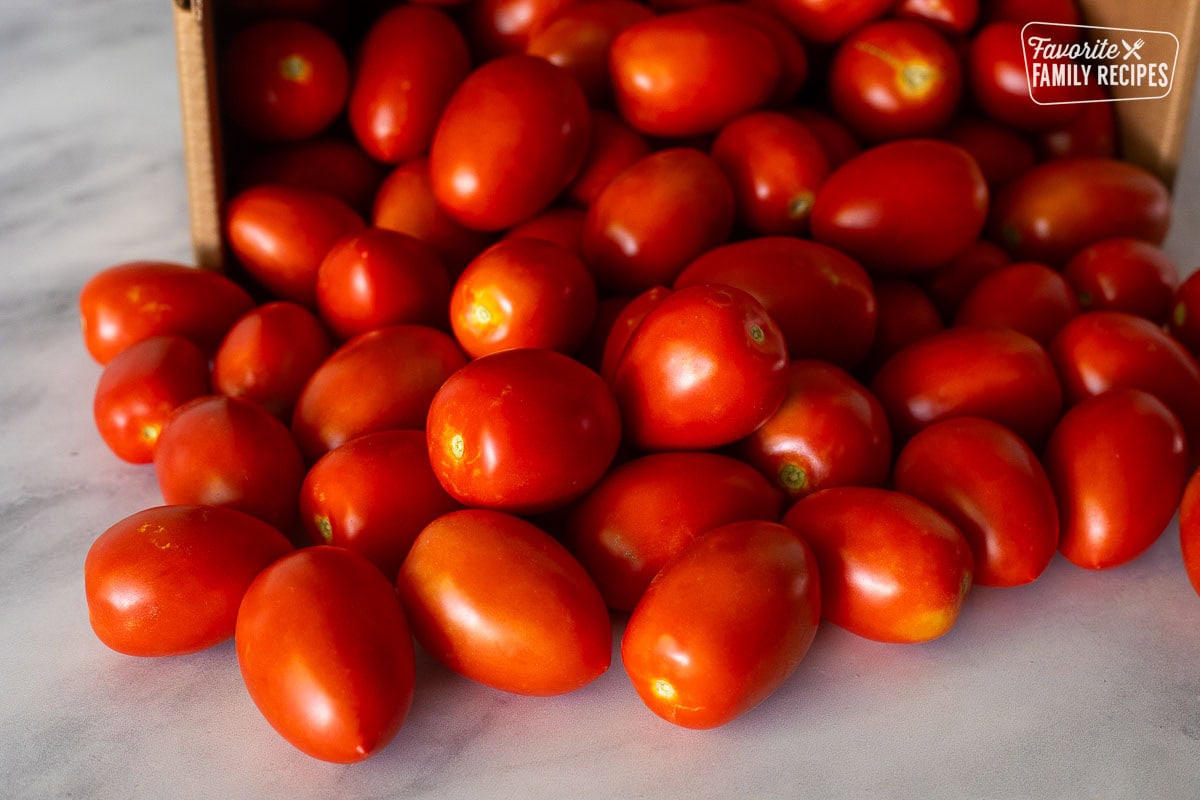
I prefer Roma, plum, or San Marzano tomatoes for canning whole. These varieties have thick flesh, fewer seeds, and less water than large slicing tomatoes. They also tend to hold their shape better during processing.
You can still use slicing tomatoes, such as Early Girl, Celebrity, or beefsteak tomatoes. They may release more juice, soften more, and need to be halved to fit through the jar opening.
Choose tomatoes that are:
- Firm and fully ripe
- Free from mold, disease, cracks, and deep bruises
- Freshly picked or recently purchased
- Not overly soft or beginning to spoil
Do not use tomatoes picked from dead or frost-killed vines. Changes in acidity can make those tomatoes unsuitable for safe home canning.
How Many Tomatoes Do I Need?
Plan on approximately 3 pounds of tomatoes for each quart jar.
- 7 quart jars: Approximately 21 pounds of tomatoes
- 6 quart jars: Approximately 18 pounds of tomatoes
- 9 pint jars: Approximately 13 pounds of tomatoes
The exact yield will vary depending on the size, variety, and water content of your tomatoes. Roma tomatoes usually fit more tightly in the jars than large slicing tomatoes.
Equipment You’ll Need
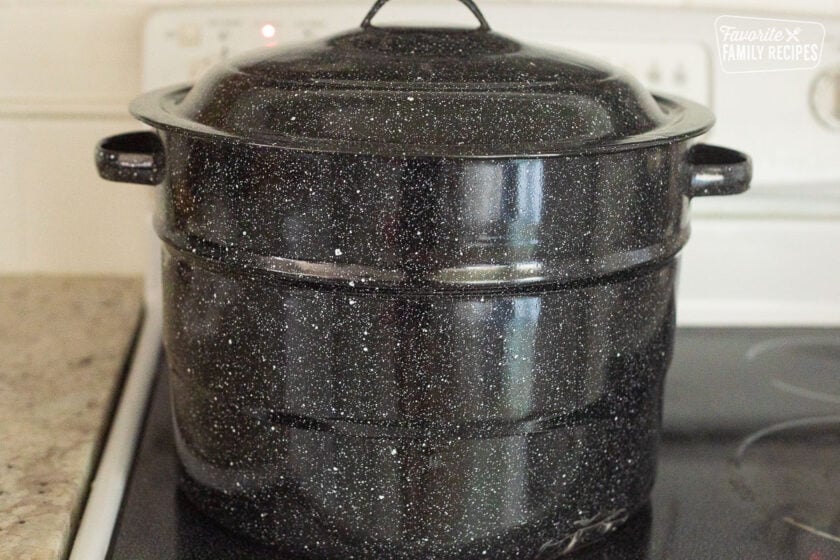
- Water bath canner with a rack: The pot must be deep enough to keep the jars covered with boiling water during processing.
- Canning jars: Use standard pint or quart canning jars without cracks, chips, or damaged rims.
- New canning lids and reusable bands: Always use a new flat lid for each jar. Bands can be reused if they are clean and free from rust or damage.
- Jar lifter: Use this to safely lift hot jars straight out of the canner.
- Canning funnel: A wide-mouth funnel makes filling the jars easier and less messy.
- Bubble remover: Use a plastic bubble remover or nonmetallic utensil to release trapped air.
- Large stockpot: You will need this for blanching the tomatoes.
- Large bowl: Fill it with ice water to quickly cool the blanched tomatoes.
- Slotted spoon: This makes moving the tomatoes from boiling water to ice water easier.
- Paring knife: Use it to remove the cores and any damaged spots.
- Clean towels: Place processed jars on a towel to protect them from sudden temperature changes.
Ingredients You’ll Need
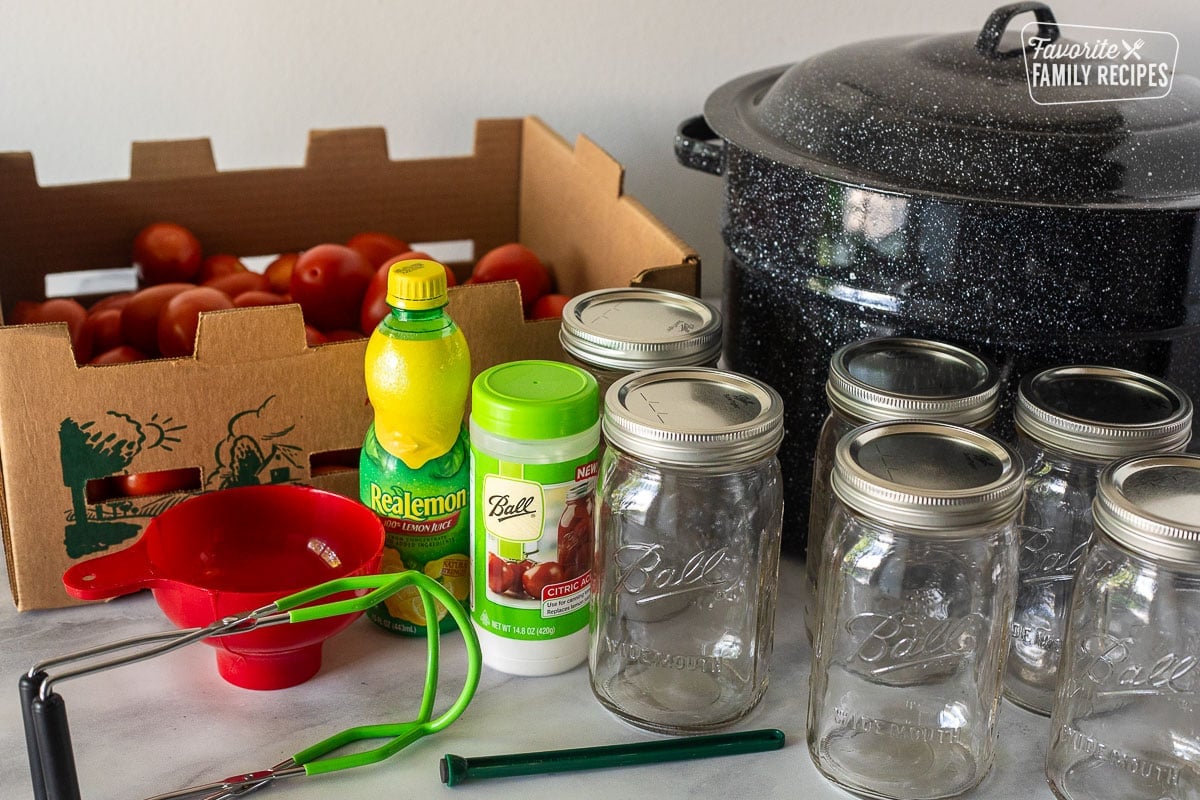
- Fresh tomatoes: Roma, plum, or San Marzano tomatoes are my first choice, but any firm, ripe, disease-free tomato can be used.
- Bottled lemon juice or citric acid: Every jar must be acidified before processing to make the tomatoes safe for water bath canning.
- Canning salt: Salt is optional and is added only for flavor. It is not required for preservation.
- Water and ice: You will need boiling water for blanching, ice water for cooling, and enough water to fill the canner.
Ingredient Additions and Substitutions
- Bottled lemon juice: Add 2 tablespoons to each quart jar or 1 tablespoon to each pint jar.
- Citric acid: Use ½ teaspoon per quart jar or ¼ teaspoon per pint jar in place of bottled lemon juice.
- Vinegar: You can use vinegar with 5 percent acidity, but it may give the tomatoes a stronger acidic flavor. Use 4 tablespoons per quart or 2 tablespoons per pint.
- Canning salt: Add 1 teaspoon per quart or ½ teaspoon per pint, if desired. You can also leave the salt out and season the tomatoes when you use them.
- Sugar: A small amount of sugar may be added to balance the tartness of the bottled lemon juice or citric acid. Sugar is not required for safe preservation.
- Tomato varieties: Paste tomatoes produce a meatier finished product, while slicing tomatoes usually release more liquid. Either type can be used when the tested recipe is followed.
- Fresh herbs, garlic, peppers, and onions: Do not add these ingredients to the jars when using this recipe. They can change the acidity and density of the contents. Add them after opening the jar.
- Boiling water or tomato juice: This recipe uses a raw pack without added liquid. Tomatoes packed in water or tomato juice require different preparation and processing instructions.
How to Peel and Prep Tomatoes for Canning
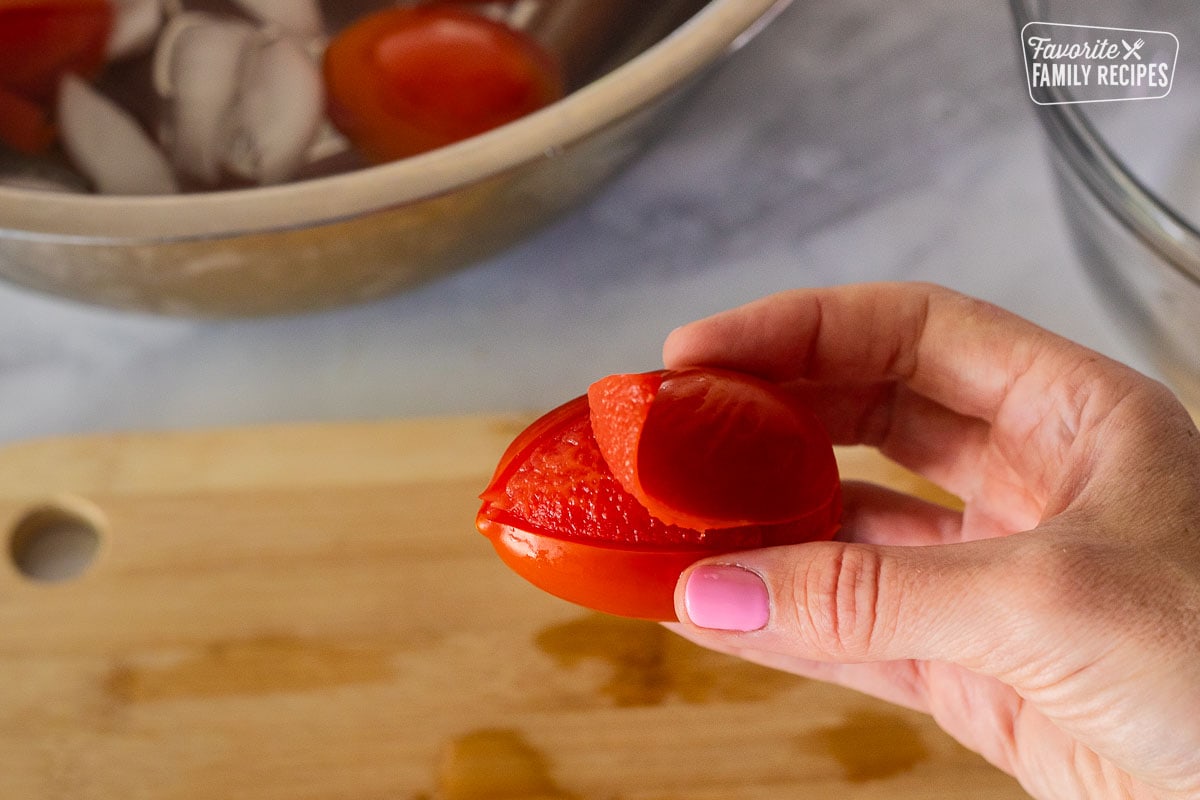
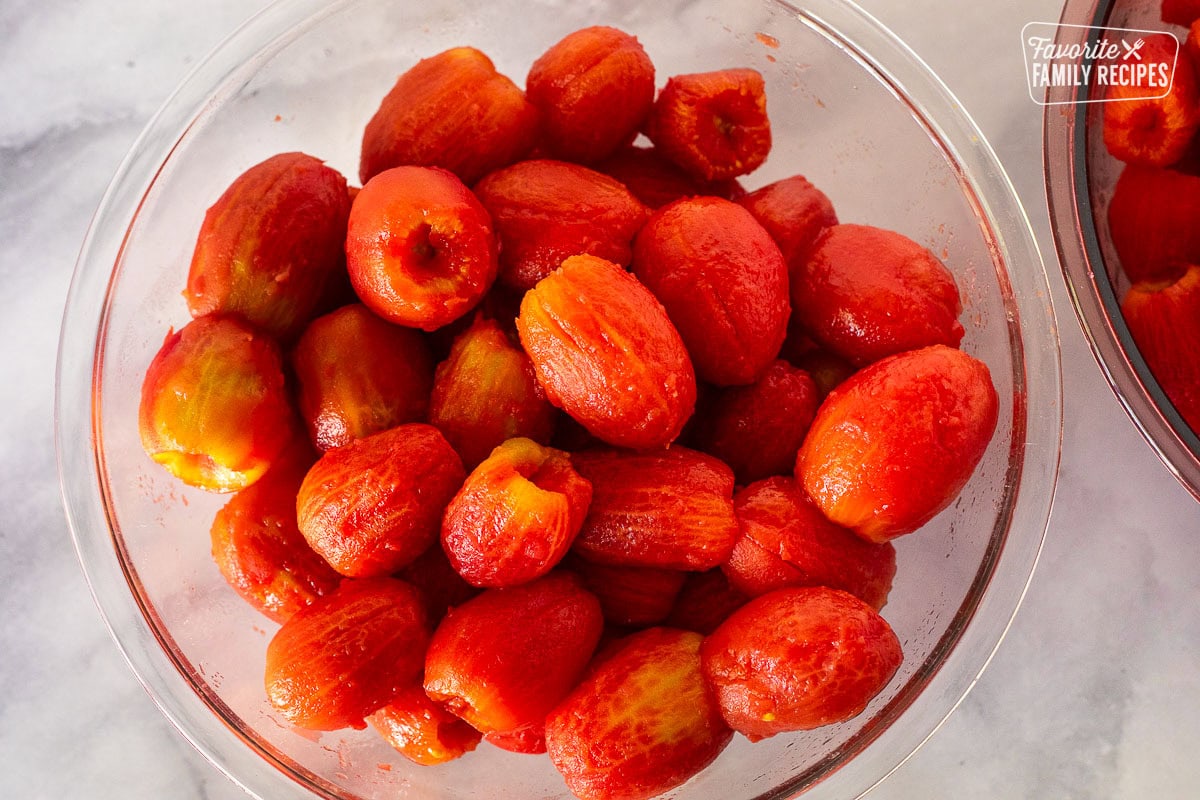
Peeling tomatoes is easy once you know the blanching trick. Scoring the bottoms helps the skins split, while the ice bath stops the tomatoes from cooking too much.
- Wash the tomatoes. Rinse them well under cool running water. Discard any tomatoes with mold or signs of spoilage, and trim away small bruised or damaged spots.
- Score the bottoms. Use a sharp paring knife to cut a shallow X into the bottom of each tomato. Cut through the skin without slicing deeply into the flesh.
- Prepare an ice bath. Fill a large bowl with cold water and plenty of ice. Set it near the stove so you can cool the tomatoes right after blanching.
- Blanch the tomatoes. Bring a large pot of water to a full boil. Lower a few tomatoes into the water at a time and boil for 30 to 60 seconds, or until the skins begin to split and pull away near the X.
- Cool and peel. Transfer the tomatoes directly to the ice bath with a slotted spoon. Once they are cool enough to handle, pull the skins away starting at the scored X.
- Core and cut as needed. Use a paring knife to remove the cores. Leave small tomatoes whole or cut larger tomatoes in half so they fit easily into the jars.
Work in small batches so the water stays at a steady boil and the tomatoes do not become too soft. If a skin does not loosen easily, return the tomato to the boiling water for another 15 to 30 seconds.

Canning Whole Tomatoes Step by Step
This gives you a quick overview of the process. You can find the exact ingredient amounts, headspace, processing times, and detailed directions in the recipe card below.
- Prepare the canner and jars. Begin heating the water in your canner, wash the jars and equipment, and keep the jars hot until you are ready to fill them.
- Blanch and peel the tomatoes. Briefly place the tomatoes in boiling water, transfer them to ice water, and remove the loosened skins and cores.
- Acidify the jars. Add the required amount of bottled lemon juice or citric acid directly to each hot jar.
- Pack the tomatoes. Fill the jars with whole or halved tomatoes, press gently to release their juices, remove trapped air, and leave the correct headspace.
- Process the jars. Place the filled jars in the boiling-water canner and process them for the amount of time required for your elevation.
- Cool and check the seals. Let the jars rest briefly in the canner, then move them to a towel and leave them undisturbed for 12 to 24 hours before checking the seals.
Processing Times by Elevation
This recipe uses a raw pack without added liquid. Both pint and quart jars use the same processing time.
| Elevation | Processing Time |
|---|---|
| 0 to 1,000 feet | 85 minutes |
| 1,001 to 3,000 feet | 90 minutes |
| 3,001 to 6,000 feet | 95 minutes |
| Above 6,000 feet | 100 minutes |
Start timing only after the water has returned to a full rolling boil.
The jars must stay covered by at least 1 inch of boiling water for the entire processing time. If the water stops boiling, bring it back to a full rolling boil and restart the processing time from the beginning.
These processing times are specifically for raw-packed whole or halved tomatoes without added water or tomato juice. Do not use shorter processing times from a different tomato-canning method.
Raw Pack vs. Hot Pack Tomatoes
There are several tested methods for canning whole or halved tomatoes. The method you choose determines how you prepare the tomatoes and how long the jars need to be processed.
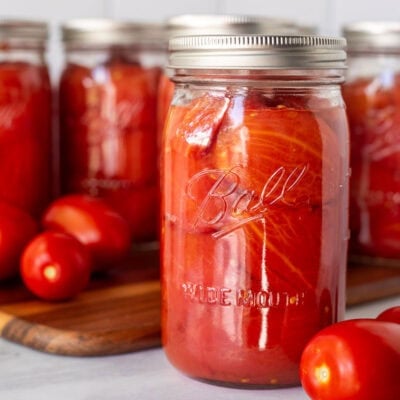
- Raw pack without added liquid: This is the method used in this recipe. Peeled tomatoes are packed into jars and gently pressed until their natural juices fill the spaces between them. It requires less preparation but has a longer processing time.
- Raw pack with boiling water: Raw tomatoes are placed in hot jars and covered with boiling water. This method has its own tested processing schedule.
- Hot pack with water: Peeled tomatoes are covered with water and boiled gently before being packed into hot jars. Hot-packed tomatoes usually fit more tightly and are less likely to float.
Do not switch between packing methods without also following the correct processing instructions for that method.
Canning Safety
Tomatoes vary in acidity. Even tomatoes that taste acidic may not be acidic enough for safe water bath canning without additional bottled lemon juice or citric acid.
- Do not skip the acidifier. Add the correct amount directly to every jar before filling it with tomatoes.
- Use bottled lemon juice, not fresh. Bottled lemon juice has standardized acidity. The acidity of freshly squeezed lemon juice can vary.
- Use the correct processing time. The 85 to 100 minute schedule is specifically for raw-packed tomatoes without added liquid.
- Adjust for altitude. Water boils at a lower temperature at higher elevations, so additional processing time is required.
- Use a true boiling-water canner. This recipe is not suitable for an atmospheric steam canner because the processing time is longer than 45 minutes.
- Do not use an Instant Pot for canning. Small electric pressure cookers are not recommended for home canning.
- Use only pint or quart jars. Do not use larger jars unless a tested recipe specifically provides instructions for that size.
- Do not add untested ingredients. Fresh basil, garlic, onions, peppers, oil, and other vegetables can affect the acidity and heat penetration of the tomatoes.
- Never taste questionable canned food. Discard jars that are leaking, bulging, foaming, spurting liquid, moldy, or have an unusual odor.
For more detailed canning information, read our Canning 101 Post, Water Bath Canning Guide, and the USDA Complete Guide to Home Canning before you begin. These guides cover equipment, jar preparation, altitude adjustments, safe processing, and how to check your finished jars.
Recipe Tips
- Check your altitude before starting. Make sure you know the correct processing time before filling the jars.
- Plan on approximately 3 pounds per quart. Keep a few extra tomatoes ready because yield can vary.
- Keep the jars hot. Filling cold jars and placing them into hot water can cause the glass to break.
- Blanch the tomatoes in small batches. Crowding the pot can lower the water temperature and cook the tomatoes unevenly.
- Watch for the skins to split. Remove the tomatoes from the boiling water as soon as the skins loosen.
- Core the tomatoes before packing. This makes them easier to use after opening the jars.
- Use a plastic bubble remover. Avoid using a metal knife, which can scratch or weaken the glass.
- Leave ½ inch headspace. Too little space can cause siphoning, while too much can interfere with the seal.
- Tighten the bands fingertip tight. The lids need to vent air while the jars are processing.
- Lift jars straight up. Do not tilt them to pour water off the lids.
- Do not press the lids while cooling. Let each jar seal naturally.
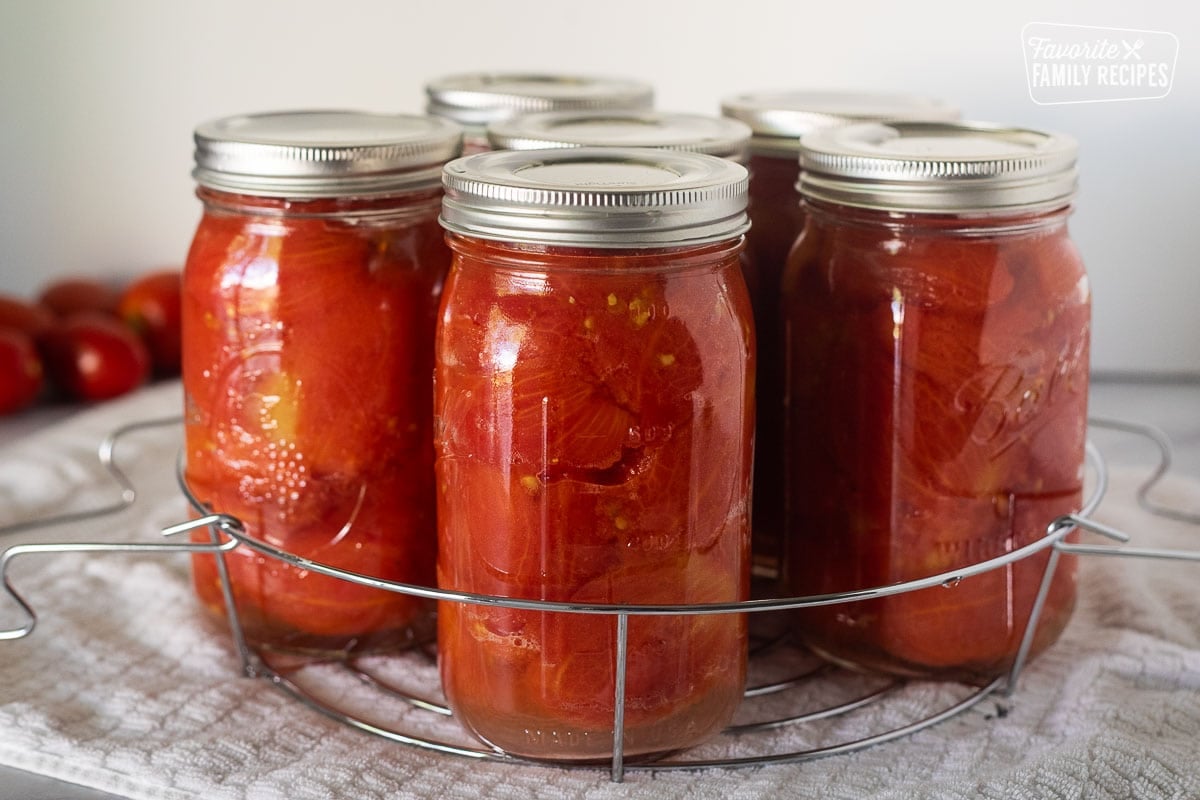
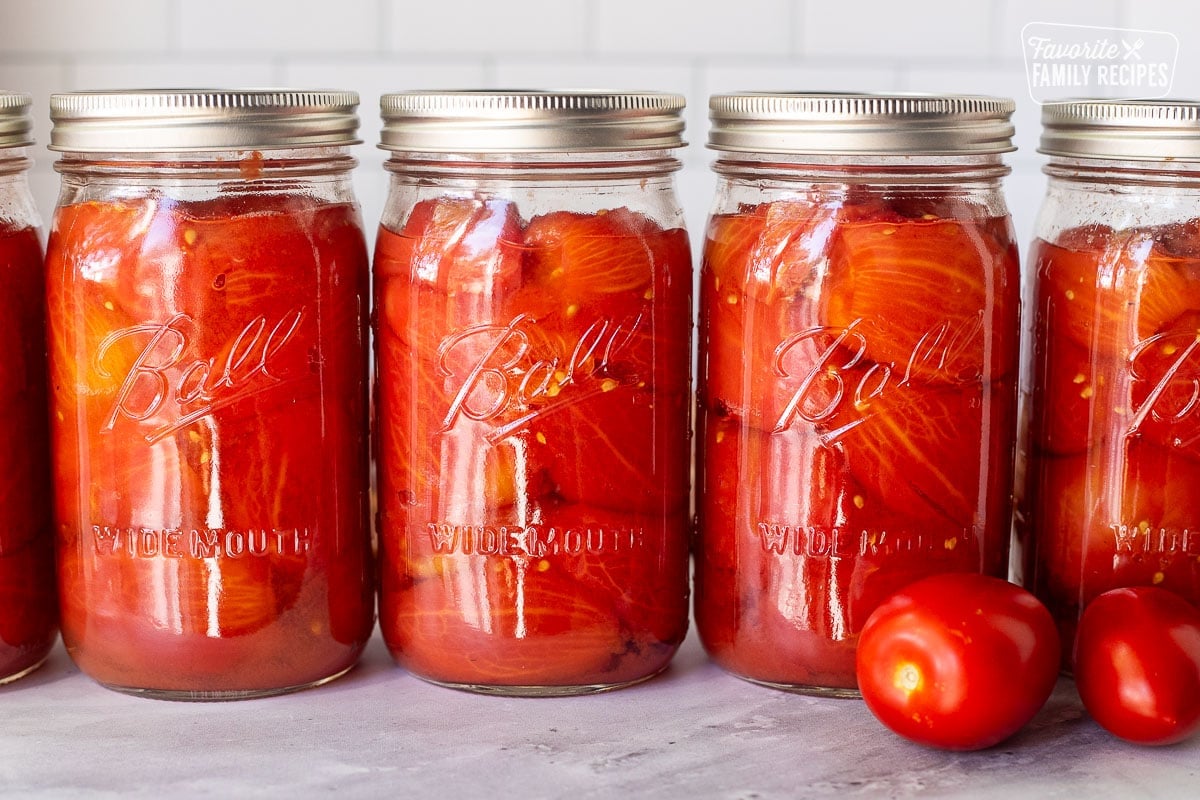
- Expect some floating. Raw-packed tomatoes often float because uncooked tomatoes contain trapped air.
- Label each jar. Write the contents and canning date on the jar so you can use the oldest jars first.
- Want to can diced tomatoes instead? Diced tomatoes are great for soups and easier to simmer down. Check out our guide for canning diced tomatoes.
Frequently Asked Questions
Yes. This tested method calls for blanching and peeling the tomatoes before they are packed into jars. Removing the skins also gives the tomatoes a better texture when you use them later.
Yes, as long as the tomatoes are firm, ripe, disease-free, and not picked from dead or frost-killed vines. Roma and plum tomatoes are easier to pack, but slicing tomatoes can also be used.
No. Use commercially bottled lemon juice because its acidity is standardized. Fresh lemon juice can vary too much in acidity.
You may notice a little extra acidity, especially if the tomatoes are naturally mild. Citric acid usually has less effect on the flavor. You can also adjust the flavor after opening the jar.
No. Salt is included only for flavor and can be reduced or left out without affecting the safety of the recipe.
Yes. Pint and quart jars use the same processing time for this raw-pack method without added liquid.
Yes, as long as they fit into the jar without being forced. Larger tomatoes can be cut in half.
Do not add fresh basil, garlic, onion, peppers, or other vegetables to the jars before canning. Add them when you open the jar and prepare your final dish.
Yes, there are tested pressure-canning methods for whole or halved tomatoes. Acidification is still required, and you must follow the exact pressure, altitude, packing, and processing instructions for that method.
You can prepare more tomatoes, but only process the number of jars that fit in your canner without crowding. Process one full canner load at a time.
These tomatoes are packed raw without added water or tomato juice. Raw tomatoes contain more trapped air and heat more slowly, so they require a longer processing time.
Troubleshooting
- The tomatoes are floating at the top of the jar.
Floating is common with raw-packed tomatoes because uncooked tomatoes contain trapped air. It can also happen when the tomatoes are packed too loosely. The tomatoes may settle during storage. - The tomatoes and juice separated.
Some separation is normal. The tomatoes may float while the clearer liquid settles toward the bottom. Stir or crush the tomatoes after opening the jar. - Liquid leaked out during processing.
This is called siphoning. It may happen when the headspace is incorrect, bands are too tight, the temperature changes suddenly, or the jars are removed too quickly. Do not open a sealed jar to replace the missing liquid. Refrigerate any jar that lost a large amount of liquid and use it promptly. - A jar did not seal.
Wait 12 to 24 hours before checking. If the lid still flexes, refrigerate the jar and use it within one week, freeze the tomatoes in a freezer-safe container, or reprocess them within 24 hours using a new lid and a tested recipe. - The lids buckled.
Buckled lids are often caused by overtightening the bands, overheating the lids, or using damaged lids. A buckled lid may not have a dependable seal. - A jar broke in the canner.
Common causes include damaged jars, sudden temperature changes, overpacked jars, or jars sitting directly on the bottom of the pot without a rack. - The water stopped boiling during processing.
Bring the water back to a full rolling boil and restart the entire processing time. - The tomatoes became darker during storage.
Some color change can happen when tomatoes are overripe, exposed to light, or stored in a warm area. Store jars in a cool, dark place. - There are bubbles inside a stored jar.
A few trapped air bubbles immediately after processing can be normal. Active bubbling, foaming, leaking, spurting liquid, or a bulging lid can indicate spoilage. Do not taste the contents.
Make Ahead and Storage
Canning whole tomatoes is best completed in one day. You can wash your jars and organize your equipment ahead of time, but blanch, peel, pack, and process the tomatoes promptly for the best quality.
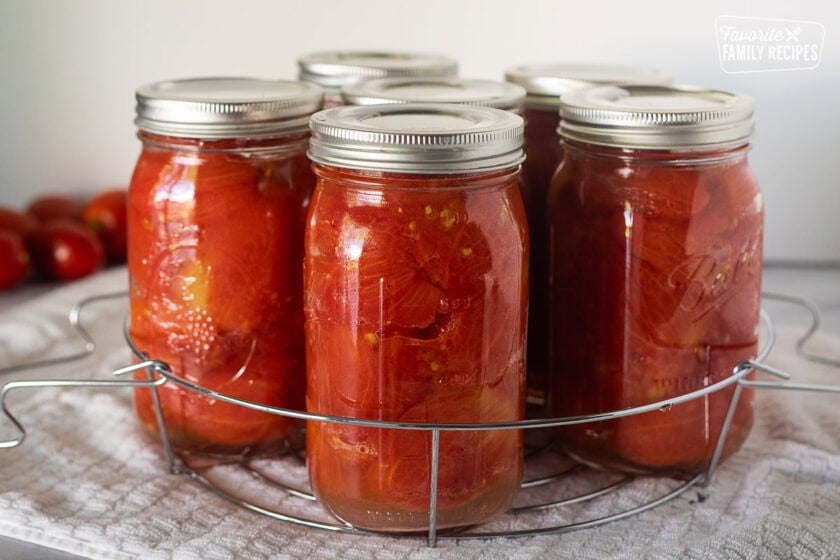
Allow the processed jars to cool undisturbed for 12 to 24 hours. Remove the screw bands, check the seals, and wash and dry the jars before storing them.
Store sealed jars in a clean, cool, dark, and dry place. For the best flavor, color, and texture, use home-canned tomatoes within one year.
Do not store jars above the stove, near a furnace, in direct sunlight, in a damp basement, or anywhere that becomes very hot.
After opening a jar, transfer any leftovers to a covered container, refrigerate them, and use them within 3 to 4 days.
Pairing Ideas
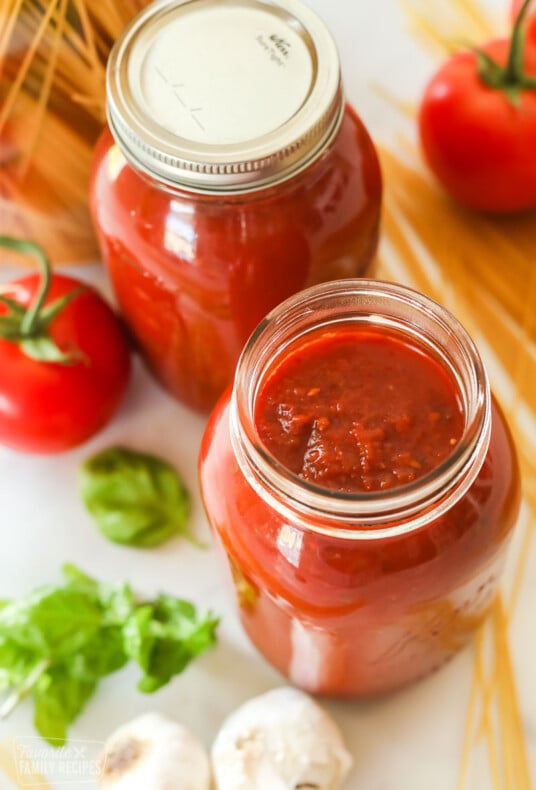
Now for the really fun part, using your canned tomatoes in recipes! I love using my tomatoes in soups, sauces, with braised meats, salsas, and so much more! You can use a potato masher and crush them for spaghetti sauce with fresh tomatoes or puree them for flavorful tomato soups. You can also crush and simmer for a long amount of time to create a homemade tomato puree to use for homemade pizza sauce or for a marinara dipping sauce. Crush and add with meatballs and seasoning to make Instant Pot Meatballs for spaghetti or meatball subs. Chop them up and add them to chicken tortilla soup, easy chili, or Chili’s salsa copycat recipe. The possibilities are endless!
More Canning Recipes
- Canning Homemade Tomato Juice
- How to Can Peaches
- How to Can Pears
- Pickled Beets
- Virginia Chunk Sweet Pickles
- Jalapeño Jelly
Once you know how to can whole tomatoes, preserving a big tomato harvest feels much more manageable. I love having these jars ready for quick soups, sauces, and dinners throughout the year.
Give this recipe a try, then leave a comment and a star rating below to let me know how your tomatoes turned out! 💛🍅
How to Can Whole Tomatoes
Ingredients
- 18 pounds tomatoes, firm and ripe
- 12 tablespoons bottled lemon juice, or 3 teaspoons Citric Acid
- 6 teaspoons canning salt, optional
- water and ice, for blanching and processing
Instructions
Prepare quart jars and lids:
- Fill a boiling-water canner with enough water to cover the filled jars by at least 1 inch. Place the canner rack inside and begin heating the water.

- Wash the jars, lids, and bands in hot, soapy water. Rinse well and keep the jars hot until ready to fill. Do not boil modern canning lids unless the manufacturer specifically instructs you to do so.
- Add 2 tablespoons bottled lemon juice or ½ teaspoon citric acid to each hot quart jar. Add 1 teaspoon canning salt to each jar, if desired.


Remove tomato skins:
- Wash the tomatoes and remove any bruised or damaged areas. Use a sharp paring knife to cut a shallow X through the skin on the bottom of each tomato. Fill a large bowl with ice water. Working in batches, lower the tomatoes into boiling water for 30 to 60 seconds, or until the skins begin to split.
- Using a slotted spoon, quickly remove the tomatoes and plunge them into the ice-water bath.
- Slip the skins from the tomatoes and remove the cores. Leave small tomatoes whole. Cut larger tomatoes in half if needed to fit easily into the jars.


For whole tomatoes:
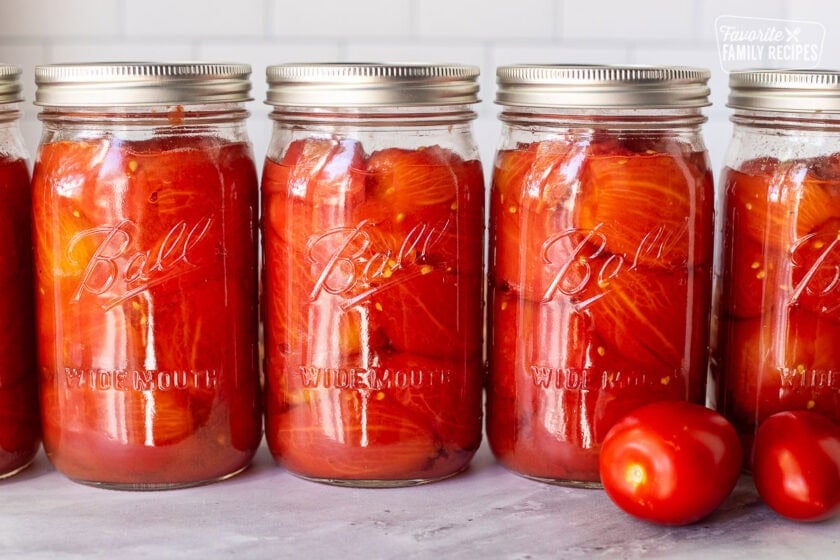
- Pack the tomatoes into the hot jars. Press the tomatoes gently until their natural juices fill the spaces between them. Do not add water. Leave ½ inch headspace.
- Slide a plastic bubble remover or spoon around the inside of each jar to release trapped air.
- Add more tomatoes if needed to maintain ½ inch headspace.


Now it’s time to process:
- Make sure jar rims, lids and rings are clean before placing the lids on the mouth of the jars.
- Center a new lid on each jar and apply the band until fingertip tight. Do not overtighten. Place the filled jars on the canner rack and lower them into the canner. Make sure the jars are covered with at least 1 inch of water. Cover the canner and bring the water to a full rolling boil.
- Process the jars in a water-bath and process accordingly depending on your elevation: 85 minutes for up to 1,000 feet, 90 minutes for 1,001-3,000 feet, 95 minutes for 3,001-6,000 feet, and 100 minutes for 6,000+ feet.Keep the water at a full rolling boil for the entire processing time. If the water stops boiling, return it to a full boil and restart the processing time from the beginning.
- When the processing time is complete, turn off the heat and remove the canner lid. Let the jars rest in the canner for 5 minutes. Lift the jars straight out of the canner and place them upright on a towel. Do not tilt the jars, press the lids, or retighten the bands.
- Let the jars cool undisturbed for 12 to 24 hours. Check each seal by pressing the center of the lid. A properly sealed lid should not flex up and down. Remove the bands, wash and dry the jars, label them with the date, and store them in a cool, dark, dry place.


Equipment
- Glass jars, quart size wide mouth
- canning lids and rings
- water canner pot with rack
- canning jar lifter
Notes
- Plan on approximately 3 pounds of tomatoes for each quart jar.
- Use only firm, ripe, disease-free tomatoes.
- Do not can tomatoes from dead or frost-killed vines.
- Add acid directly to every jar before filling.
- Use bottled lemon juice, not freshly squeezed lemon juice.
- Use 2 tablespoons bottled lemon juice or ½ teaspoon citric acid per quart.
- For pint jars, use 1 tablespoon bottled lemon juice or ¼ teaspoon citric acid.
- Salt is optional and is added only for flavor.
- This recipe uses a raw pack without added liquid.
- Leave ½ inch headspace.
- Pint and quart jars use the same processing time for this method.
- Process for 85 to 100 minutes, depending on elevation.
- Do not use an atmospheric steam canner for this recipe.
- Do not add fresh herbs, garlic, onion, peppers, oil, or other vegetables.
- Cool the jars undisturbed for 12 to 24 hours before checking the seals.
- Store sealed jars without the screw bands in a cool, dark, dry place.
- Use within one year for the best quality.
- Refrigerate opened tomatoes and use within 3 to 4 days.
Nutrition
Nutrition information is automatically calculated, so should only be used as an approximation.
Love this recipe?
We want to hear from you! Please leave a review.

i canned tomatos this season (italian plum/san marzano) the juice is very watery, tomatoes were drained before running through machine, any suggestions why so liquidy
Excess liquid when canning whole tomatoes is primarily caused by the tomatoes natural water content being released during the canning process. This is perfectly fine.
Thank you for your tips on how to can whole tomatoes. It works and had excellent results!
This was such a help with all my yard tomatoes! Such great step-by-steps!
This is so simple and easy to follow! Looking forward to using this in the future!