
We may earn a commission when you click on the affiliate links in this post.
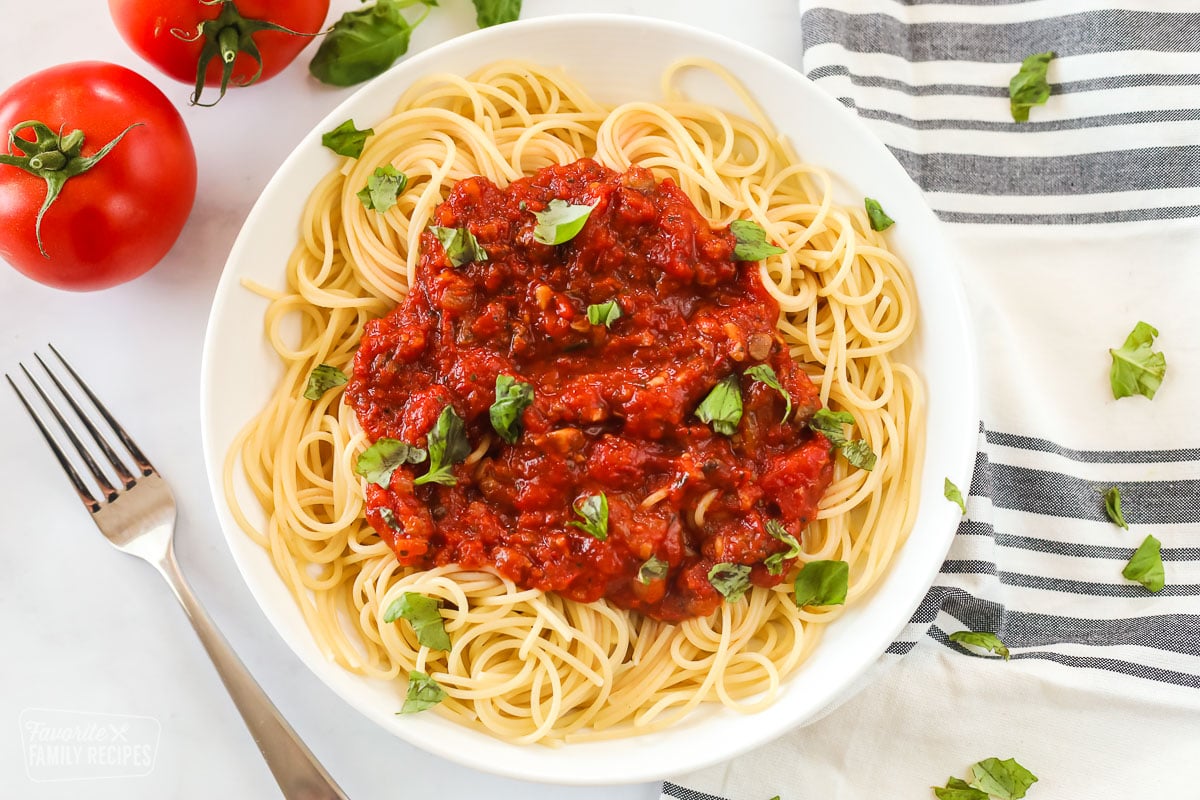
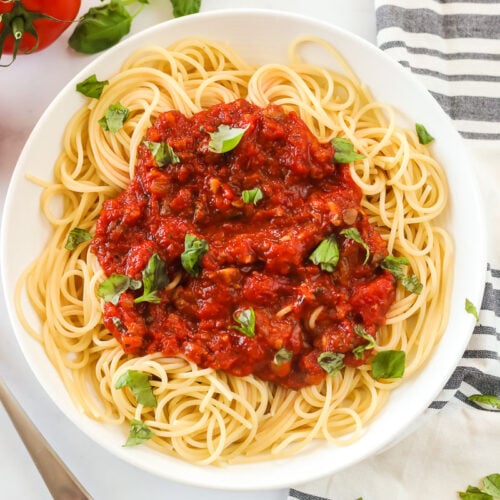
This Homemade Spaghetti Sauce with Fresh Tomatoes is one of the best ways to use ripe garden tomatoes. It is thick, hearty, and filled with onions, mushrooms, garlic, fresh herbs, and plenty of rich tomato flavor. Serve it over spaghetti, use it in lasagna, or make a double batch to freeze for an easy dinner later.
5 Star Reviews ⭐️⭐️⭐️⭐️⭐️
“My husband said it was the best pasta sauce I have ever made. The depth of flavor and simplicity was similar to what we experienced in Italy. It will be my go to recipe from now on.” – LuAnne
“By far the best sauce I’ve ever made. The soy sauce in the mushrooms adds a deep richness. You will never regret making this.” – Carolyn
“Absolutely love this recipe! 2nd time I’ve made it this summer, with the abundance of tomatoes my garden has produced. Thank You! This recipe is definitely a keeper.” – Cheryl
Why I Love This Sauce
I have been making homemade spaghetti sauce with fresh tomatoes for years, especially when our garden tomatoes are coming on faster than we can eat them. The flavor is so much fresher than sauce from a jar, and I love being able to adjust the texture and seasonings as it cooks.
The mushrooms give the sauce a hearty texture, and my little trick of adding soy sauce to the mushrooms brings out a rich, savory flavor without making the sauce taste like soy sauce. Fresh basil, oregano, garlic, and slowly simmered tomatoes finish it off. It takes a little longer than opening a jar, but most of that time is hands-off simmering, and the flavor is well worth it.
This sauce is also very flexible. You can keep it meatless, add ground beef or sausage, leave it chunky, blend it smooth, or roast the tomatoes first for even more concentrated flavor.
🩷 Erica
Table of Contents
- 5 Star Reviews ⭐️⭐️⭐️⭐️⭐️
- Why I Love This Sauce
- Ingredients You’ll Need
- Ingredient Additions and Substitutions
- Make It a Meat Sauce
- How to Make Spaghetti Sauce with Fresh Tomatoes
- Best Tomatoes to Use
- Roasting Fresh Tomatoes
- No Fresh Tomatoes? No Problem!
- Recipe Tips
- Frequently Asked Questions
- Troubleshooting
- Make Ahead and Storage
- Pairing Ideas
- More Homemade Pasta Sauce Recipes
- Homemade Spaghetti Sauce with Fresh Tomatoes Recipe
Ingredients You’ll Need
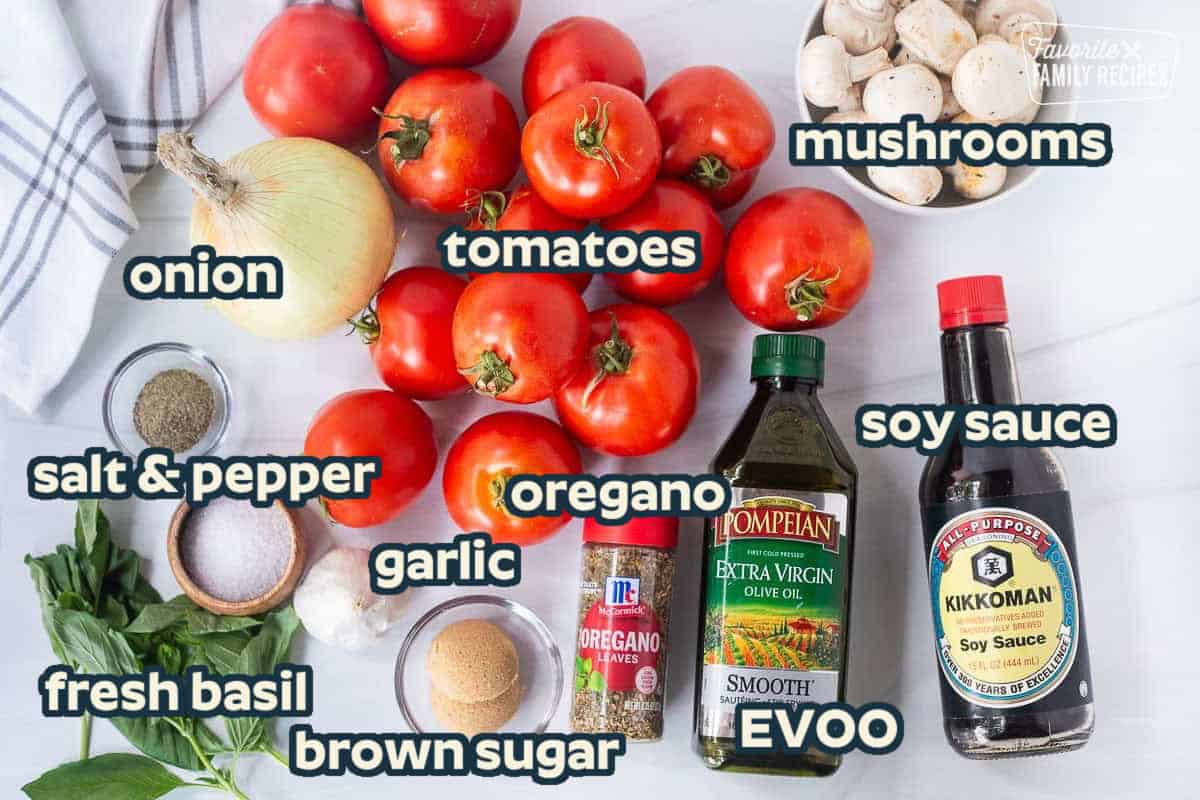
- Fresh tomatoes: Ripe garden tomatoes give this sauce its fresh flavor, but good-quality canned tomatoes will also work when tomatoes are not in season.
- Olive oil: Used to soften the onion and mushrooms and create the flavorful base of the sauce.
- Onion: A chopped yellow, white, or sweet onion adds a mild sweetness and savory flavor.
- Mushrooms: Fresh chopped mushrooms give the meatless sauce a hearty texture and rich flavor.
- Soy sauce: A small amount brings out the savory flavor of the mushrooms without making the finished sauce taste like soy sauce.
- Garlic: Freshly minced garlic adds the best flavor, but jarred minced garlic can be used when needed.
- Fresh herbs: Fresh basil and oregano give the sauce a bright, garden-fresh flavor.
- Brown sugar: Start with a small amount and add more only if the tomatoes taste especially acidic.
- Salt and pepper: Add these gradually and taste the sauce as it simmers.
Ingredient Additions and Substitutions
This fresh tomato spaghetti sauce is easy to adjust based on what you have in the garden or refrigerator.
- Bell peppers: Add chopped red, yellow, or green bell peppers with the onion.
- Carrots: Finely grated carrots add natural sweetness and help give the sauce more body.
- Zucchini: Stir in finely chopped zucchini for more vegetables and a chunkier sauce.
- Red pepper flakes: Add a pinch for a little heat.
- Red wine: Pour in a splash after sautéing the vegetables and let it simmer for a few minutes before adding the tomatoes.
- Tomato paste: Add one tablespoon at a time when you want a thicker or more concentrated sauce.
- Fresh parsley: Add chopped parsley with the basil or sprinkle it over the sauce before serving.
- Dried herbs: Substitute dried basil and oregano when fresh herbs are not available. Because dried herbs are more concentrated, use a smaller amount.
- No mushrooms: Leave them out or replace them with finely chopped bell peppers, carrots, or zucchini.
- Gluten-free option: Replace regular soy sauce with certified gluten-free tamari or gluten-free soy sauce.
- Vegetarian option: Keep the sauce as written and check that your soy sauce is vegetarian.
Make It a Meat Sauce
You can easily turn this into a hearty spaghetti meat sauce.
Brown about one pound of ground beef, ground pork, Italian sausage, ground turkey, or a mixture of meats. You can cook the meat with the onion or brown it separately and drain any extra grease before adding it to the sauce.
Continue with the recipe as written and let the meat simmer with the tomatoes and seasonings. The longer simmering time helps the meat flavor blend into the sauce.
You can also add cooked meatballs, shredded beef short ribs, or sliced Italian sausage. For another option, try our homemade meat sauce.
How to Make Spaghetti Sauce with Fresh Tomatoes
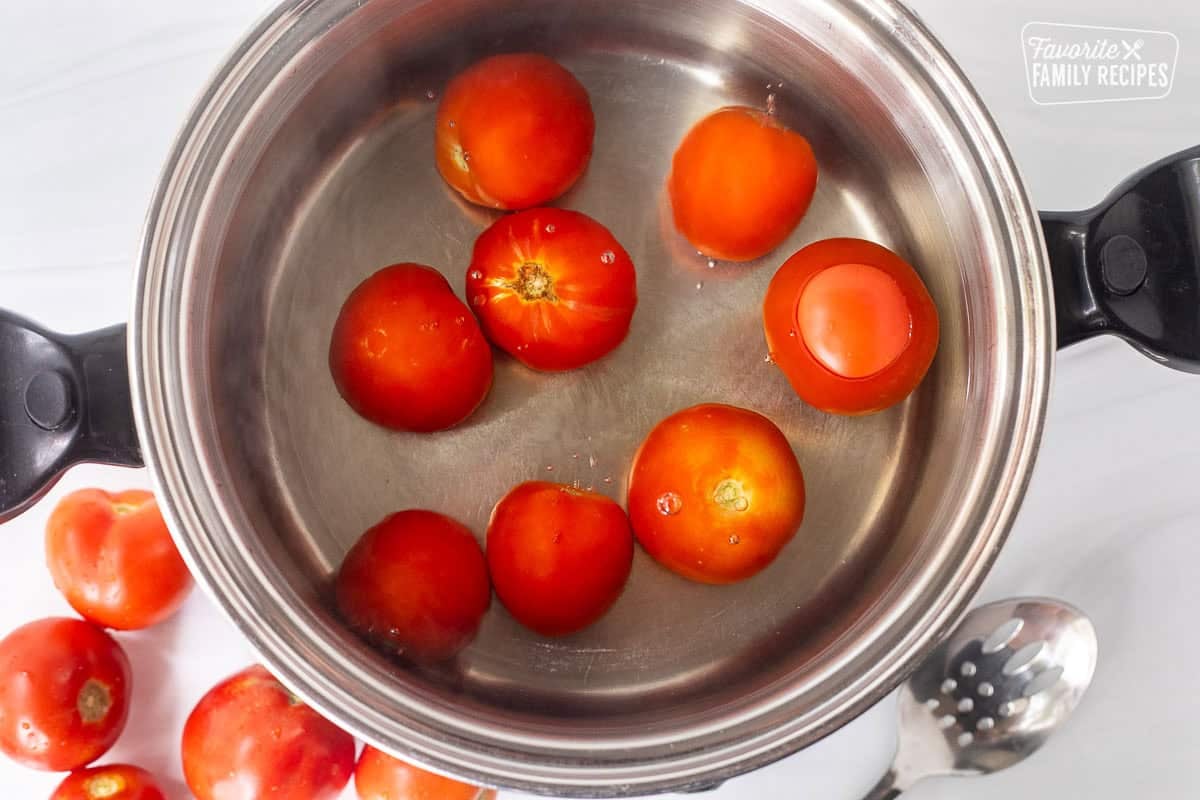
- Blanch the tomatoes. Cut a shallow X in the bottom of each tomato. Lower a few tomatoes at a time into boiling water and cook for 30 to 60 seconds, or until the skins begin to loosen. Transfer them immediately to a bowl of ice water.
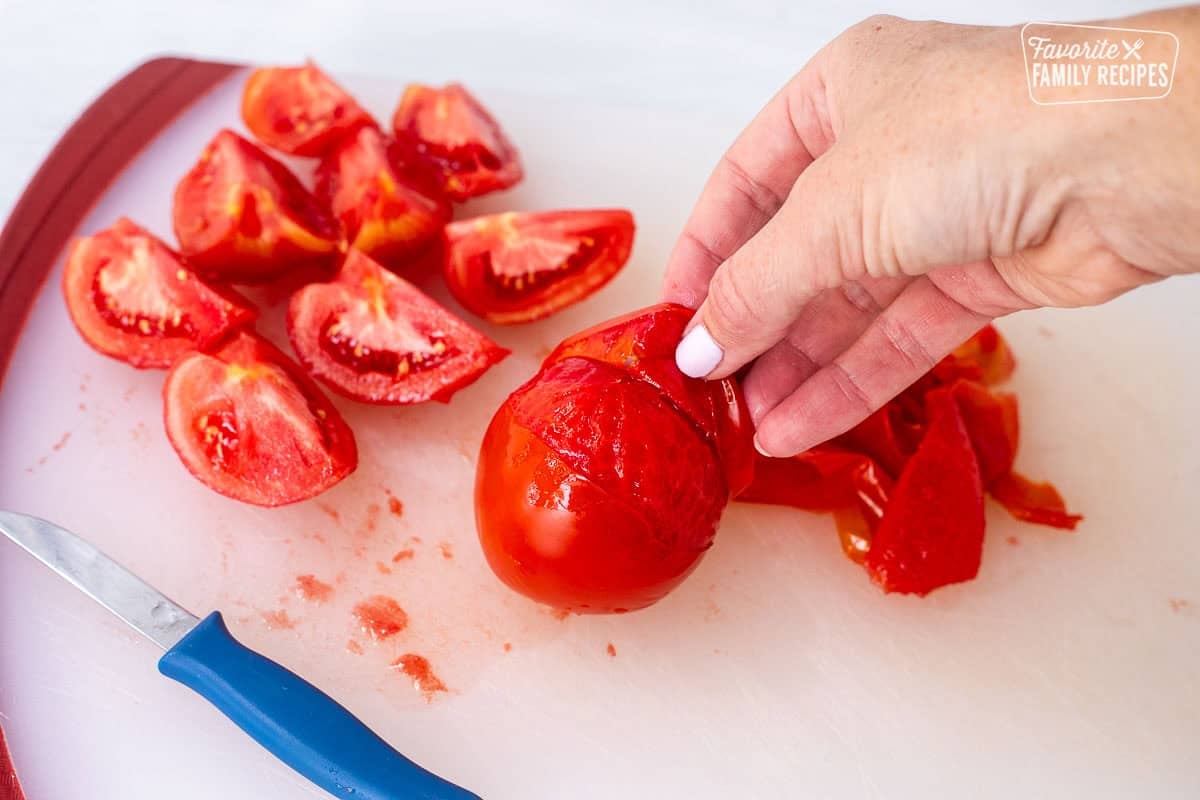
- Peel and crush the tomatoes. Remove the skins and tough stem areas, then cut the tomatoes into quarters. Pulse them a few times in a food processor or blender until they look like crushed tomatoes. Do not completely purée them unless you want a smooth sauce.
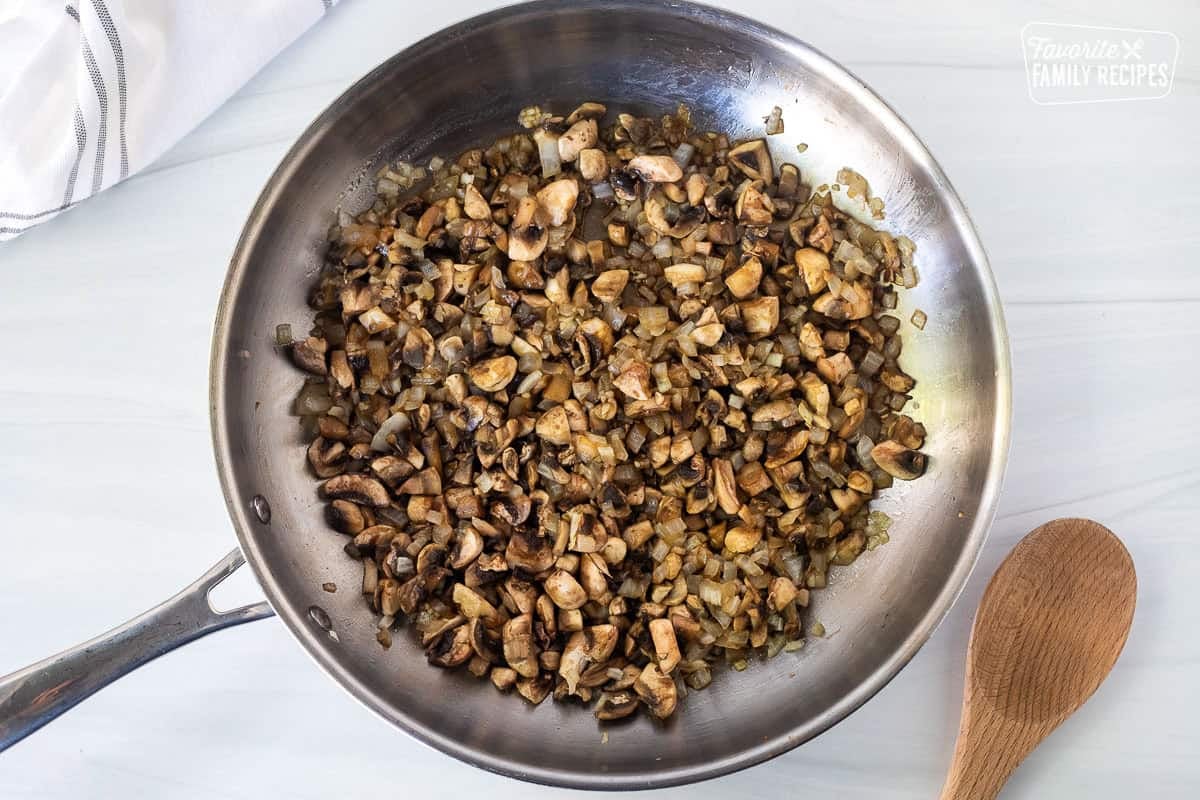
- Cook the vegetables. Heat the olive oil in a large, heavy pot. Add the onion and cook until softened. Add the mushrooms and cook for a few more minutes. Stir in the soy sauce and garlic, then cook just until the garlic is fragrant.
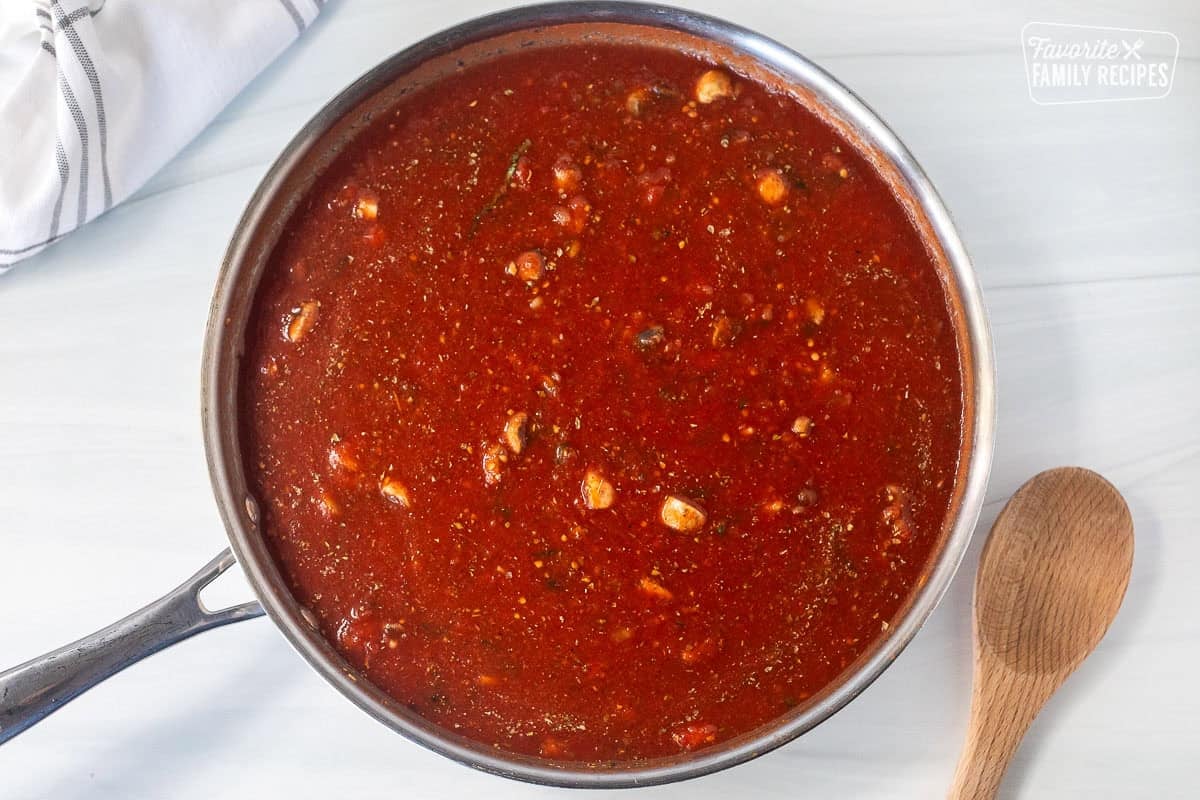
- Add the tomatoes and seasonings. Stir in the crushed tomatoes, basil, oregano, brown sugar, salt, and pepper. Bring the mixture to a gentle simmer.
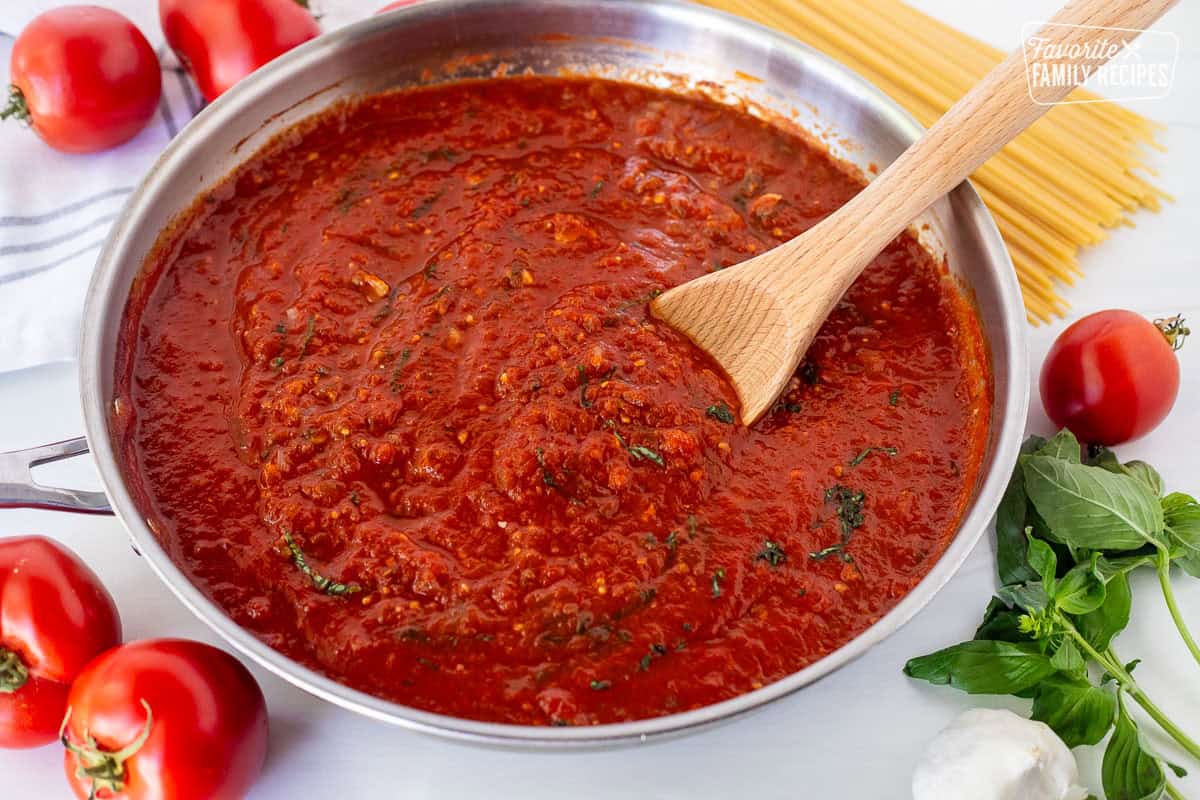
- Simmer the sauce. Cook uncovered for at least one hour, stirring occasionally and scraping the bottom of the pot. For a deeper flavor, simmer it longer. When simmering for more than two hours, cover the pot during the first hour, then uncover it so the sauce can reduce.

- Taste and serve. Taste the sauce and adjust the salt, pepper, sugar, or herbs as needed. Serve over hot pasta or use it in your favorite pasta recipe.
Best Tomatoes to Use
The best tomatoes for spaghetti sauce are ripe, flavorful tomatoes with plenty of flesh and not too much water.
- Roma or plum tomatoes are my first choice because they are meaty, have fewer seeds, and cook into a naturally thick sauce. Fresh San Marzano-style tomatoes are another good option when you can find them.
- Heirloom tomatoes add wonderful flavor, but some varieties contain more liquid. They may need a longer simmering time.
- Beefsteak tomatoes work well, especially when they are fully ripe, but they are usually juicier than Roma tomatoes. Combining them with paste tomatoes gives the sauce a good balance of flavor and texture.
- Cherry and grape tomatoes are naturally sweet and can be added to other tomato varieties. They are especially good when roasted first.
I often use a mixture of whatever ripe tomatoes are coming out of the garden. Tomato size and water content can vary quite a bit, so let the consistency of the sauce guide your cooking time.
For help growing your own tomatoes, take a look at our tips and tricks for growing tomatoes.
Roasting Fresh Tomatoes
Roasting the tomatoes first is optional, but it concentrates their flavor and brings out their natural sweetness. This is especially helpful when your tomatoes are juicy or a little less flavorful.
- Preheat the oven to 375 degrees F and line a large baking sheet with parchment paper.
- Cut the tomatoes in half. Scoop out some of the loose seeds and gel, then place the tomatoes cut-side down on the baking sheet.
- Roast until the skins blister and the edges begin to brown, about 30 to 45 minutes depending on the size and variety of the tomatoes.
- Pour any liquid from the baking sheet through a strainer and save it.
- Let the tomatoes cool enough to handle, then pull off the loosened skins.
- Add the roasted tomatoes and strained juices to the sauce pot and continue with the recipe.
Small cherry or grape tomatoes can be roasted with chopped onion, garlic, bell pepper, and a little olive oil. Their skins are thin enough that you can usually blend everything together without peeling them.
No Fresh Tomatoes? No Problem!
Home-grown tomatoes are delicious in this recipe but fresh, garden tomatoes can be hard to come by year-round. Whenever we can’t use fresh tomatoes, we always use DOP San Marzano Tomatoes. They are THE best alternative to homegrown tomatoes. We even use San Marzano tomatoes before resorting to store-bought tomatoes. For this recipe we use two 28oz. cans of tomatoes. We prefer using whole tomatoes as opposed to crushed tomatoes (most DOP tomato brands only come with whole tomatoes) and simply mash them with a potato masher as the sauce cooks down.
Recipe Tips
- Use a wide, heavy pot. A wider surface helps moisture evaporate so the sauce thickens more quickly.
- Choose very ripe tomatoes. Underripe tomatoes can make the sauce taste sour or flat.
- Do not overprocess the tomatoes. A few quick pulses will give you the texture of crushed tomatoes without turning them into juice.
- Cook the garlic briefly. Garlic can become bitter when burned, so add it after the onion and mushrooms have softened.
- Keep the heat low. The sauce should gently bubble rather than boil rapidly.
- Stir more often as the sauce thickens. Thick tomato sauce can stick and scorch on the bottom of the pot.
- Wait before adding all the sugar. Taste the tomatoes first, then begin with the smaller amount and add more only when needed.
- Salt gradually. Soy sauce already contains salt, so taste the sauce before adding the full amount.
- Blend for a smoother sauce. Use an immersion blender directly in the pot, or carefully blend part of the sauce and stir it back in.
- Add pasta water when serving. A small splash of starchy pasta water can help the sauce coat the noodles.
- Make a double batch. This sauce freezes well and makes an easy base for future pasta dinners, lasagna, and sandwiches.
Frequently Asked Questions
The soy sauce is added to the mushrooms rather than directly to the finished sauce. It brings out their deep, savory flavor, similar to the way I prepare sautéed mushrooms. The finished sauce should not taste like soy sauce. You can use low-sodium soy sauce, gluten-free tamari, or leave it out.
Simmer the sauce uncovered so excess water can evaporate. A wide pot will help it reduce more quickly. You can also add tomato paste one tablespoon at a time or blend part of the sauce with an immersion blender. Remember that the sauce will continue to thicken slightly as it cools.
Peeling the tomatoes gives the sauce a smoother texture, but it is not required. You can leave the skins on if you do not mind a more rustic texture. Blend the tomatoes well if you are keeping the skins.
No. I remove the rough stem area, but I do not usually remove all the seeds. You can scoop them out if you prefer a smoother sauce or if your tomatoes contain a lot of watery seed gel.
Yes. Sauté the onion, mushrooms, garlic, and soy sauce on the stovetop first. Transfer everything to a slow cooker and cook on LOW for 6 to 8 hours or HIGH for 3 to 4 hours. Leave the lid slightly cracked during the last hour if the sauce needs to thicken.
This particular recipe has not been tested for safe home canning, and it contains low-acid ingredients such as onions and mushrooms. Do not use it as a canning recipe. Use our tested canned spaghetti sauce recipe when you want shelf-stable sauce.
The final amount depends on how juicy the tomatoes are and how long you reduce the sauce. It generally makes about 5 to 7 cups, or approximately six 1-cup servings.
Yes. Fully ripe tomatoes may not need much added sugar. You can also add finely grated carrot with the onion for natural sweetness or add a splash of red wine. Taste the finished sauce before deciding whether it needs any sugar.
Yes. Granulated sugar will balance the acidity, but brown sugar adds a slightly deeper flavor. Begin with a small amount of either one and add more only as needed.
Marinara is usually a simpler tomato sauce made with tomatoes, garlic, herbs, and olive oil. Spaghetti sauce is a broader term and may include onions, mushrooms, vegetables, meat, or additional seasonings. This recipe is heartier than a basic marinara but can still be used anywhere you would normally use pasta sauce.
Yes. Add a splash of dry red wine after the onion and mushrooms have cooked. Let it simmer for two or three minutes before adding the tomatoes so the flavor has time to concentrate.
Troubleshooting
- The sauce is too thin: Continue simmering it uncovered. You can also add tomato paste one tablespoon at a time or blend some of the tomatoes into the sauce.
- The sauce is too thick: Stir in a small amount of water, broth, reserved tomato juice, or pasta cooking water until it reaches the consistency you like.
- The sauce tastes too acidic: Let it simmer longer, then add a small amount of brown sugar or finely grated carrot. Add only a little at a time and taste after each addition.
- The sauce is too sweet: Add more tomatoes, a pinch of salt, or a small splash of red wine or red wine vinegar to bring the flavors back into balance.
- The sauce tastes bland: It may need more salt, garlic, oregano, basil, or red pepper flakes. Tomatoes can vary greatly in flavor, so taste and adjust as the sauce cooks.
- The sauce is too salty: Add more unsalted tomatoes or a little water. Avoid adding more salt or soy sauce until the sauce has reduced.
- The sauce is sticking to the pot: Reduce the heat and stir more frequently. A heavy-bottomed pot will distribute the heat more evenly and help prevent scorching.
- The vegetables are too chunky: Blend the sauce with an immersion blender until it reaches the texture you want.
Make Ahead and Storage
This sauce is a great make-ahead recipe because the flavor gets even better after the ingredients have had time to sit together.
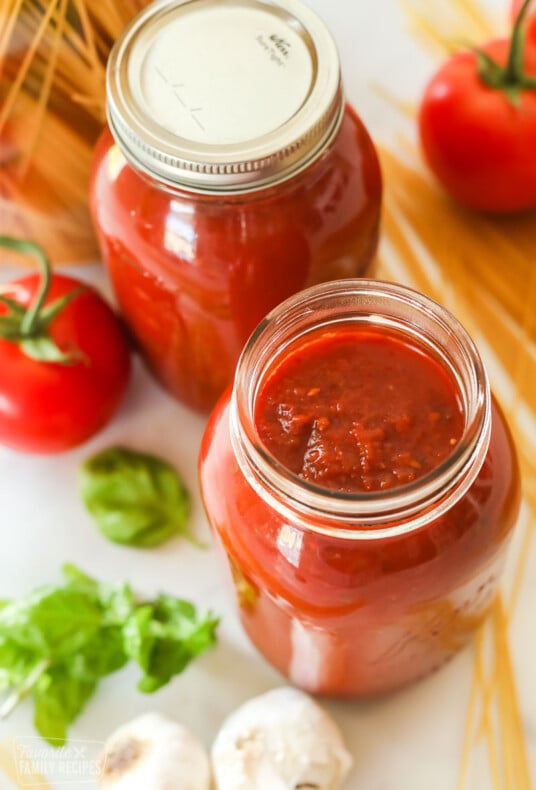
Allow the sauce to cool, then transfer it to an airtight container. Store it in the refrigerator for 3 to 4 days.
To freeze the sauce, cool it completely in the refrigerator first. Transfer it to freezer-safe containers, glass jars, or resealable freezer bags. Leave room at the top of rigid containers and jars because the sauce will expand as it freezes.
Freezer bags can be laid flat until frozen and then stacked to save space. The sauce can be frozen for up to six months, although the flavor and texture are best within the first three months.
Thaw frozen sauce overnight in the refrigerator. Reheat it in a saucepan over medium-low heat, stirring occasionally. Add a splash of water if it has become too thick.
Pairing Ideas
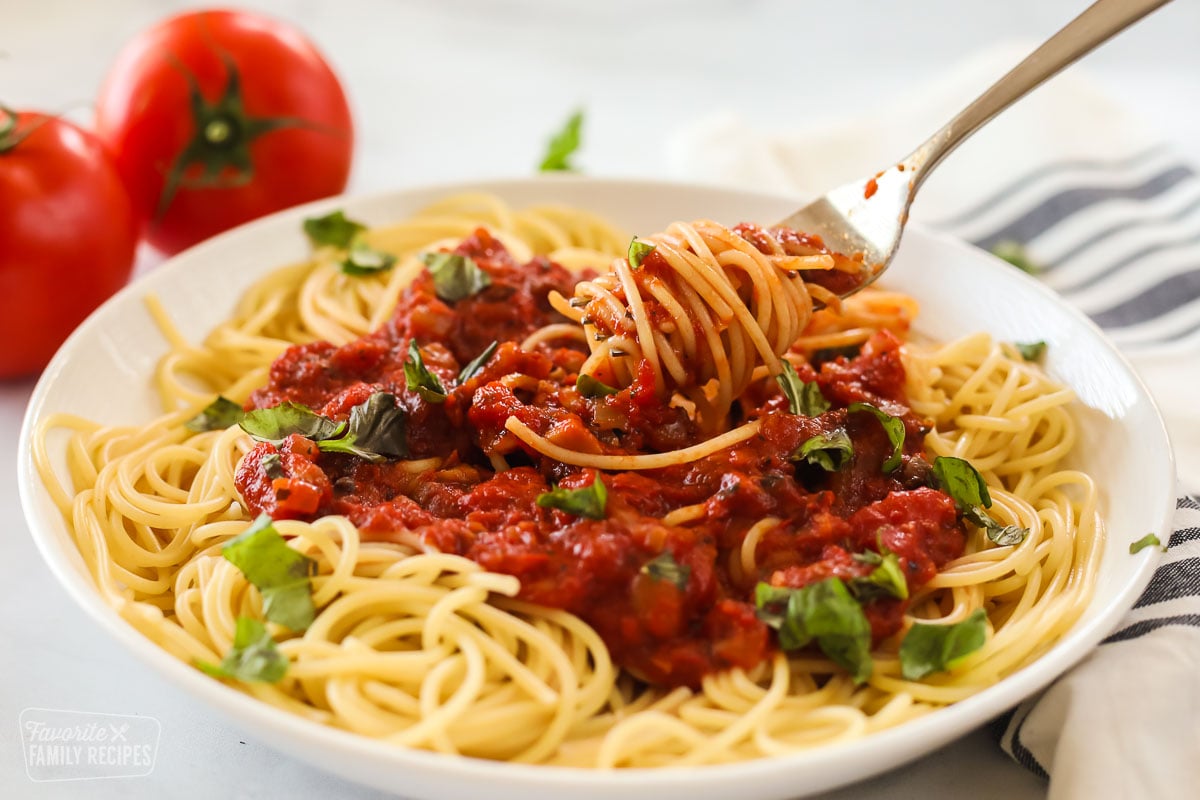
Serve this Homemade Spaghetti Sauce with Fresh Tomatoes over spaghetti with Olive Garden Salad, Loaded Cheesy Garlic Bread, or Oven Roasted Green Beans. You can also use it to make Meatball Sub Sandwiches or Chicken Parmesan Sandwiches.
More Homemade Pasta Sauce Recipes
- Meat Sauce
- Homemade Pizza Sauce
- Marinara Dipping Sauce
- Ravioli Sauce
- Homemade Pesto Sauce
- Healthy Alfredo Sauce
- Browse All Our Italian Sauces
This fresh tomato spaghetti sauce is one of my favorite ways to use ripe garden tomatoes. Give it a try, then leave a comment and a rating below to let me know how you served it or what vegetables you added. 🍅🍝
Homemade Spaghetti Sauce with Fresh Tomatoes
Video
Ingredients
- 12-14 tomatoes, (fresh, garden tomatoes work best- appx. 6-8 lbs. You can also use two 28oz. cans of San Marzano tomatoes)
- 2 tablespoons olive oil
- 1 large onion, chopped
- 8 ounces mushrooms, fresh, chopped
- 2 teaspoons soy sauce, (see notes above)
- 6 cloves garlic, minced
- 10-12 basil leaves, chopped
- 1 tablespoon oregano, finely chopped
- 1-2 tablespoons brown sugar, (start with 1 tablespoon, taste, and add more as you go along as needed)
- 1 tablespoon Kosher salt, (or to taste)
- 1 teaspoon pepper, (or to taste)
Instructions
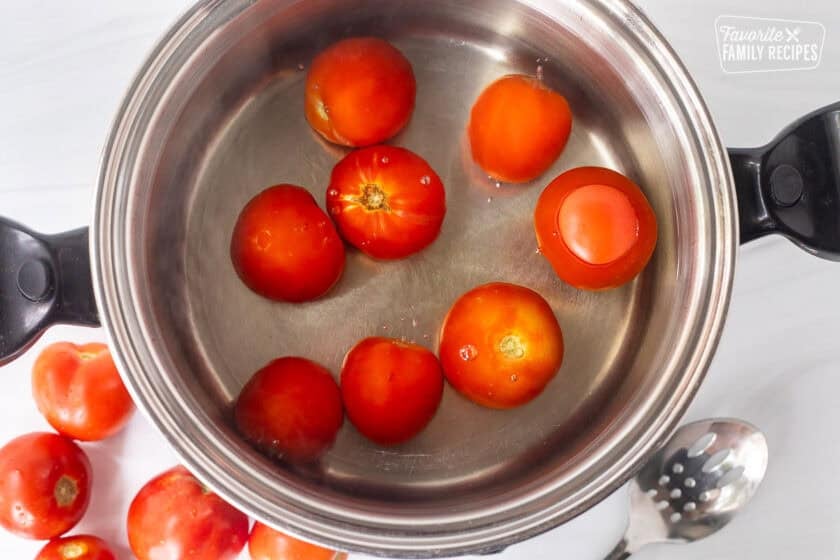
- Bring a large pot of water to a boil and prepare a large bowl of ice water. Cut a shallow X in the bottom of each tomato. Place a few tomatoes at a time in the boiling water for 30 to 60 seconds, or until the skins begin to loosen.
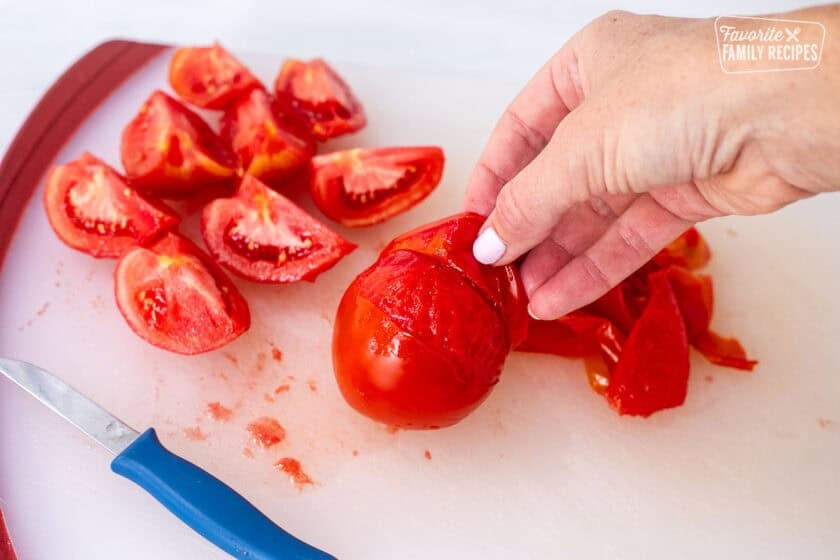
- Immediately transfer them to the ice water. Peel the tomatoes and remove the tough stem areas. Cut the tomatoes into quarters and place them in a food processor or blender. Pulse a few times until they reach the consistency of crushed tomatoes. Do not overprocess. Set aside.
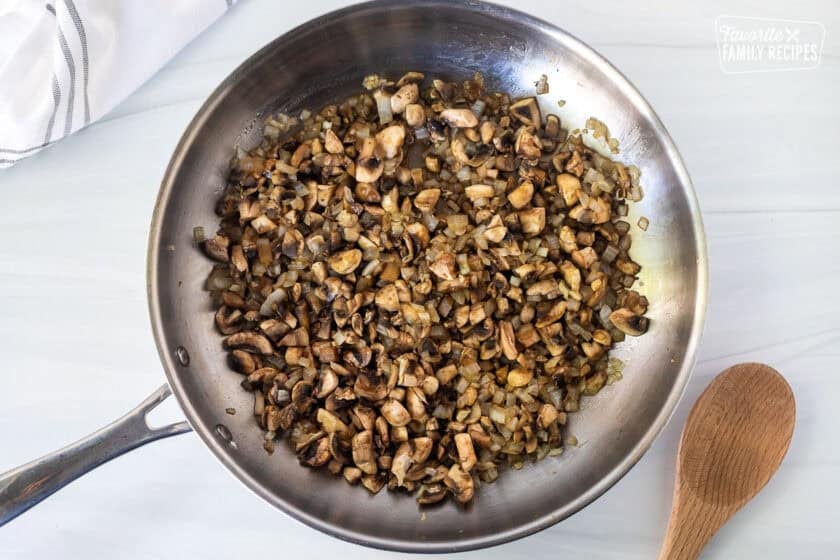
- Heat the olive oil in a large, heavy pot over medium heat. Add the onion and sauté until softened and translucent. Add the mushrooms and cook for 2 to 3 minutes. Stir in the soy sauce and garlic and cook for another 30 to 60 seconds, or until the garlic is fragrant.
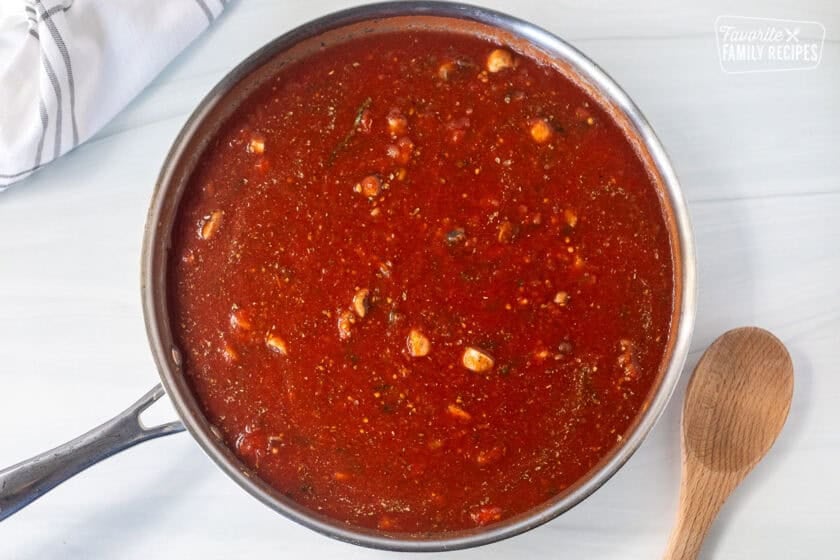
- Add the crushed tomatoes, basil, oregano, 1 tablespoon brown sugar, salt, and pepper. Stir well and bring the sauce to a gentle simmer.
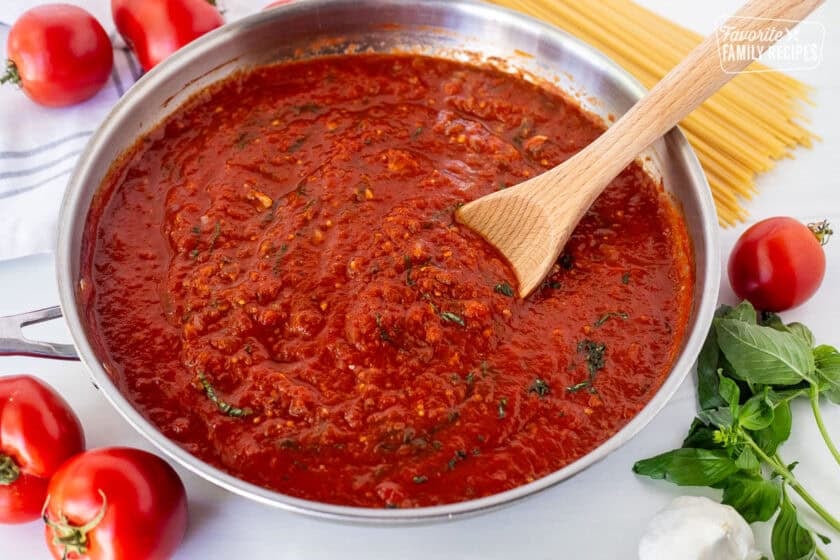
- Simmer uncovered for at least one hour, stirring occasionally and scraping the bottom of the pot. Taste and add more brown sugar, salt, or pepper as needed. When simmering for two hours or longer, cover the pot during the first hour, then uncover it and continue cooking until the sauce reaches your preferred thickness.
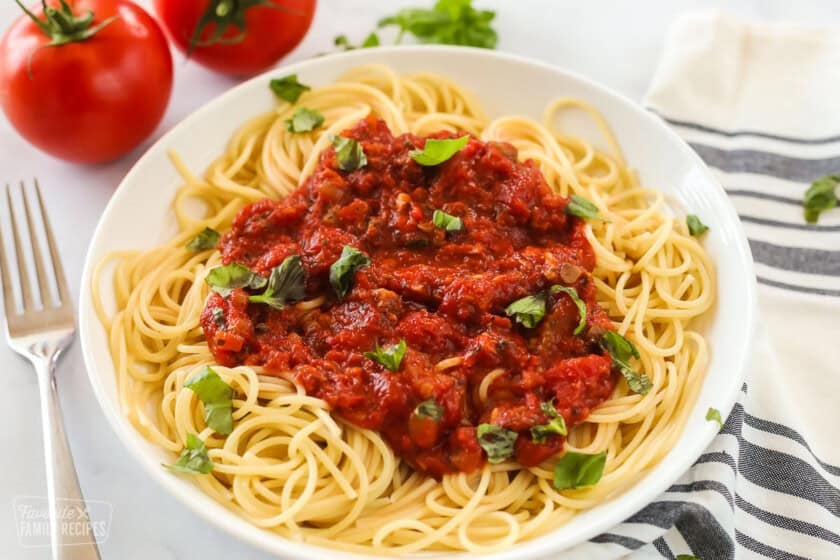
- Taste once more and adjust the seasonings. Serve hot over cooked pasta or use in your favorite pasta dish.
Notes
- Tomato size, sweetness, and water content vary, so adjust the simmering time and seasonings as needed.
- For a chunky sauce, pulse the tomatoes only a few times and coarsely chop the vegetables.
- For a smooth sauce, blend the finished sauce with an immersion blender.
- If the sauce is too thin, simmer it uncovered longer or add tomato paste one tablespoon at a time.
- To make meat sauce, brown one pound of ground beef or sausage with the onion, drain any excess grease, and continue with the recipe.
- Two 28-ounce cans of whole or crushed tomatoes can be substituted for fresh tomatoes.
- For the slow cooker, sauté the vegetables first, then cook the sauce on LOW for 6 to 8 hours or HIGH for 3 to 4 hours.
- This recipe has not been tested for home canning. Use a tested canning recipe when making shelf-stable sauce.
- Refrigerate leftovers for 3 to 4 days or freeze in airtight containers for up to six months.
Nutrition
Nutrition information is automatically calculated, so should only be used as an approximation.
Love this recipe?
We want to hear from you! Please leave a review.

Awesome sauce! Love it!
Just made this recipe tonight. I do not like mushrooms so I used green peppers. The taste is great. The next time I make this recipe I will reduce the amount of salt a little, this of course, is my preference.
Love, love, love this sauce! My family is spoiled now because they do not want the jar kind anymore!
I thrown tomatoes in a ziplock bag into the freezer. when frozen drop in hot water for about 10 seconds and the skin comes right off. Then thaw in bowl, core and boil seeds and all.
Why does everyone peel and deseed tomatoes that is where the excellent taste of tomatoes is incased in….to me that is like skining and deboneing a chicken
Not me I like all that stuff
I have a ton of small romas. Have you ever tried not blanching and peeling them? Seems like a ton of work for the smaller tomatoes but I’d love to try this recipe.
I haven’t tried that specifically, but let us know how it goes if you try it!
Tried recipes using 2 tbsp of brown sugar, we find it too sweet. Is there a way to fix it please.
If you don’t like it as sweet, you can leave out the sugar!
We find lemon juice enhances the tomatoes. Alternatively, a bit of balsamic vinegar.
I pick my tomatoes, wash and cut each end off, then dry them off and place on parchment paper lined baking sheet and freeze a few hours or overnight. Take them out and thaw. They will be soft. Put tomatoes in a food mill and squish them thru it. They will have no skins nor seeds. Make what you want out of the fresh sauce. This takes planning ahead but at least you don’t have to blanch and peel them and as an added feature… no seeds.
I haven’t made this yet but definitely will–such rave reviews! I’m wondering if this would freeze well. I have lots of tomatoes (hooray!) and would like to make several batches but don’t want to can it for a variety of reasons. Freezing would be my preference. Has anybody tried that?
Yes you can freeze it! We have done it before and it works great!
Brilliant xx
This is an amazing sauce. I eliminated mushrooms and soy sauce, but that is just personal preference. We love it and will be making it again!
Oh yum!!! I’ve been simmering this recipe for an hour and a half now and just snuck a taste… this is delicious!!! Made it exactly like the recipe calls for! Will be making a bigger batch for canning!!!
I will never buy spaghetti sauce again! This recipe is a winner! The sauce is so tasty and I love that it’s made with fresh tomatoes. Thank you!
So fresh and delicious! I will definitely make this again!
This spaghettie sauce had so much flavor we loved it!! Everyone loved the sauce, it was the star of the dinner!!
Made a batch earlier in the week and making my second today. Absolutely delicious. I made it was roasted fresh tomatoes from the garden. Great because very little sugar is needed and my hubby is diabetic. Thank you.
Thank you so much for your comment and 5-star rating! I’m so happy you like this recipe!
I’m making sauce today and want to roast the tomatoes. Did you peel tomatoes before roasting?
Made this yesterday with our garden tomatoes. It is wonderful. I can never leave a recipe allow so I did make a few changes. I roasted the tomatoes as some suggested but did it on the bbq since our temp today is 110 so don’t need the oven on. Also added extra mushrooms since I had them and love mushrooms, added one can tomato paste for my doubled recipe. Best sauce I’ve ever had. Meat not needed. We froze extra in ziplock bags rather than canned the sauce. Hope we have more tomatoes for this season so I can make more.
Made this with roasted Cherokee Purples and volunteer Kamuela (I live in Hawaii) tomatoes, and I have never tasted a better tomato pasta sauce in my life! Thank you for the recipe!
Hi Liz I’m in Michigan and my husband grows an over abundance of tomatoes every year. This is the first year he grew Cherokee purples while they grew they grew terribly! Every single one was severely cracked and split even though the tops were still green. What we managed to salvage which wasn’t much but were very tasty. Any suggestions on what he can do to make them better for next season?
I haven’t grown Cherokee purple tomatoes, but from what I know about them, the tops are supposed to be green. Most people pick theirs when the tomato is half green and let them ripen the rest of the way on the counter to prevent splitting. I hope this helps!
Don’t be afraid of that soy sauce addition…it’s delicious
I made this homemade spaghetti sauce and it was absolutely delicious. Taste way better than the jar spaghetti sauce. The directions was easy to follow. I roasted my tomatoes first.
I definitely want to try the roasted tomato next time
Do you have to saute green peppers and onion first? Can.t they
simmer with the tomatoes raw?
I think sautéing them brings out the flavors more, but you could just put them in with the sauce too.
Hi Vicky, I pureed my green pepper and onion instead of sauteing.
This recipe, and the tip on roasting the tomatoes first, led to the most delicious sauce that I have ever tasted! This was my first attempt at spaghetti sauce from scratch. Thx so much!
I made this sauce with some Roma tomatoes I froze whole this summer. It was awesome. My husband lived it.
I made this sauce tonight. It tastes great. I let it simmer down for about 4 hours. Nice thick consistency. Can’t wait to have it over pasta tomorrow.
Lovely recipe as it is. Second time around, I halved the sugar, added finely chopped carrots and celery, and cooked and chopped some hot Italian sausage with a bit of dried fennel seed, but only added the meat to half of the sauce, to please different tastes. But, the basic sauce is genius. Freezing it in small batches for later use as well.
I’d like to add some sausage also. Do you just use it as a spaghetti sauce that way over pasta? Or make lasagna? Trying to figure out what to do with it after I make it!
This was my first time attempting to make fresh tomato sauce. I followed the recipe, except I omitted the mushrooms and had to take out the seeds because of a medical issue, and used less brown sugar. I also added tomato paste to thicken the sauce. It was delicious, my husband loved it. In fact I’m back to making another batch for my lasagna. After tweaking to my taste this sauce is the bomb!
Love the recipes Thanks