
We may earn a commission when you click on the affiliate links in this post.
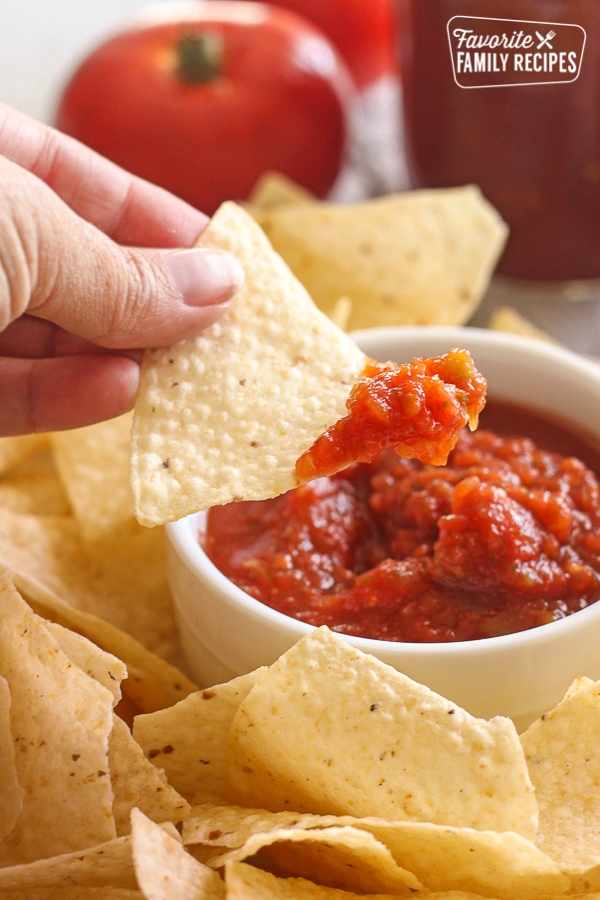
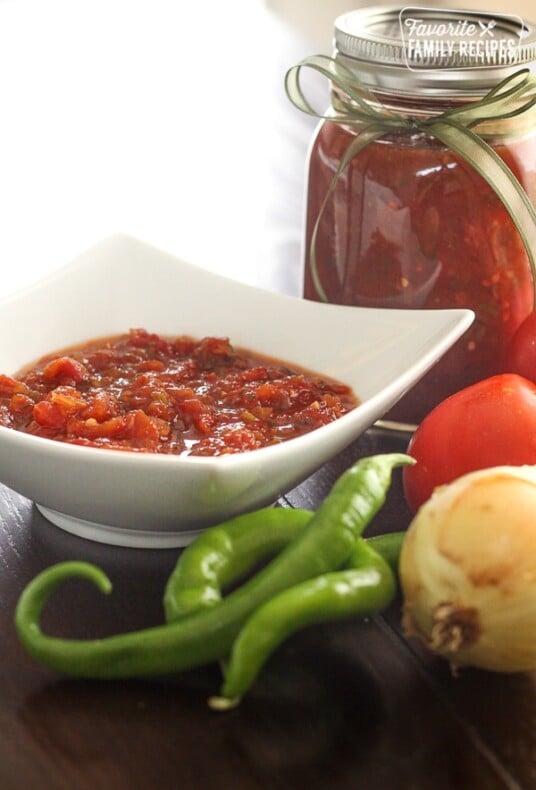
This Chunky Salsa Recipe for Canning is thick, savory, slightly spicy, and loaded with fresh tomato flavor. It has the restaurant-style taste I love, with plenty of jalapeño, garlic, cilantro, and cumin, but no added sugar. One big batch gives me jars of homemade salsa to serve with chips, tacos, nachos, eggs, and so many of our favorite meals.
5 Star Reviews ⭐️⭐️⭐️⭐️⭐️
“I have made this recipe so many times and it comes out perfectly every single time. It’s so fresh and delicious!” – Renee
“Delicious! I left mine a little chunky and it was perfect!” – April
“Love how easy this recipe comes together. The addition of cumin adds so much flavor!” – Milisa
Why I Love This Savory Salsa
Our family grows a lot of tomatoes. Once our garden starts producing in July, we usually have fresh tomatoes coming in until the first freeze. By the end of summer, I feel like I am constantly peeling, chopping, and canning, but I honestly love it. We are perfectionists with our tomato growing method, be sure to check out our easy guide for growing the BEST tomatoes.
After making big batches of Canned Spaghetti Sauce and Homemade Tomato Juice, this Savory Salsa is always high on my list. It tastes similar to restaurant salsa, but it is thicker, chunkier, and made with fresh tomatoes from the garden.
This recipe works so well because the tomatoes are drained, the vegetables are pulsed instead of completely pureed, and tomato sauce and tomato paste give the salsa a thick, scoopable consistency. There is no added sugar, so the flavor stays savory rather than sweet.
We have tested the finished salsa for acidity and confirmed that it reaches the required pH level when the recipe is prepared exactly as written.
🩷 Erica
Table of Contents
- 5 Star Reviews ⭐️⭐️⭐️⭐️⭐️
- Why I Love This Savory Salsa
- Equipment You’ll Need
- Ingredients You’ll Need
- Ingredient Additions and Substitutions
- How to Can Chunky Salsa
- Water-Bath Processing Times by Elevation
- Let’s Talk Tomatoes 🍅
- Canning Safety
- Recipe Tips
- Frequently Asked Questions
- Troubleshooting
- Make Ahead and Storage
- Pairing Ideas
- More Canning Recipes
- Chunky Salsa Recipe for Canning
Equipment You’ll Need
- Large stockpot: This is a very large batch, so use a heavy pot with plenty of room for stirring without overflowing.
- Water-bath canner with a rack: The jars should sit on a rack rather than directly on the bottom of the canner.
- Canning jars, lids, and rings: Use the exact jar size covered by the recipe’s processing validation.
- Blender or food processor: Use this to pulse the onions, jalapeños, garlic, cilantro, vinegar, and lime juice.
- Immersion blender: This makes it easy to break down the tomatoes while still controlling the final texture.
- Canning funnel: A wide-mouth funnel makes it much easier to fill the jars without getting salsa on the rims.
- Jar lifter: Use a canning jar lifter to move hot jars safely.
- Bubble remover and headspace tool: This helps release trapped air and measure the headspace accurately.
- Ladle: Use a heat-safe ladle for transferring the hot salsa into the jars.
- Clean kitchen towels: You will need these for wiping jar rims and protecting the counter while the jars cool.
- Food-safe gloves: Gloves are helpful when chopping or handling jalapeño peppers.
Ingredients You’ll Need
- Tomatoes: Use ripe, firm tomatoes that have been peeled, chopped, and drained; paste tomatoes make a thicker salsa, but your favorite garden tomatoes will also work.
- Kosher salt: Salt seasons the tomatoes and brings out their flavor as they simmer.
- Vinegar and lime juice: These provide the acid in the recipe and must be measured accurately without reducing either amount.
- Yellow onions and jalapeño peppers: These give the salsa its savory base and slightly spicy flavor.
- Garlic and cilantro: Fresh garlic adds depth while cilantro gives the salsa its familiar fresh flavor.
- Spices: Cumin and black pepper add warmth and give this Savory Salsa its restaurant-style taste.
- Tomato sauce and tomato paste: These deepen the tomato flavor and give the finished salsa a thick, scoopable texture.
Ingredient Additions and Substitutions
Canning salsa is different from making a fresh salsa that will be eaten right away. With fresh salsa, you can add another onion, a handful of peppers, or more garlic whenever you want. With canned salsa, those changes can affect acidity, density, and heat penetration.
For a shelf-stable batch, prepare this recipe exactly as it was tested.
- Tomato varieties: Roma and other paste tomatoes give you the thickest texture because they contain less juice and fewer seeds. Early Girl, Better Boy, Big Boy, Jack’s Whopper, and other ripe garden tomatoes can also be used as long as you measure the required amount after peeling, chopping, and draining.
- Jalapeños: Use the type of jalapeños included in the acidity-tested version of the recipe. Do not replace fresh peppers with canned jalapeños unless that version has also been tested.
- Extra heat: Do not increase the measured amount of jalapeños or other peppers. Add hot sauce, fresh jalapeño, cayenne, or red pepper flakes after opening the jar.
- Vinegar and lime juice: Do not reduce, omit, or substitute either acid unless the alternate version has been professionally reviewed and tested.
- Onions, garlic, and cilantro: Do not increase these ingredients before canning. You can stir in more fresh onion, garlic, or cilantro after opening a jar.
- Salt and seasonings: Because this recipe was tested as written, use the listed amounts for canning. Additional salt or seasonings can be added when the jar is opened.
- Sugar: This is a no-sugar-added salsa. The tomatoes provide enough natural sweetness to balance the savory ingredients.
- Corn, beans, or fruit: Do not add corn, black beans, mango, peaches, or pineapple to this recipe. Use a canning recipe specifically developed for those ingredients.
How to Can Chunky Salsa
- Prepare the tomatoes and canning equipment. Wash the tomatoes and remove any that are bruised, moldy, damaged, overripe, or from frost-damaged vines. Peel, chop, and drain the tomatoes. Wash the jars, lids, and rings, then keep the jars hot until you are ready to fill them.
- Simmer and blend the tomatoes. Place the prepared tomatoes and salt in a large stockpot. Bring the tomatoes to a simmer, stirring frequently. Use an immersion blender to coarsely blend the tomatoes until they reach the chunky consistency you want.
- Prepare the onion mixture. While the tomatoes are simmering, combine the vinegar, lime juice, onions, jalapeños, garlic, and cilantro in a blender or food processor. Pulse until everything is finely chopped but not completely pureed. Work in two or three batches if necessary.
- Combine and simmer the salsa. Add the onion mixture to the tomatoes, then stir in the cumin, black pepper, tomato sauce, and tomato paste. Bring the salsa back to a simmer and cook for 30 minutes to 1 hour, stirring often so the tomatoes do not scorch.
- Fill the jars. Ladle the hot salsa into hot jars, leaving the headspace specified by the validated process. Remove trapped air bubbles and adjust the headspace if needed. Wipe each rim with a clean, damp towel, center a new lid on the jar, and tighten the ring until fingertip tight.
- Process and cool. Place the filled jars upright in the water-bath canner. Make sure the water covers the jars by at least 2 inches for a processing time of 30 minutes or longer. Bring the water to a full rolling boil, process for the required time based on your elevation, and then turn off the heat. Remove the canner lid and let the jars rest in the water for 5 minutes. Transfer them to a towel-lined counter and leave them undisturbed for 12 to 24 hours before checking the seals.
Water-Bath Processing Times by Elevation
Process quart jars for 40 minutes in a boiling-water canner for altitudes of 1,000 feet or less. Adjust processing time for higher altitudes:
- 0 to 1,000 feet: 40 minutes
- 1,001 to 3,000 feet: 45 minutes
- 3,001 to 6,000 feet: 50 minutes
- 6,001 to 8,000 feet: 55 minutes
- 8,001 to 10,000 feet: 60 minutes
Start the timer only after the water gets to a full rolling boil. If the water stops boiling at any point during processing, bring it back to a rolling boil and restart the full processing time.
Let’s Talk Tomatoes 🍅
Our family knows tomatoes! You could even say we are tomato “whisperers”. If you ask our friends and neighbors they will tell you our garden gets tomatoes the first week of July and we are overflowing with tomatoes until the first freeze. Once you get your tomato-growing strategy down, you are good to go. We have a great guide for growing tomatoes that teaches our proven method.
Some of you may want to know what varieties we like best. We have grown pretty much every variety you can think of, but our go-to favorite the last couple of years is the “Jack’s Whopper”. This is a big ol’ juicy tomato, perfect for slicing and putting on sandwiches but also great for canning. We also love Early Girls, Better Boy, Big Boy, Roma tomatoes, and Sun Golds (cherry tomato). Any variety will work great with this savory canned salsa recipe. Feel free to use your favorite!
Canning Safety
For more detailed canning information, read our Canning 101 Post, Water Bath Canning Guide, and the USDA Complete Guide to Home Canning before you begin. These guides cover equipment, jar preparation, altitude adjustments, safe processing, and how to check your finished jars.
Recipe Tips
- Measure the prepared tomatoes. Measure the tomatoes after they have been peeled, chopped, and drained.
- Choose firm tomatoes. Do not use tomatoes that are moldy, badly bruised, overripe, cracked, diseased, or harvested from frost-damaged vines.
- Use paste tomatoes for thicker salsa. Roma and other paste tomatoes have more flesh and less juice than slicing tomatoes.
- Drain watery tomatoes well. Removing excess tomato liquid helps the salsa thicken without adding starch or changing the recipe.
- Wear gloves when handling peppers. Jalapeño oils can irritate your hands, eyes, and skin.
- Keep the salsa chunky. Coarsely blend the tomatoes and pulse the other vegetables. Avoid turning the mixture into a completely smooth puree.
- Stir frequently. Tomato paste and drained tomatoes can scorch on the bottom of the pot as the salsa thickens.
- Use hot jars for hot salsa. A large temperature difference between the jars and salsa can cause the glass to crack.
- Do not over-tighten the rings. Fingertip tight is enough. Air needs to escape from the jars during processing.
- Keep the jars upright. Tilting the jars can allow salsa to get under the lid and interfere with the seal.
- Expect some variation in yield. The batch usually makes 9 to 12 quarts, depending on the tomato variety, how well the tomatoes are drained, and how long the salsa simmers.
- Do not thicken with starch. Never add flour or cornstarch before canning. If you want an even thicker salsa, drain off a little liquid after opening the jar.
- Check every seal. A properly sealed lid should be concave and should not flex when you press the center after the jar has cooled completely.
Frequently Asked Questions
You can make a half batch by dividing every ingredient evenly and keeping the ingredient ratios exactly the same. Do not shorten the processing time just because the batch is smaller. Use the full processing schedule for each jar, and use only the jar size covered by the process validation.
Do not increase the amount of jalapeños or other peppers in a salsa that will be canned. Peppers are low-acid ingredients, and adding more can change the balance of the recipe. Add fresh jalapeño, hot sauce, cayenne pepper, or crushed red pepper after opening the jar.
Use the type of jalapeño included when the recipe was tested. Fresh and commercially canned or pickled jalapeños do not have the same acidity. Do not swap one for the other in a shelf-stable canning recipe unless that substitution has been tested.
Yes. This recipe was tested using peeled tomatoes, so that is how it should be prepared for canning. Peeling also keeps tough pieces of tomato skin out of the finished salsa.
Roma, San Marzano, and other paste tomatoes are great choices because they are meaty and contain less liquid. We also use Jack’s Whopper, Early Girl, Better Boy, Big Boy, and other garden varieties. Juicy slicing tomatoes work, but they need to be drained well.
Yes. A food processor makes preparing such a large batch much faster. Pulse the onions, peppers, garlic, and cilantro in short bursts so they are finely chopped but not completely pureed.
Follow the recipe’s hot-pack instructions exactly. Cooking the salsa combines the flavors, reduces excess liquid, and brings the mixture to the temperature expected by the processing schedule. Do not use this processing time for raw salsa.
No. Corn and beans are low-acid ingredients and should not be added to this recipe. Use a separately tested canning recipe written specifically for corn or bean salsa.
Yes. Freezing is a good choice when you do not have a professionally validated canning process or when you want to change the recipe. Let the salsa cool, transfer it to freezer-safe containers, leave room for expansion, and freeze. The texture may be slightly softer after thawing, but the flavor will still be good.
The basic ingredients are naturally gluten-free, but check the labels on the tomato sauce, tomato paste, vinegar, canned jalapeños, and spices to make sure there are no gluten-containing additives or cross-contact warnings.
Troubleshooting
- Why is my salsa watery? Some tomato varieties contain more liquid than others. Make sure the tomatoes are thoroughly drained before measuring, and simmer the salsa for the full amount of time. Do not add flour or cornstarch before canning. You can drain off a little liquid after opening the jar if needed.
- Why did my salsa separate in the jar? Some separation is normal, especially when using juicy tomatoes. The solids may rise while liquid settles near the bottom. If the jar sealed properly and there are no signs of spoilage, stir the salsa after opening.
- Why did liquid leak from my jars during processing? This is called siphoning. It can happen when jars are overfilled, air bubbles are not removed, the temperature changes too quickly, or the jars are removed from the canner immediately. Leave the correct headspace and let the jars rest in the canner for 5 minutes before removing them.
- Why didn’t my jars seal? Common causes include food on the jar rim, incorrect headspace, damaged jars, faulty lids, over-tightened rings, or processing errors. Refrigerate any unsealed jar and use it promptly. Do not store it at room temperature.
- Why are there bubbles in my canned salsa? Small trapped air bubbles may remain if they were not removed before processing. However, bubbles that continue rising in a stored jar can be a sign of spoilage, especially if the jar is leaking, bulging, discolored, or has an unusual odor. Discard the salsa without tasting it.
Make Ahead and Storage
- Prepare ahead: The tomatoes can be washed, peeled, chopped, and drained the day before. Store them covered in the refrigerator until you are ready to make the salsa.
- Prepare the vegetables: The onions, garlic, and jalapeños can also be prepared ahead and refrigerated separately.
- Before storing: Let processed jars cool undisturbed for 12 to 24 hours. Check the seals, remove the rings, wash the outside of each jar, and label it with the contents and date.
- Shelf storage: Store properly processed and sealed jars in a cool, dry, dark place. For the best flavor, color, and texture, use home-canned salsa within one year.
- After opening: Refrigerate the salsa and use it within several days.
- Unsealed jars: Refrigerate any jar that does not seal and use it promptly. Do not place an unsealed jar on the pantry shelf.
- Freezer storage: Cool the salsa completely and freeze it in freezer-safe containers with room for expansion.
- Signs of spoilage: Discard the salsa without tasting it if the lid is loose or bulging, the jar is leaking, liquid spurts when opened, bubbles rise through the salsa, mold is present, the color looks unusual, or the salsa has a foul or unusual odor.
Pairing Ideas
I always serve this Chunky Salsa with a big bowl of tortilla chips, but it is just as good spooned over Crockpot Chicken Tacos, Walking Tacos, Navajo Tacos, or Carne Asada Nachos. It also makes a great topping for Breakfast Quesadillas, scrambled eggs, burrito bowls, grilled chicken, baked potatoes, and taco salad.
More Canning Recipes
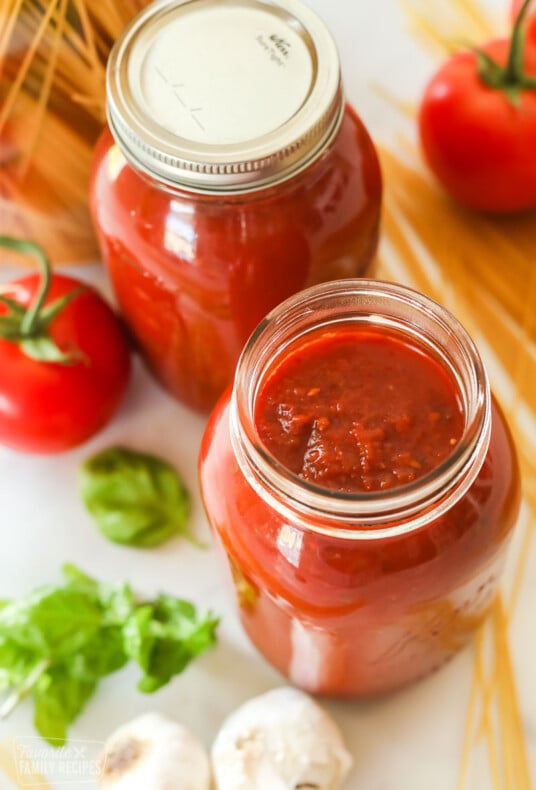
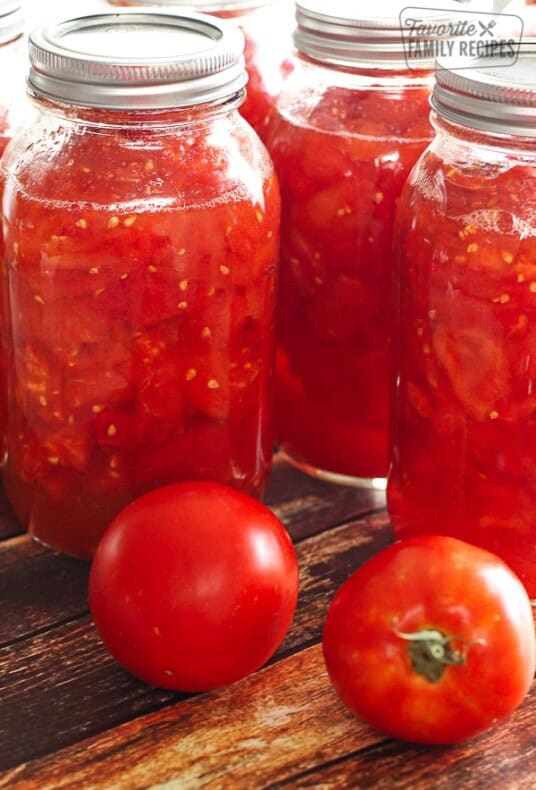
- Canning Homemade Tomato Juice
- How to Can Peaches
- How to Can Pears
- Pickled Beets
- Virginia Chunk Sweet Pickles
- Jalapeño Jelly
This Chunky Salsa Recipe for Canning is one of my favorite ways to use a big crop of garden tomatoes. It is thick, savory, slightly spicy, and so convenient to have ready for chips, tacos, nachos, and quick meals.
Please leave a comment and a star rating after you make it. I would love to hear what kind of tomatoes you used and whether your family likes their salsa chunky or more finely blended! 💛🍅
Chunky Salsa Recipe for Canning

Ingredients
- 25 cups tomatoes, peeled, chopped, and drained
- 1/3 cup Kosher salt
- 1 cup vinegar
- 1/4 cup lime juice
- 5 onions, yellow, chopped
- 2 cup jalapeno peppers, chopped
- 18 garlic cloves, chopped (SO much easier to get the pre-peeled garlic cloves)
- 3 bunches cilantro, remove stems, roughly chop
- 3 Tablespoons cumin
- 1 Tablespoon black pepper
- 45 ounces tomato sauce, 3 cans
- 36 ounces tomato paste, 3 cans
Instructions
- Place the peeled, chopped, and drained tomatoes and Kosher salt in a very large stockpot. Bring to a simmer, stirring frequently.
- Use an immersion blender to coarsely blend the tomatoes until they reach your preferred chunky consistency.
- While the tomatoes are simmering, combine the vinegar, lime juice, onions, jalapeños, garlic, and cilantro in a blender or food processor. Pulse until finely chopped but not completely pureed. Work in two or three batches if necessary. Add a small amount of the simmering tomatoes if additional liquid is needed for blending.
- Add the blended onion mixture to the stockpot. Stir in the cumin, black pepper, tomato sauce, and tomato paste.
- Simmer the salsa for 30 minutes to 1 hour, stirring frequently so the tomatoes and tomato paste do not scorch.
- Ladle the hot salsa into hot canning jars, leaving the headspace specified by the validated process. Remove air bubbles, adjust the headspace, wipe the rims clean, and apply new lids and rings until fingertip tight.
- Process the jars in a boiling-water canner for 40 minutes at elevations of 1,000 feet or less. Adjust the processing time for elevation. Begin timing only when the water reaches a full rolling boil.
- When processing is complete, turn off the heat, remove the canner lid, and let the jars rest in the water for 5 minutes. Remove the jars without tilting and let them cool undisturbed for 12 to 24 hours.
- Check the seals, remove the rings, wash and label the jars, and store properly processed jars in a cool, dry, dark place.
Equipment
- Large Stockpot
- blender or food processor
- Immersion blender
- Water-bath canner with rack
- Canning jars, lids, and rings
- Canning funnel
- jar lifter
- Bubble remover and headspace tool
Notes
- This recipe usually yields 9 to 12 quarts, depending on the tomato variety, how thoroughly the tomatoes are drained, and how long the salsa simmers.
- We have tested the finished salsa for acidity. Do not change the ingredient quantities or proportions.
- Use only the type of jalapeño included in the tested version of the recipe.
- Do not reduce the vinegar or lime juice.
- Do not increase the tomatoes, onions, peppers, garlic, cilantro, tomato sauce, or tomato paste.
- Do not add corn, beans, fruit, flour, cornstarch, meat, or other vegetables.
- Keep the salsa coarsely blended rather than completely pureed.
- Stir frequently while simmering because tomatoes and tomato paste scorch easily.
- For processing times of 30 minutes or longer, keep at least 2 inches of boiling water above the jars.
- Adjust the processing time for elevation: 45 minutes at 1,001 to 3,000 feet, 50 minutes at 3,001 to 6,000 feet, 55 minutes at 6,001 to 8,000 feet, and 60 minutes at 8,001 to 10,000 feet.
- Let the jars cool undisturbed for 12 to 24 hours before checking the seals.
- Refrigerate any jar that does not seal.
- Store sealed jars in a cool, dry, dark place and use within one year for the best quality.
- Refrigerate the salsa after opening.
- For a hotter salsa, add fresh peppers or hot sauce after opening the jar rather than increasing the peppers before canning.
Nutrition
Nutrition information is automatically calculated, so should only be used as an approximation.
Love this recipe?
We want to hear from you! Please leave a review.

Can this be halved? That’s a lot of salsa for an old couple like us…even giving some as gifts.
Sure!
Wow! This looks wonderful and perfect for little get together! Can’t wait to make this!
Delicious! I left mine a little chunky and it was perfect!
I have made this recipe so many times and it comes out perfectly every single time. It’s so fresh and delicious!
Love how easy this recipe comes together. The addition of cumin adds so much flavor!
I am going to give this a try. I recently bought everything for canning, now I just need to do it. This salsa recipe sounds fantastic!
Just pinned this! Love the extra tips on Jalapenos!