
We may earn a commission when you click on the affiliate links in this post.
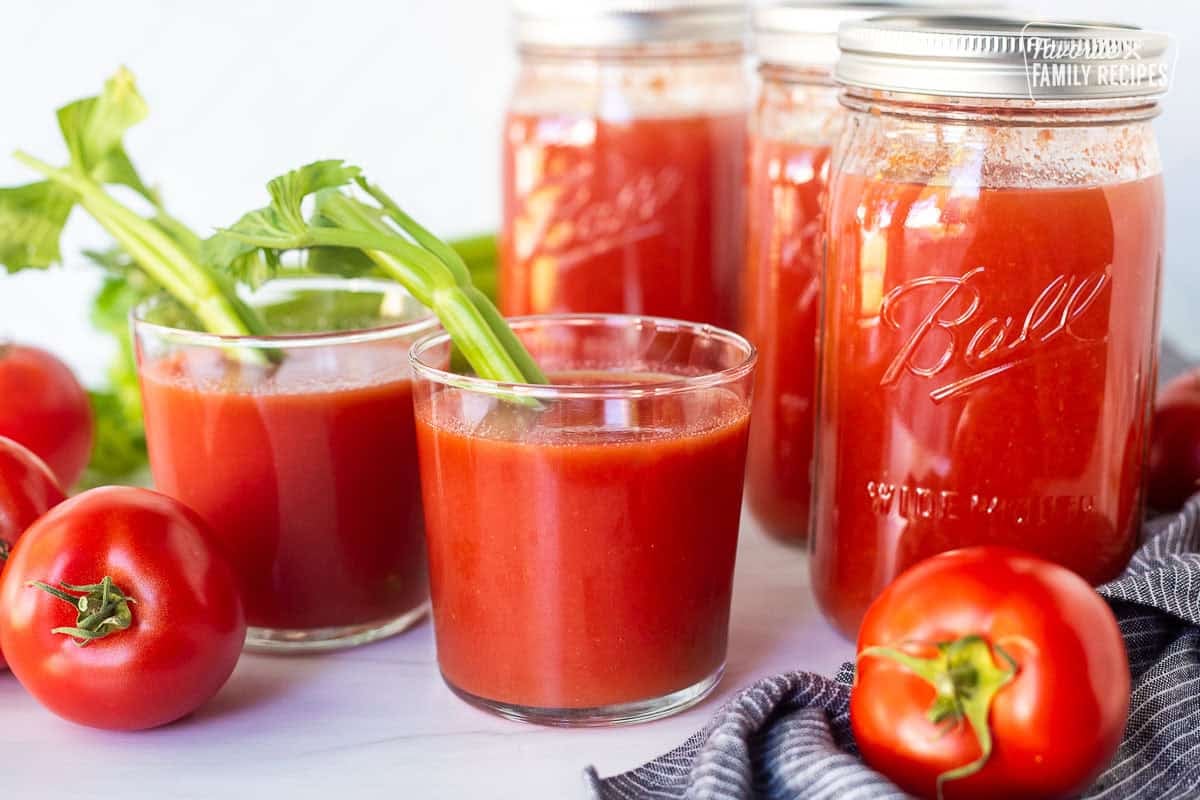
This homemade Tomato Juice Recipe is one of my favorite ways to preserve fresh garden tomatoes. The juice is rich, smooth, and seasoned with salt, onion salt, and celery salt for that classic tomato juice flavor. Drink it cold, use it in soups and chili, or follow the instructions for canning tomato juice so you can enjoy it all year.
5 Star Reviews ⭐️⭐️⭐️⭐️⭐️
“I think this recipie deserves 10 stars, it’s delicious. I’ve saved my home grown tomatoes till I had enough to make the juice. The Juice has the nicest tang to it, I’ll most certainly be making more next summer. Thanks for adding your delicious recipe” – Kat
“OMG! This tomato juice is absolutely amazing! We had lots of tomatoes this year and canned 17 quarts of tomato juice. So much better than store bought. Super simple to make. Thanks so much for sharing your recipe!” – Linda
“I love tomato juice and never thought to make it myself, but this recipe was amazing, super easy to make, and perfect, I love that I know 100% of the ingredients that were used to make it!” – Lily
Why I Love This Tomato Juice
At our house, this homemade tomato juice is like liquid gold. When the garden tomatoes start piling up, I know it is time to pull out the big stockpot and start making enough juice to last us through the year. We love drinking it ice cold straight from the fridge, especially when it has had plenty of time to chill, but I also use it constantly in soups, stews, chili, sauces, and other family recipes.
The combination of salt, onion salt, and celery salt gives it that familiar V8-style flavor, only it tastes so much fresher because it is made with ripe garden tomatoes. I usually make at least 25 quarts at a time, which is definitely a full day of work, but seeing all those jars lined up on the pantry shelves makes it completely worth it. I love knowing I can grab a jar whenever I need a quick drink or a flavorful tomato base for dinner.
🩷 Erica
Table of Contents
- 5 Star Reviews ⭐️⭐️⭐️⭐️⭐️
- Why I Love This Tomato Juice
- Supplies You’ll Need
- Ingredients You’ll Need
- Ingredient Additions and Substitutions
- Best Tomatoes to Use
- How to Make Tomato Juice
- Canning Safety
- Recipe Tips
- Frequently Asked Questions
- Troubleshooting
- Make Ahead and Storage
- Pairing Ideas
- More Canning Recipes
- Homemade Tomato Juice Recipe
Supplies You’ll Need
- Water bath canner with a rack: The pot should be deep enough to hold your jars with at least 2 inches of water over the tops.
- Pint or quart canning jars: Check each jar carefully and do not use jars with chips or cracks.
- New canning lids and clean bands: Always prepare the lids according to the manufacturer’s instructions.
- Large stockpot: Use stainless steel or another nonreactive pot for cooking the tomatoes.
- Tomato strainer or food mill: This removes the tomato peels and seeds while keeping the juice and pulp.
- Knife and cutting board: You will need these for removing the cores, blemishes, and damaged areas.
- Potato masher or sturdy spoon: This helps release the juice while the tomatoes begin cooking.
- Canning funnel and ladle: These make it much easier to transfer the hot juice into the jars.
- Headspace tool: Use this to check the space between the juice and the top of each jar.
- Jar lifter: This is essential for safely moving hot jars in and out of the canner.
- Clean towels: Set hot jars on a towel or cooling rack rather than directly on a cold countertop.
If you are making a large batch, a tomato strainer saves so much time. This is the exact one I use when I am making several batches.
Ingredients You’ll Need
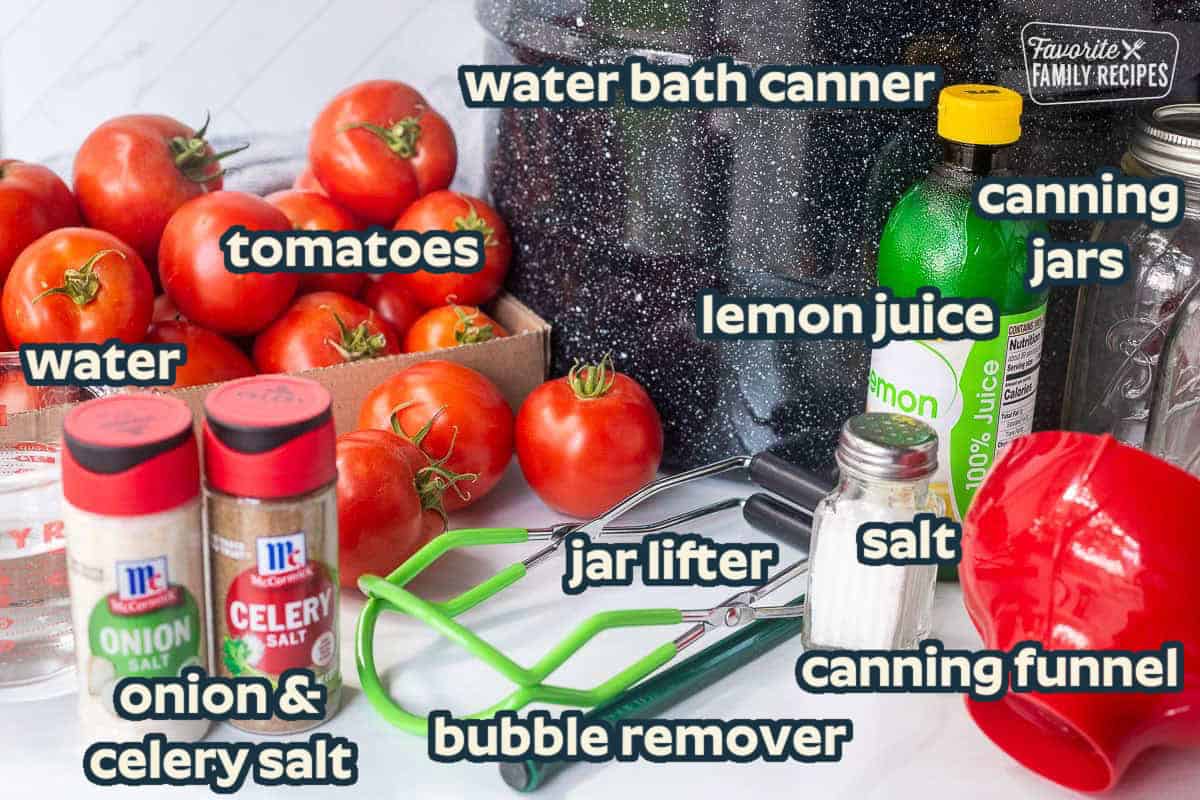
- Tomatoes: Use ripe, flavorful tomatoes that are free from decay, bruises, and damaged areas.
- Water: A small amount keeps the tomatoes from sticking before they release their own juice.
- Seasonings: Salt, onion salt, and celery salt give the juice its familiar savory flavor.
- For canning: Bottled lemon juice provides the consistent acidity needed for safe water bath canning.
Ingredient Additions and Substitutions
The basic seasonings in this recipe give the juice a traditional flavor, but there are a few ways you can adjust it.
- Citric acid: You can use citric acid instead of bottled lemon juice. Use ½ teaspoon per quart jar or ¼ teaspoon per pint jar.
- Bottled lemon juice: Always use commercially bottled lemon juice when canning. Fresh lemon juice does not have a standardized acidity level.
- Black pepper or cayenne: Add these to individual glasses after opening the jar for extra heat.
- Worcestershire sauce: A little Worcestershire sauce is good in tomato juice, especially when you are using it for a Bloody Mary. Add it after opening rather than to the canning jars.
- Balsamic vinegar: A splash can add sweetness and tang, but it is best stirred into the juice after opening.
- Fresh herbs: Basil, parsley, and oregano can be added when serving. I do not recommend adding fresh herbs directly to the jars unless you are following a tested canning recipe that includes them.
Do not add fresh onions, garlic, celery, peppers, carrots, or other vegetables to this recipe before canning. Those ingredients change the acidity and require a tested tomato-and-vegetable juice recipe with its own preparation and processing instructions.
Best Tomatoes to Use
Almost any ripe tomato can be used for making tomato juice, especially tomatoes that are grown in your own garden. I usually prefer a mixture of juicy slicing tomatoes and meatier paste tomatoes. The slicing tomatoes provide plenty of liquid, while the paste tomatoes give the juice more body.
Some of my favorite varieties include:
- Park’s Whopper
- Early Girl
- Beefsteak
- Better Boy
- Celebrity
- Brandywine
- Roma
- San Marzano
Look for tomatoes that are deeply colored, heavy for their size, and have a fresh tomato smell. Avoid tomatoes with mold, decay, deep cracks, or insect damage. Do not use tomatoes harvested from dead or frost-killed vines for canning.
The variety you choose will also affect the color and texture. Paste tomatoes make a thicker juice, while large slicing tomatoes usually make a thinner, juicier batch. A mix of the two gives me the best balance.
Plan on approximately 3 to 3½ pounds of tomatoes for every quart of finished juice. The exact yield will vary depending on the variety and how juicy the tomatoes are.
How to Make Tomato Juice
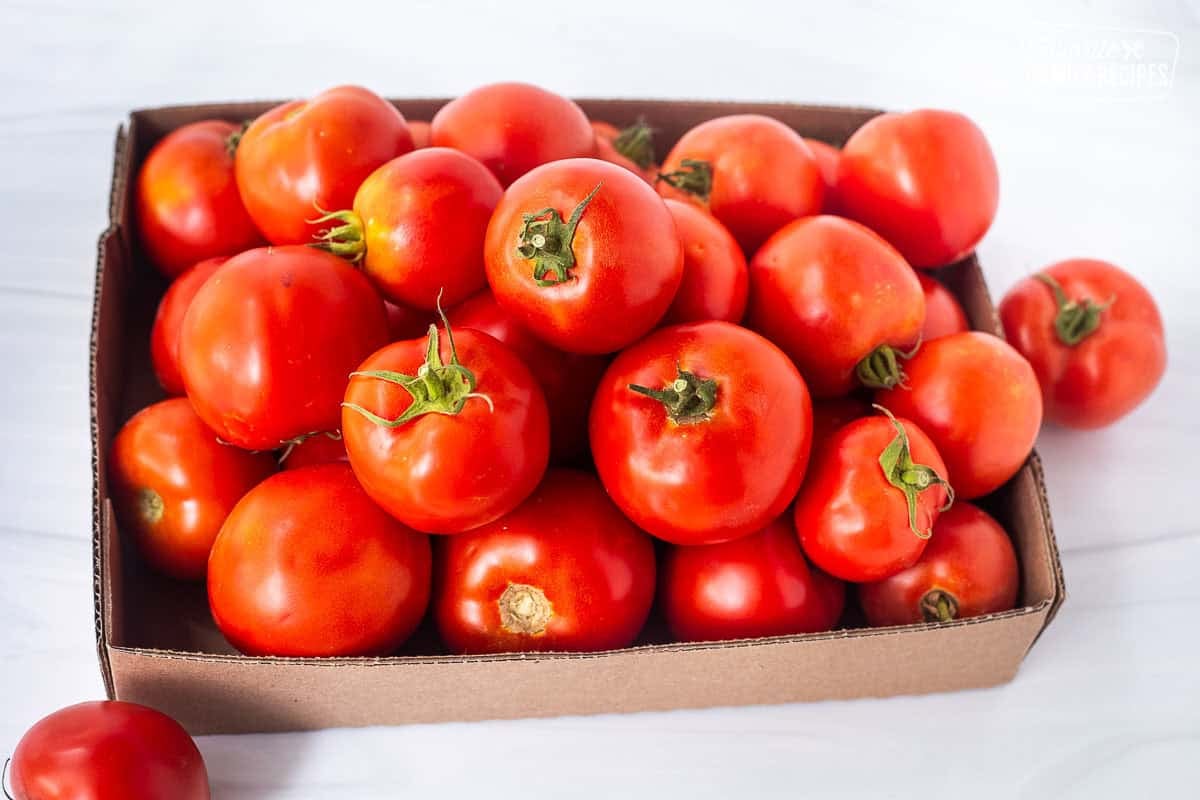
- Wash and prepare the tomatoes. Wash the tomatoes thoroughly under running water. Remove the cores, stems, bruised spots, cracks, and blemishes, then cut the tomatoes into quarters or large chunks. You do not need to peel them first.
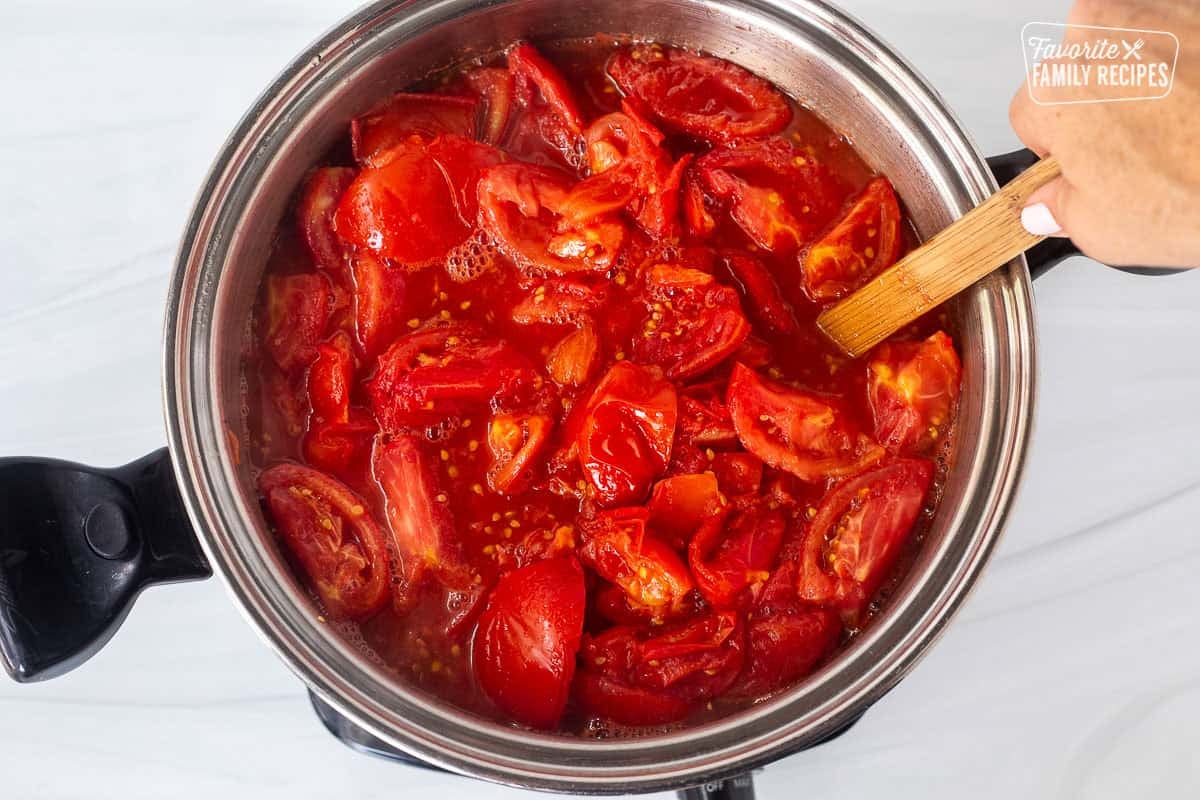
- Cook until soft. Place the tomatoes in a large stockpot and add just enough water to prevent sticking. Bring to a boil over medium-high heat, crushing and stirring the tomatoes as they begin releasing their juice. Simmer until the tomatoes are very soft and broken down.
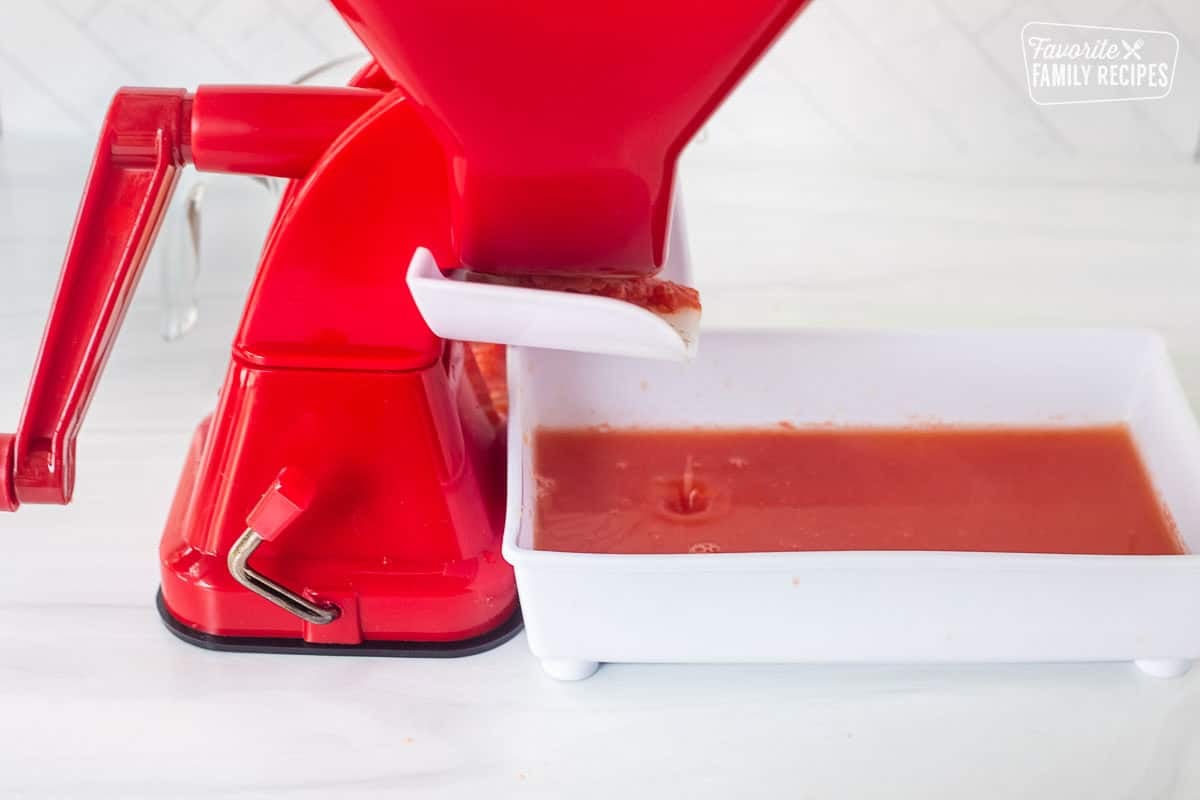
- Remove the skins and seeds. Working in batches, press the cooked tomatoes through a tomato strainer, food mill, or fine colander. The juice and pulp will pass through while the skins and seeds are left behind. Discard or compost the scraps.
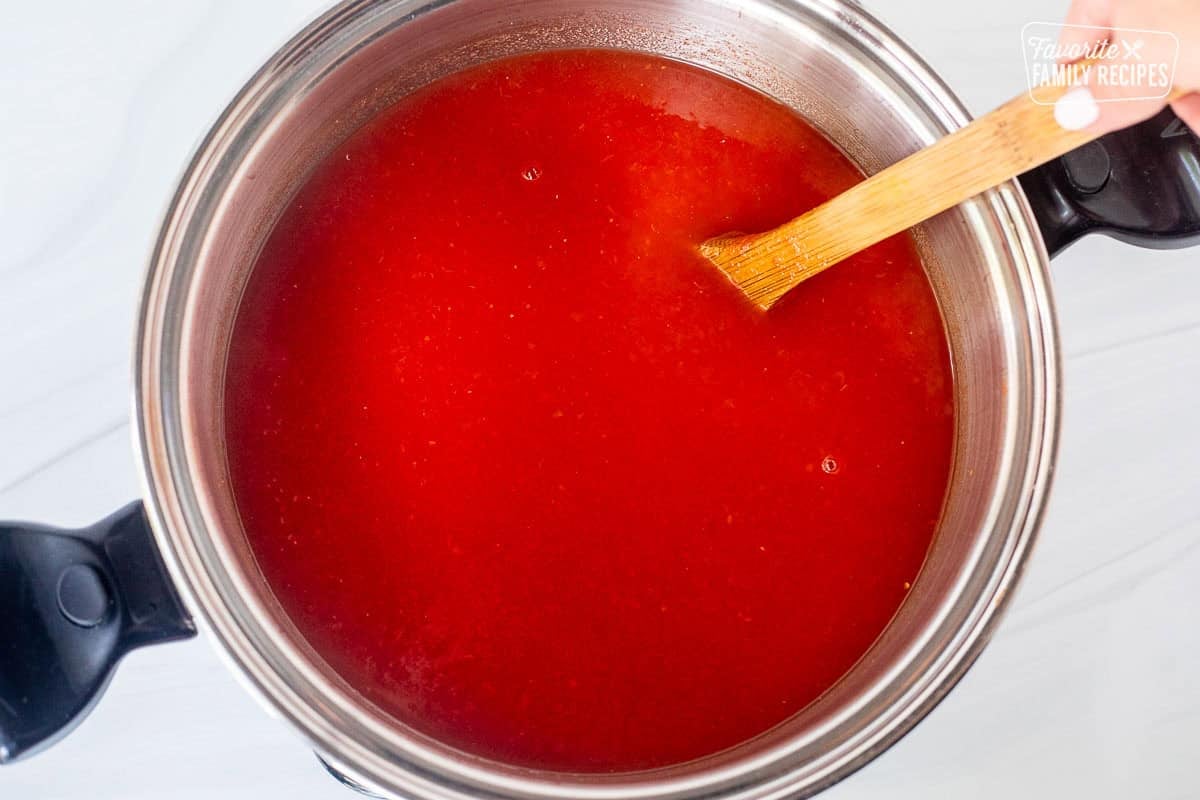
- Measure and season the juice. Return the strained juice to the clean stockpot and bring it back to a gentle boil. Measure how much finished juice you have, then add the salt, onion salt, and celery salt according to the recipe amounts for each quart. Simmer briefly so the seasonings can blend into the juice.
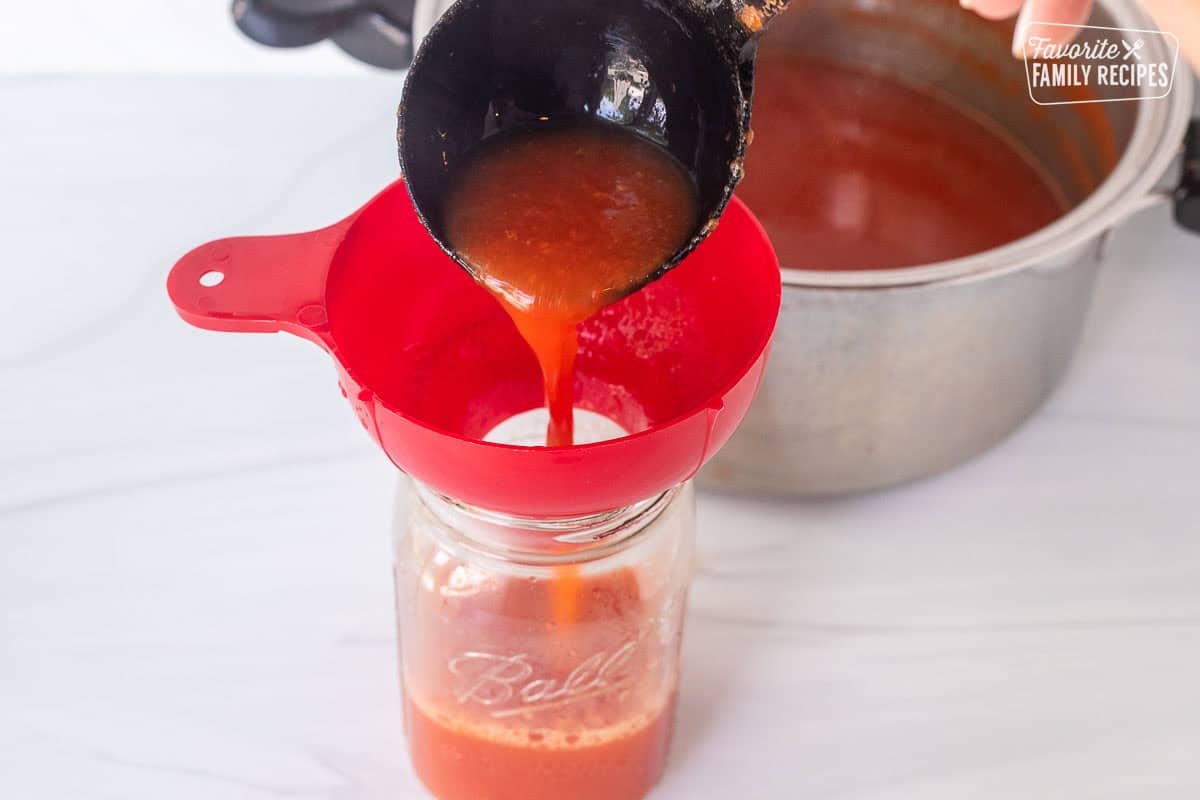
- Fill the jars. Add the required bottled lemon juice to each clean, hot jar. Ladle in the boiling tomato juice, leaving ½-inch headspace. Wipe the jar rims, center the lids, and apply the bands until fingertip tight.
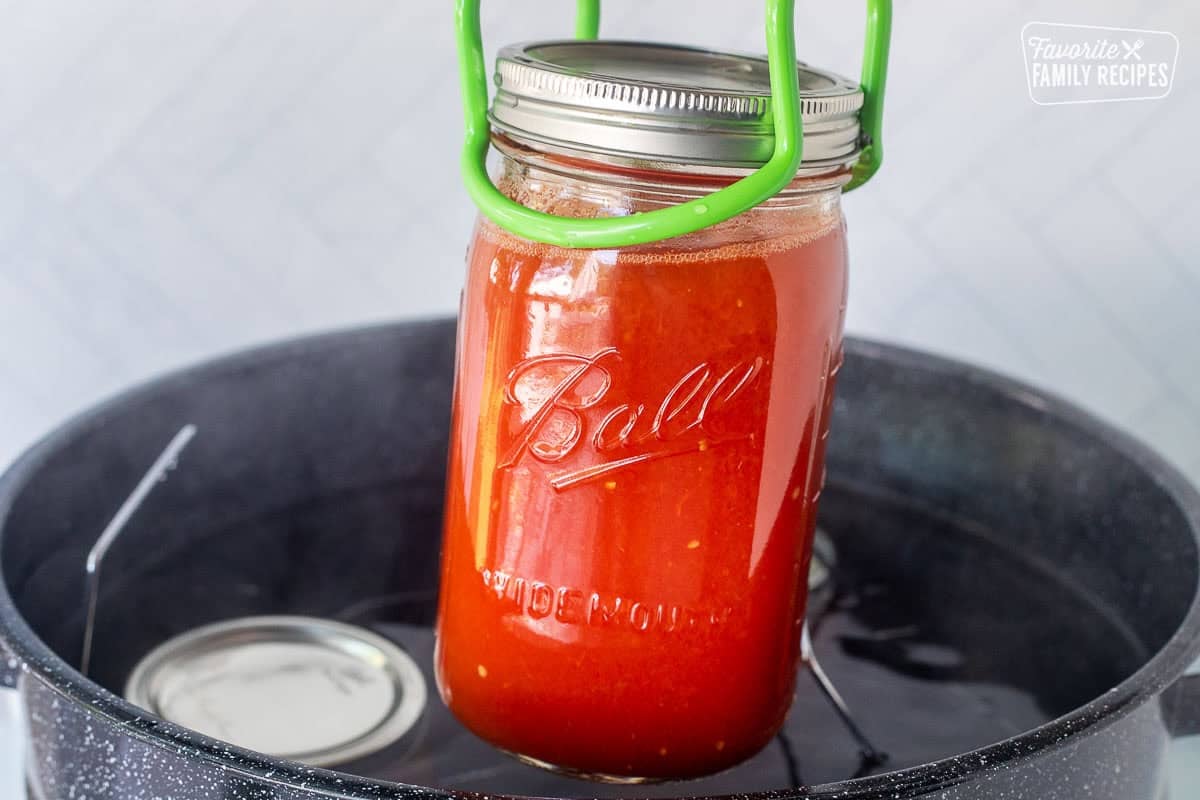
- Process and cool. Place the filled jars in a boiling water bath canner and process according to the jar size and your elevation. When the time is complete, turn off the heat, remove the lid, and let the jars rest in the canner for 5 minutes. Transfer them to a towel or cooling rack and leave them undisturbed for 12 to 24 hours before checking the seals.
Canning Safety
Tomatoes vary in acidity depending on their variety, growing conditions, and ripeness. Because of this, every jar of tomato juice must be acidified before it is processed.
Add the acid directly to each jar before adding the hot juice:
- Quart jars: 2 tablespoons bottled lemon juice or ½ teaspoon citric acid
- Pint jars: 1 tablespoon bottled lemon juice or ¼ teaspoon citric acid
Do not reduce or leave out the acid, even when using naturally tart tomatoes. Salt is added for flavor, but the bottled lemon juice or citric acid is what provides the required additional acidity.
Fill each jar with hot tomato juice, leaving ½-inch headspace. The jars must then be processed in a boiling water bath canner. Simply pouring hot juice into jars and waiting for the lids to seal is not a safe canning method.
Water Bath Processing Times
| Elevation | Pint Jars | Quart Jars |
|---|---|---|
| 0 to 1,000 feet | 35 minutes | 40 minutes |
| 1,001 to 3,000 feet | 40 minutes | 45 minutes |
| 3,001 to 6,000 feet | 45 minutes | 50 minutes |
| Above 6,000 feet | 50 minutes | 55 minutes |
Make sure the jars are covered by at least 2 inches of water because the processing time is longer than 30 minutes. Start the timer only after the water has returned to a full rolling boil. If the boiling stops at any time, bring the water back to a boil and restart the full processing time.
After processing, let the jars cool undisturbed for 12 to 24 hours. Remove the bands and press the center of each lid to check the seal. The lid should be firm and should not flex or make a clicking sound.
These acidification amounts and processing times follow the tested tomato juice instructions from the National Center for Home Food Preservation. For more information about safe home canning, read our Canning 101 Guide and Water Bath Canning Guide. Our guide for How to Can Whole Tomatoes also has helpful information about preparing tomatoes and adjusting for elevation.
Recipe Tips
- There is no need to peel the tomatoes first. The skins and seeds are removed when you run the cooked tomatoes through the food mill or tomato strainer.
- Measure the juice before adding seasonings. The amount of juice you get will vary, so do not add all the seasonings based only on the starting weight of your tomatoes.
- Use a tomato strainer for large batches. A hand-crank or electric tomato strainer separates the juice from the seeds and skins much faster than pressing everything through a colander.
- Use a heavy, nonreactive pot. Stainless steel is a good choice. Avoid aluminum, which can react with the acid in tomatoes.
- Start with the smaller amount of water. The tomatoes will release plenty of liquid as they heat. Only add more water if the tomatoes begin sticking to the bottom of the pot.
- Keep the tomatoes moving. Stir frequently, especially during the first few minutes, to prevent scorching.
- Use the hot-break method to reduce separation. Start by heating and crushing a small amount of tomatoes until boiling. Gradually add the remaining cut tomatoes while keeping the mixture boiling. Maintaining the heat helps slow the enzyme activity that causes the pulp and liquid to separate later. Separation is harmless, but this method can make the juice look more uniform.
- Run the scraps through twice for pulpier juice. If you like thick tomato juice, put the skins and pulp through the tomato strainer a second time. This can help extract a little more tomato pulp without leaving large pieces of peel or seeds in the juice.
- Keep the jars hot. Filling a cold jar with boiling tomato juice can cause thermal shock and may crack the glass.
- Do not overtighten the bands. Turn them only until fingertip tight. Air needs to escape from the jars while they are processing.
Frequently Asked Questions
No. The tomato skins and seeds are removed after the tomatoes have cooked, so there is no need to blanch and peel each tomato beforehand. Run the cooked tomatoes through a tomato strainer, food mill, or fine sieve before canning.
Yes. Salt is included for flavor and is not responsible for making the tomato juice safe to can. You can reduce or omit the salt, onion salt, and celery salt. Remember that both onion salt and celery salt contain sodium, so all three seasonings need to be considered when lowering the sodium. Do not reduce the bottled lemon juice or citric acid, and do not shorten the processing time.
Yes. For each pint, use half of the seasoning amounts listed for a quart. That would be ½ teaspoon salt, ¼ teaspoon onion salt, and ⅛ teaspoon celery salt per pint. Add 1 tablespoon bottled lemon juice or ¼ teaspoon citric acid to each pint jar. Process pints according to the elevation chart.
Absolutely. For a Virgin Bloody Mary, add a squeeze of lemon juice, a few drops of hot sauce, Worcestershire sauce, black pepper, and a little prepared horseradish if you like it spicy. Serve it over ice with celery, parsley, olives, or a pickle. Vodka can be added for a traditional Bloody Mary. Add these ingredients after opening the jar rather than before canning.
You may notice a slight tang when the juice is warm, but it is usually much less noticeable after the juice has chilled or has been added to a recipe. Citric acid is another tested option if you are especially sensitive to lemon flavor. Do not reduce the acid amount.
No. Fresh lemons can vary in acidity, while commercially bottled lemon juice has a standardized acidity level. Use bottled lemon juice or the measured amount of citric acid when canning.
Plan on approximately 3 to 3½ pounds of tomatoes for every quart of juice. Different tomato varieties contain different amounts of liquid, so your final yield may vary.
Frozen tomatoes can be used to make fresh or frozen tomato juice, but for the best-quality canned product, I prefer fresh, sound tomatoes. Tomatoes soften after freezing and may separate more easily. If you plan to can juice made from previously frozen tomatoes, make sure the tomatoes were in good condition when frozen and follow the full hot-pack, acidification, and processing instructions.
You can blend the cooked tomatoes, but the mixture still needs to be pressed through a fine sieve to remove the skins and seeds before canning. Blenders can also incorporate more air, which can increase foaming and separation.
Not to this particular canning recipe. Fresh vegetables lower the overall acidity and require a different research-tested tomato-and-vegetable juice recipe. You can add those flavors after opening the jar.
The tomatoes and basic seasonings are naturally gluten-free. Check the labels on the onion salt, celery salt, Worcestershire sauce, and any other seasonings you add if you are cooking for someone with celiac disease or a gluten allergy.
Troubleshooting
- Why did my tomato juice separate? Separation happens when enzymes in the tomatoes break down the natural pectin before the tomatoes become hot enough. To reduce separation, heat and crush a small amount of tomatoes until boiling, then gradually add the remaining tomatoes while keeping the mixture boiling. Separation is usually a quality issue rather than a safety issue. Shake or stir the juice after opening.
- Why is my tomato juice too thin? Juicy slicing tomatoes naturally produce thinner juice. Use a mixture that includes Roma, San Marzano, or another paste tomato for more body. You can also run the leftover pulp through the strainer a second time. If you simmer the juice longer, do it before filling the jars and keep the consistency pourable rather than reducing it to a thick paste.
- Why is my tomato juice too thick? The juice may be thick if you used mostly paste tomatoes or ran the pulp through the strainer more than once. You can use a mixture of paste and slicing tomatoes in the next batch. After opening a jar, thin the juice with water or broth if needed for drinking or cooking.
- Why does the juice taste salty? Salt, onion salt, and celery salt all contribute sodium. Always measure the finished juice before adding the seasonings. If a batch is too salty, dilute it after opening with unsalted tomato juice, water, or broth. Reduce the seasoning amounts in your next batch, but keep the acidifier and processing time the same.
- Why does my juice taste too acidic? The bottled lemon juice or citric acid is required for safe canning and should not be reduced. Citric acid may have a less noticeable flavor than bottled lemon juice. You can also add a small amount of sugar after opening the jar to soften the tart flavor.
- Why did my tomato juice scorch? Tomatoes can stick before they release enough juice. Use a heavy-bottomed stockpot, begin with the recipe’s small amount of water, and stir frequently. Pay special attention to the bottom and corners of the pot.
- Why did liquid leak out during processing? This is called siphoning. It can happen when jars are overfilled, bands are too tight, the heat changes suddenly, or the jars are removed immediately after processing. Leave the full ½-inch headspace, maintain a steady boil, and let the jars rest in the canner for 5 minutes before removing them.
- What should I do if a jar does not seal? Refrigerate the jar and use it within 3 to 4 days, freeze it in a freezer-safe container, or reprocess it within 24 hours. To reprocess, pour the juice into a pot, bring it back to a boil, fill a clean hot jar, use a new lid, and repeat the entire processing time.
- How can I tell if canned tomato juice has spoiled? Discard any jar with a loose or bulging lid, leaking liquid, mold, spurting liquid, rising bubbles, an unusual color, or a foul odor. Never taste tomato juice to decide whether it is safe.
Make Ahead and Storage
For the best results, prepare and can the tomato juice on the same day. If you need to pause, refrigerate the strained juice promptly, then bring it back to a full boil before filling the jars.
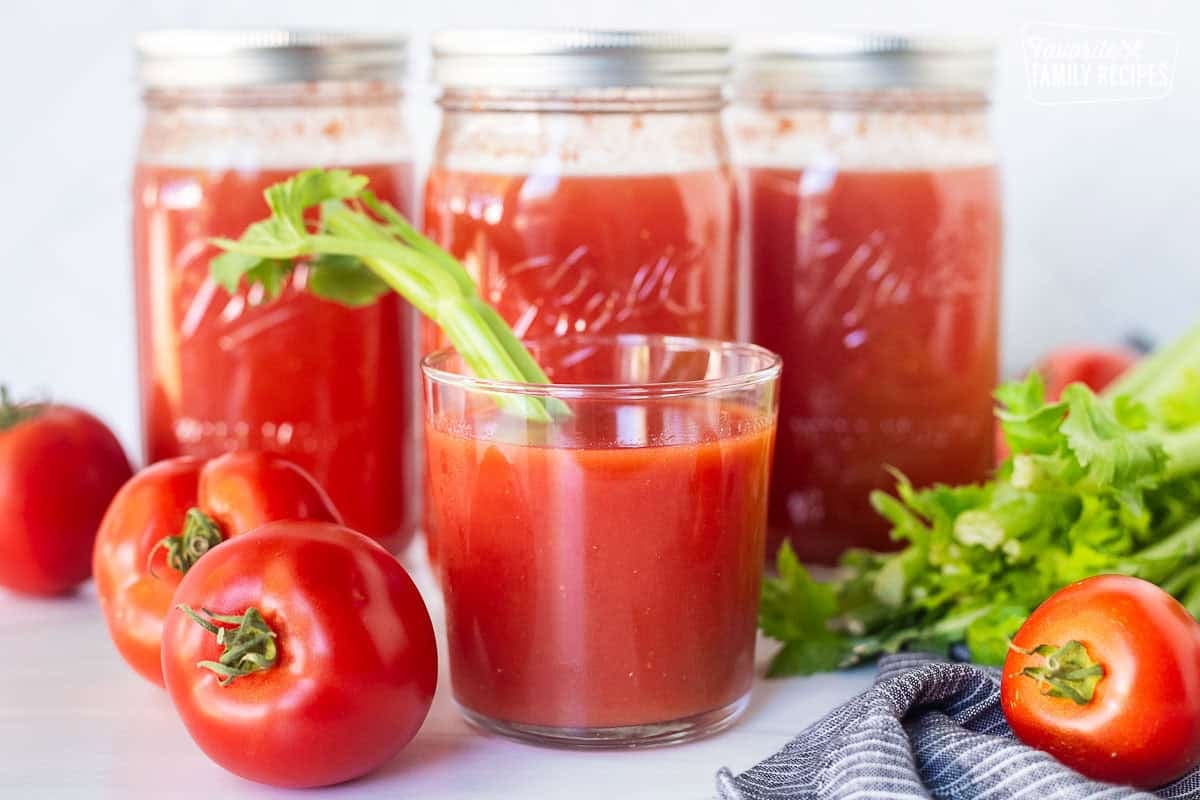
Fresh tomato juice: Store in an airtight jar or bottle in the refrigerator and use within 3 to 4 days.
Opened canned tomato juice: Refrigerate after opening and use within 3 to 4 days.
Frozen tomato juice: Cool the juice completely and transfer it to freezer-safe jars, bags, or containers. Leave extra room for expansion. Freeze for up to 1 year for the best quality.
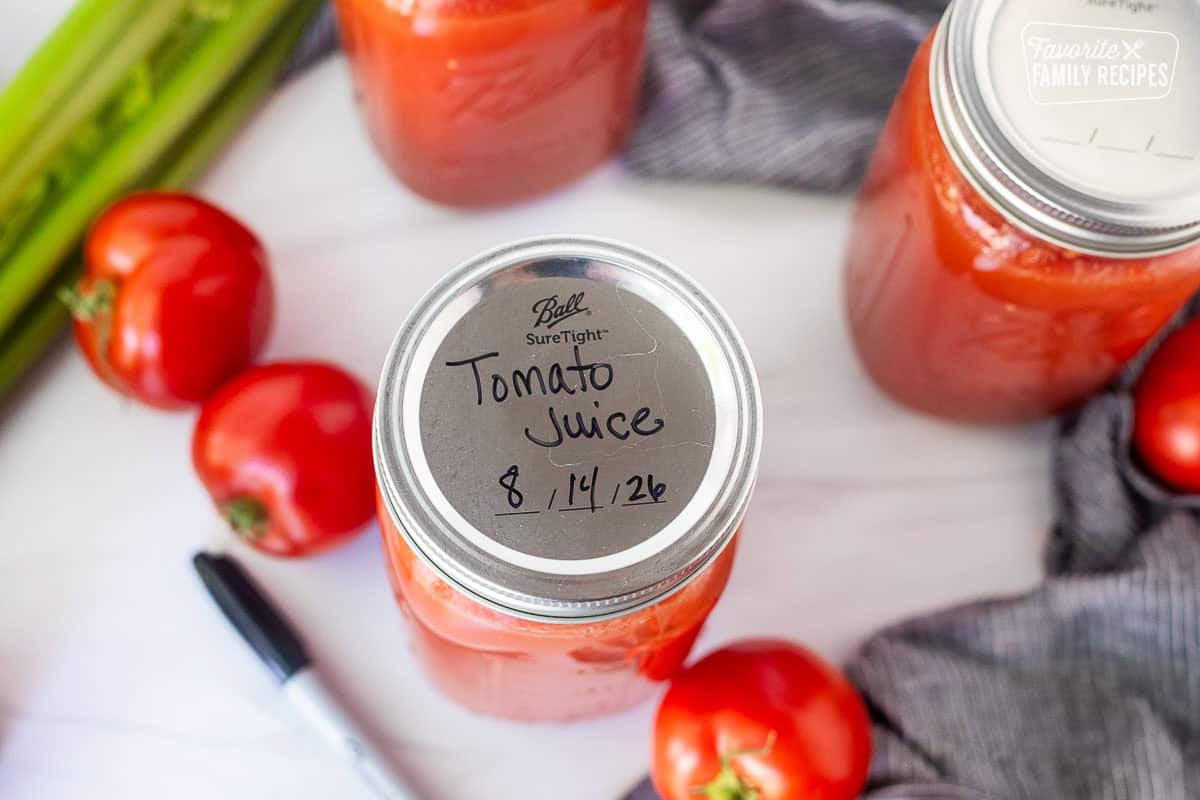
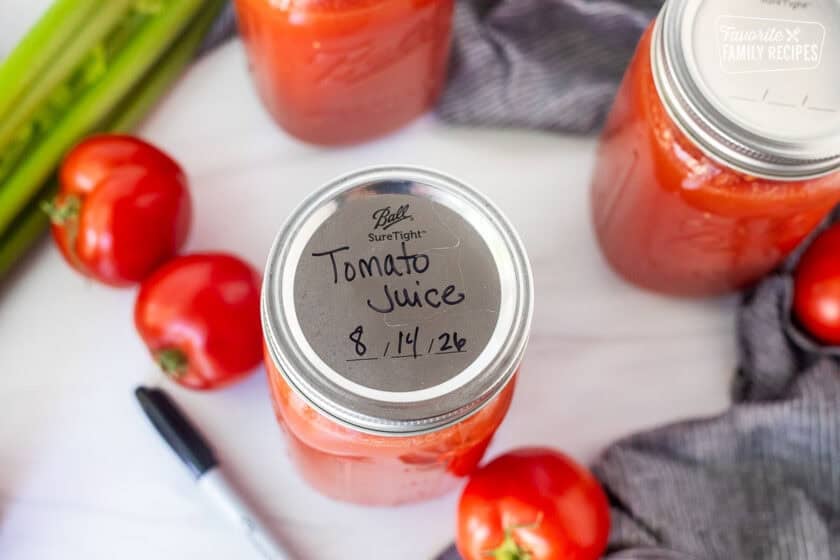
Canned tomato juice: Label and date each jar, remove the bands, and store the sealed jars in a cool, dark, dry place. For the best quality and nutritional value, plan to use home-canned tomato juice within 1 year. Always inspect the lid, seal, and contents before opening.
Pairing Ideas
Homemade tomato juice is useful for much more than drinking. Use it as the base for Cafe Zupas Tomato Basil Soup, Grilled Sirloin Steak with Tomato Basil Sauce, Mom’s Cheater Chili, or Creamy Tomato Basil Soup with Sausage. It is also great in vegetable soup, stew, Spanish rice, meatloaf, pasta sauce, and any recipe that needs a flavorful tomato base.
More Canning Recipes
Once the canner is out and the garden is producing, try some of our other favorite canning recipes:
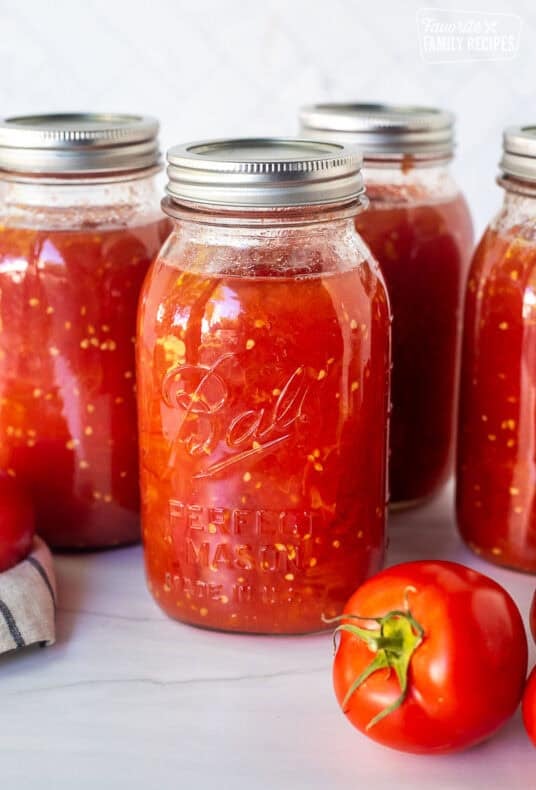
- How to Can Whole Tomatoes
- How to Can Peaches
- How to Can Pears
- Pickled Beets
- Virginia Chunk Sweet Pickles
- Jalapeño Jelly
This Tomato Juice Recipe is such a good way to turn a big tomato harvest into something you can use throughout the year. Drink it cold, season it for a Bloody Mary, or open a jar whenever you need a flavorful base for soup, chili, stew, or sauce. Once you try homemade, it is hard to go back to the store-bought kind.
Have you tried Canning Tomato Juice with this recipe? Leave a comment and a star rating below. I would love to hear how your batch turned out and which tomato varieties you used! 💛🍅
Homemade Tomato Juice Recipe
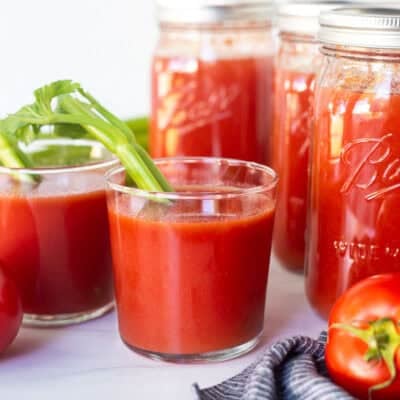
Video
Ingredients
- 23 pounds tomatoes, (yields about 7 quarts tomato juice)
- water, approximately ¼ cup to 1 cup
Per Quart of Juice:
- 1 teaspoon salt
- 1/2 teaspoon onion salt
- 1/4 teaspoon celery salt
Add to each Quart Jar:
- 2 tablespoons bottled lemon juice, (or 1 tablespoon per pint jar)
Instructions
- Wash the tomatoes thoroughly. Remove the cores, stems, bruises, and blemishes, then cut the tomatoes into quarters or large chunks.
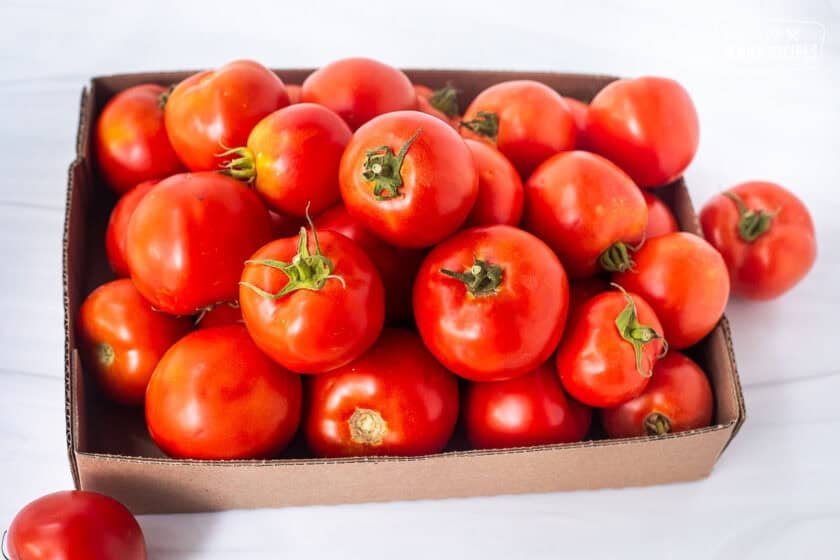
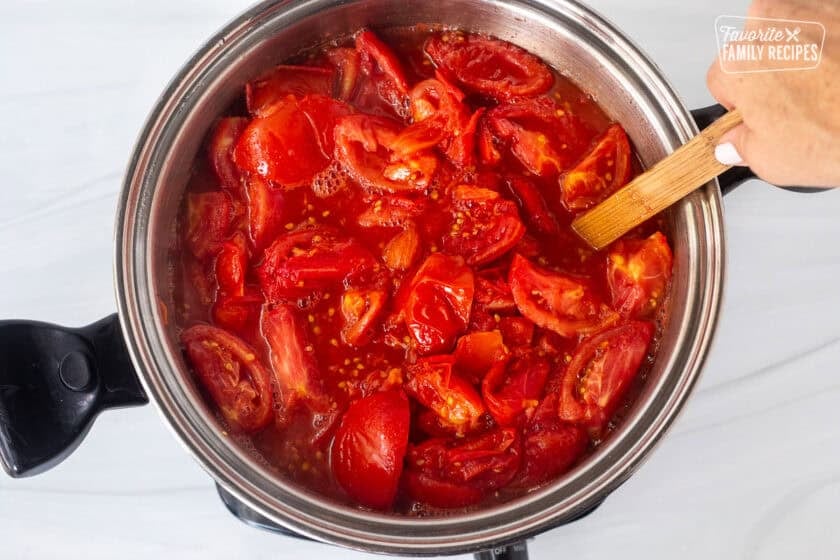
- Place the tomatoes in a large stockpot. Add ¼ to 1 cup water, using only enough to prevent sticking. Bring to a boil over medium-high heat, stirring and crushing the tomatoes occasionally. Simmer until very soft and broken down, about 20 to 30 minutes.
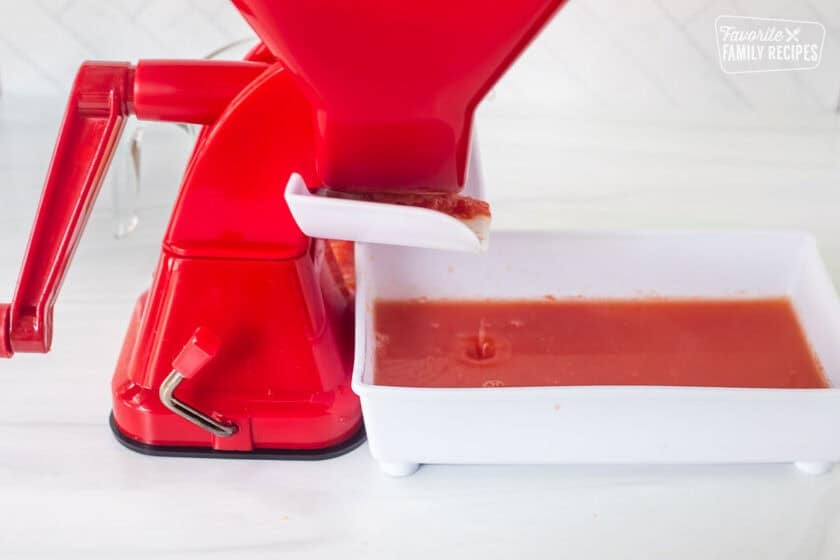
- Working in batches, press the cooked tomatoes through a food mill, tomato strainer, or fine colander to remove the skins and seeds. Discard or compost the skins and seeds.
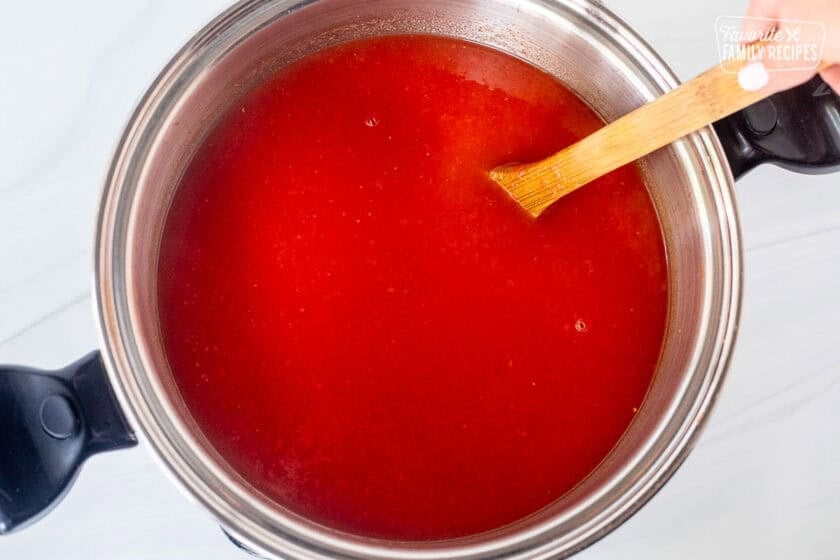
- Return the strained tomato juice to the clean stockpot and bring it back to a gentle boil. Measure the amount of finished juice. For each quart of juice, add 1 teaspoon salt, ½ teaspoon onion salt, and ¼ teaspoon celery salt. Simmer for 5 to 10 minutes, stirring occasionally.
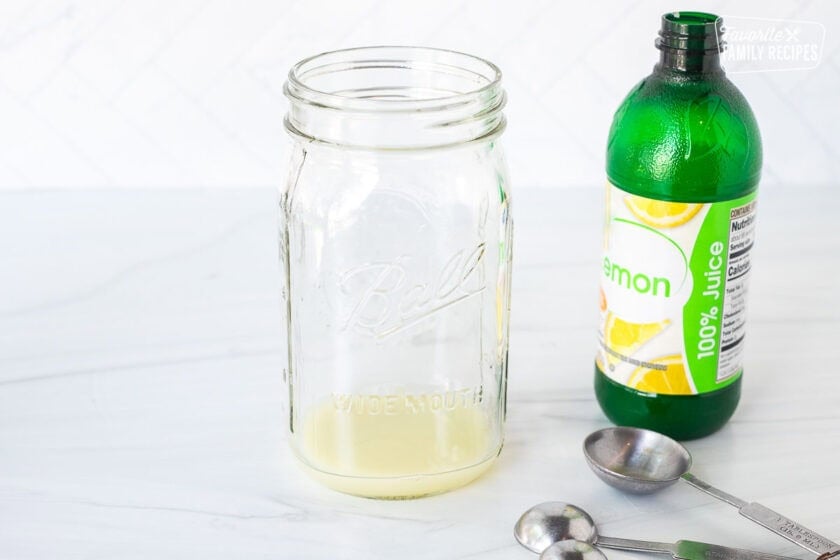
- Prepare a boiling water bath canner and keep clean jars hot. Add 2 tablespoons bottled lemon juice to each quart jar or 1 tablespoon bottled lemon juice to each pint jar. Citric acid may be used instead, using ½ teaspoon per quart or ¼ teaspoon per pint.
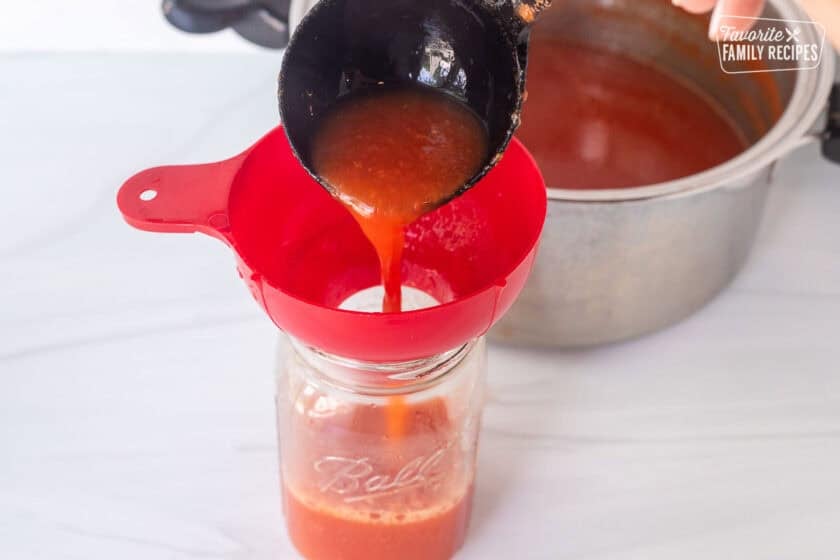
- Ladle the hot tomato juice into the jars, leaving ½-inch headspace. Wipe the rims clean, center the lids, and apply the bands until fingertip tight.
- Process the jars in a boiling water bath canner. Process pints for 35 minutes and quarts for 40 minutes at elevations up to 1,000 feet. Increase the processing time according to the elevation chart in the notes.
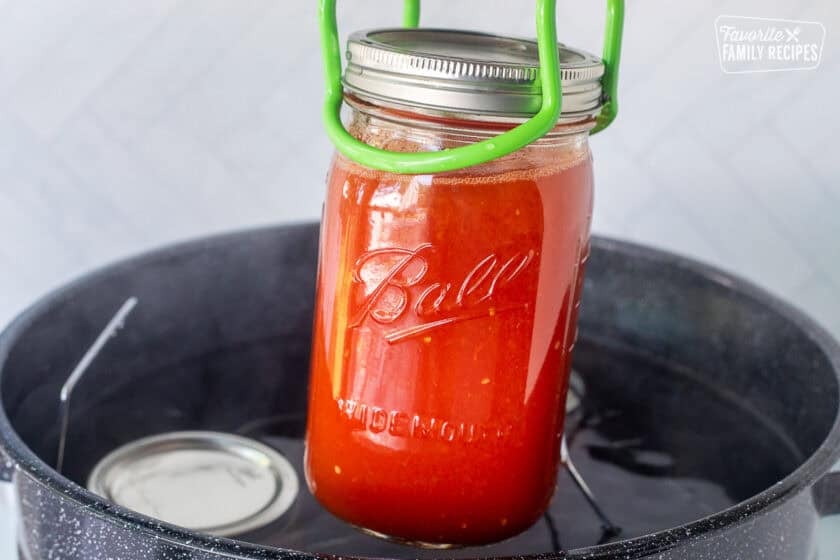
- Turn off the heat, remove the canner lid, and leave the jars in the water for 5 minutes. Remove the jars without tilting and cool undisturbed for 12 to 24 hours. Check the seals, remove the bands, label, and store.
Equipment
- Large Stockpot
- Tomato strainer, food mill, or fine colander
- Water-bath canner with rack
- Quart canning jars with lids and bands
- Canning funnel
- Jar lifter and headspace tool
Notes
- Plan on approximately 3 to 3½ pounds of tomatoes for every quart of finished juice.
- The yield will vary depending on the tomato varieties and how much liquid they contain.
- Measure the finished juice before adding the salt, onion salt, and celery salt.
- You do not need to peel the tomatoes before cooking. The food mill or tomato strainer will remove the peels and seeds.
- Bottled lemon juice or citric acid is required for safe water bath canning. Do not use fresh lemon juice.
- Use 2 tablespoons bottled lemon juice or ½ teaspoon citric acid per quart.
- Use 1 tablespoon bottled lemon juice or ¼ teaspoon citric acid per pint.
- Leave ½-inch headspace in every jar.
- Do not add fresh vegetables, onions, garlic, peppers, celery, or fresh herbs to this recipe before canning.
- If making pints, use ½ teaspoon salt, ¼ teaspoon onion salt, and ⅛ teaspoon celery salt per jar.
- Process pint jars for 35 minutes at 0 to 1,000 feet, 40 minutes at 1,001 to 3,000 feet, 45 minutes at 3,001 to 6,000 feet, or 50 minutes above 6,000 feet.
- Process quart jars for 40 minutes at 0 to 1,000 feet, 45 minutes at 1,001 to 3,000 feet, 50 minutes at 3,001 to 6,000 feet, or 55 minutes above 6,000 feet.
- Start timing only after the water has returned to a full rolling boil.
- If the boiling stops during processing, return the water to a boil and restart the full processing time.
- Cool jars undisturbed for 12 to 24 hours before checking the seals.
- Store sealed jars without the bands in a cool, dark, dry place and use within 1 year for the best quality.
- Refrigerate opened jars and use within 3 to 4 days.
Nutrition
Nutrition information is automatically calculated, so should only be used as an approximation.
Love this recipe?
We want to hear from you! Please leave a review.

I served this and people wanted to know what brand it was. When I said that I made it, one of my guests was astonished. She didn’t know you could make tomato juice. Excellent recipe canning it keeps it stable for a very long time.
can you put the tomatoes through the grinder to remove the skins and seeds before boiling. what happens if you dont boil first. will it still be safe to use.
I haven’t tried it that way, but I think that should be fine. The tomatoes will still cook when you simmer the sauce.
Growing up I loved V8 juice but never thought I could make it myself! This recipe has reminded me of something I used to love and I’m excited to try making it from home! Printing this recipe now!
The perfect drink! I love knowing exactly what I am putting in my body so making my own drinks is perfect, thanks for the idea!
This was delicious!!! Followed recipe exactly except used a Weston tomato press to squeeze the juice. Wonderful recipe. Sometimes for a smaller batch I don’t can it, just put it in the fridge. It never lasts long. Larger batches get canned proper. A+.
This was our first time at making tomato juice. Just used every variety of tomato we had in our patio garden. Canned a bunch and sampled what didn’t fit in to the jars. In the words of Guy Fieri, “Winner, winner, chicken dinner!” Wouldn’t change a thing.
Don’t throw away the pulp and seeds. Dehydrate them for tomato powder. Tomato powder is the best of ever, It can be used in so many things. Meat loaf, soup, mixed in your hamburgers, etc.
I’ve never heard of that before! I will have to try it!
Instead of straining to remove the seeds and skin, can it all be pureed in a blender? If so, does it still taste good?
We have not tried it that way, so I can’t definitively say how it would affect the taste or texture. Let us know how it turns out if you do try it!
I fix mine like that leaving the skin an seed it was really good
So do I. It is really good and makes it thicker. I make really good juice and have done this for years.
How do you seal the jars?
Can it be frozen instead of canning?
Sure!
I use a Foley Food Mill for processing foods with skins and seeds like tomato juice, grape preserves, etc.
Haven’t actually made your tomato juice yet, just started cooking about 2 quarts of yellow grape tomato juice that I juiced using my blender. Next I will run the cooked juice through the Foley Food Mill before adding the spices.
Where dose it say anything about lemon juice in the recipe? I just started the water bath and didnt put any lemon juice in the jars!? How is this going to affect the juice? Will it keep?
To be safe, you always want to add lemon juice to the bottom of your jars. It just helps with the acidity levels. You may want to re-process your jars if you are worries about it or if you think you will use them soon, you can keep them refrigerated.
I made this juice and let me say……. ‘It’s DELICIOUS!! I’ll definitely be making more of it!! It would make a great Bloody Mary, a base for vegetable soup or chili and it’s so good over ice!! Thanks for sharing this recipe!!
Hi Dee! I am so glad to hear you like this recipe! We love using it as a base for soups too! SO tasty! Thank you for sharing your nice comment and thanks for the 5-stars!
Just a helpful hint. I have a very large electric cooker, looks like a giant crockpot. I put it on 250 degrees and put quartered and if large tomatoes I cut more. I put them in the crock pot and every few hours I ladle of the juice. I now have tomatoe juice and sauce ready to can.
Delicious, but I’m not adding but 1/4 tsp salt to quarts next batch and add 2 Tablespoons lemon juice or use citric acid. Little too salty for me.
It is fine to leave the salt out, just don’t leave out the lemon juice unless you are substituting it with something that can bring up those acidity levels. Just for safety reasons. Glad you liked it! Hope this helps!
I just read the instructions but you didn’t mention if you waterbath canned this or pressure can. And for how long.
We usually only water bath or steam bath. It takes about 40 minutes to process each batch. Hope this helps!
Our recipe uses tomatoes, green peppers. onions, sugar, salt, and pepper. We cook the vegetables first, then run them through a strainer, simmer the juice, then pour the juice into jars, and process the jars in a pressure canner for twenty minutes. My husband drinks it as juice, or we heat it for soup. Sometimes I add thickening made from butter, flour and a little tomato juice. It is really good. We have it with grilled cheese sandwiches every Sunday. It is important to process the jars in a pressure canner, though. Check for a recipe in the Ball Blue Book or talk to your extension service, because the recommended times change as knowledge grows.
Thanks for sharing, I realy enjoyed this recipe
Processing is referring to the sterilization of the jars?
You will want to clean and sterilize the jars first– “processing” is so the lids seal onto the jars, making it safe for long-term storage.
Can you use cherry tomatoes?
I don’t see why not!
Boil for how long
Simmer until very soft and broken down, about 20 to 30 minutes. Hope this helps!
Is it 1 cup of water per quart or total
1 cup total. You only use the water for cooking the tomatoes.
When you say process for 40 minutes, are you talking about processing in a pressure cooker or a water bath?
Water bath or steam… pressure cooker would be different (I don’t know how different because I don’t have a pressure cooker … :/ )
pressure cooking tomato products is typically 5 pounds of pressure for 15 minutes.
I am making your spaghetti sauce right at this moment. I have processed my tomatoes with my Kitchenaid vegetable / fruit strainer. Your recipe says for 25 lbs of tomatoes. I have no clue how many lbs I used. I just haul them in from the garden and processed them. Do you know how many gallons is 25 lbs of tomatoes?
Generally 1 lb is about 2 cups (16 oz.)
We used a strainer like yours called a Squeezo for years. My husband was always trying to figure our how to motorize it because sometimes we would do 5 or more gallons at a time. We finally got the attachment for my Kitchenaid. It is great but does not have a screen fine enough for blackberries. We wore our first attachment out. The bushing wears out and allows the juice to flow back into the mixer. Looks like leaking grease. Hubby used directions found on Pinterest to dismantle and clean mixer. We never cook our tomatoes first. Do raw, then bring to a boil in pot. We only add salt but will try the onion salt and celery salt. Throw in a tobasco pepper before you seal and let age if you want it spicy. In your directions you say throw away the pulp. That comes through the screen with the juice. You are just throwing away the skin and seeds. Throw those in the garden for a great crop of volunteer tomato plants next year (if you did not precook). We use an heirloom Roma type tomato for lots of pulp.
Thank you so much for your comment, especially about the Kitchen Aid attachment… very good to know! Also, thank you for spotting that typo– I will fix it now!
Because tomatoes are a borderline low-acid food you need to acidify the tomato juice with lemon juice or citric acid before you waterbath can the quarts to safeguard against botulism. To each quart of tomato juice add 2 tablespoons of lemon juice or 1/2 teaspoon of citric acid.
Can you just put the lemon juice in the whole pot while you cook it before you water bath it
You probably could– just by putting them in each jar you know there is enough acid in each individual jar.
I use a Tomato Juicer and you don’t loose anything. It is quick and separates pulp etc. Much much quicker
Was given some quarts of canned tomatoe juice…It is to sweet for us.
What can i do to fix it?
Was given to me by my mother in law….Desperate for a way to fix it.
Could you add some salt, onion salt, and/or celery salt?