
We may earn a commission when you click on the affiliate links in this post.
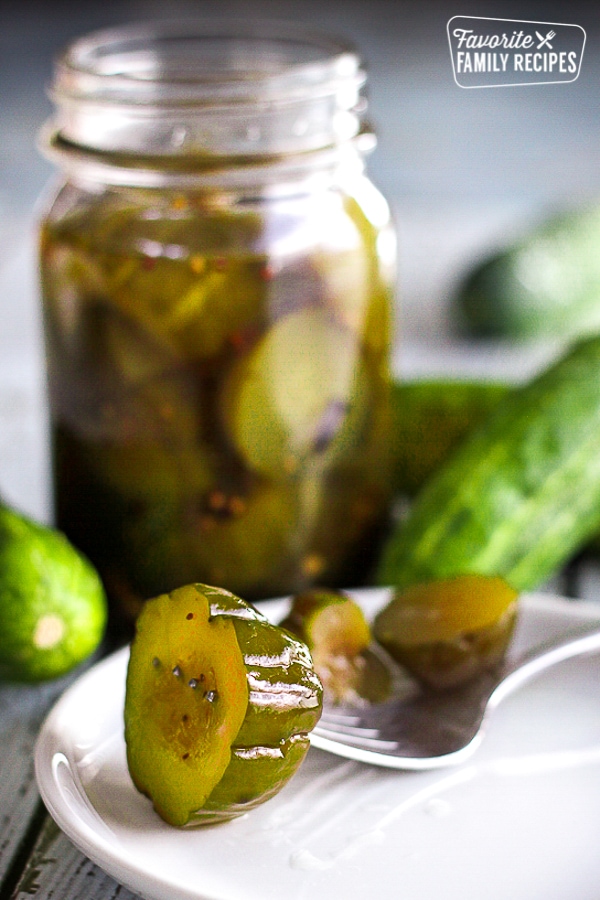
This old-fashioned Sweet Pickles Recipe makes crisp pickling cucumbers with a sweet, tangy syrup and plenty of warm pickling spice. These 14-day pickles take some patience, but most of the daily steps only require a few minutes. Once processed in a water bath canner, the jars can be stored in the pantry and enjoyed all year.
5 Star Reviews ⭐️⭐️⭐️⭐️⭐️
“Fabulous pickles! I had never made sweet pickles before; I followed the directions and the pickles turned out better than expected. My family loves them, and another batch is already in progress.” – Dana
“Perfect. Thank you so much! I’m adding the pickling spices, vinegar and sugar today. I can’t wait!” – Sara
“My father made them every year, and I carried on the tradition. The same exact recipe, and they are my family favorite. They are so good!” – Laurie
Why I Love These Sweet Pickles
These Virginia Chunk Sweet Pickles are truly a taste of my childhood. Whenever we visited my Aunt Echo and Uncle Larry, they would set a jar of sweet pickles on the dinner table. My favorite way to eat them was alongside roast and mashed potatoes. They were crisp, tangy, sweet, and completely different from the soft sweet pickles at the grocery store.
I love this recipe because it uses a gradual 14-day process that gives the cucumbers time to develop their texture and flavor. The cucumbers are first cured in a salt brine, then soaked in a spiced vinegar syrup that becomes sweeter each day. There are several steps, but none of them are difficult. I like to put the schedule on my calendar before I begin so I always know what needs to be done.
🩷 Erica
Table of Contents
- 5 Star Reviews ⭐️⭐️⭐️⭐️⭐️
- Why I Love These Sweet Pickles
- Supplies You’ll Need
- Ingredients You’ll Need
- Ingredient Additions and Substitutions
- How to Make Sweet Pickles
- How to Cut the Cucumbers into Large Chunks
- Canning Safety
- Recipe Tips
- Frequently Asked Questions
- Troubleshooting
- Make Ahead and Storage
- Pairing Ideas
- More Canning Recipes
- Sweet Pickles Recipe
Supplies You’ll Need
You do not need a lot of specialized equipment for this Sweet Pickles Recipe, but you will need a food-safe container for the 14-day curing process and basic water bath canning supplies.
- One-gallon food-grade container: Use a glass, food-grade plastic, stainless steel, unchipped enamelware, or food-safe stoneware container.
- Cover and weight: Use a clean plate, fermentation weight, or another food-safe weight to keep the cucumbers 1 to 2 inches below the brine or syrup.
- Clean kitchen towel: Place this over the container to protect the cucumbers during the curing process.
- Large stainless steel saucepan: You will use this to prepare the salt brines and boil the sweet vinegar syrup.
- Colander: This makes it easy to drain and rinse the cucumbers throughout the 14-day process.
- Cutting board and sharp knife: Use these to remove the blossom ends and cut the cucumbers into thick, even 1-inch slices on Day 7.
- Measuring cups and spoons: Accurate measurements are especially important when preparing brines and syrups for canning.
- Cheesecloth and kitchen twine: Tie the celery seed and pickling spices into a small spice bag so they can be easily removed before canning.
- Pint or quart canning jars: Use sterile pint jars or clean, hot quart jars with no cracks, chips, or damaged rims.
- New canning lids and screw bands: Use new flat lids for each batch and clean screw bands that are not bent or rusty.
- Boiling-water canner with a rack: The canner should be deep enough to cover the filled jars with at least 1 inch of boiling water.
- Canning funnel: A wide-mouth funnel helps keep the jar rims clean while packing the cucumber pieces and adding syrup.
- Jar lifter: Use this to safely move hot jars into and out of the canner.
- Ladle: A ladle makes it easier to pour the hot syrup over the cucumber pieces.
- Bubble remover and headspace tool: Use a nonmetallic tool to release trapped air and check for ½ inch of headspace.
- Clean cloth or paper towel: Wipe the jar rims before applying the lids so sticky syrup does not interfere with the seal.
Ingredients You’ll Need
- Pickling cucumbers: Choose fresh, firm cucumbers that are 2 to 5 inches long. Small cucumbers with few seeds will give you the best texture.
- Canning or pickling salt: This pure salt dissolves evenly and does not contain anti-caking ingredients that can cloud the brine.
- Water: Fresh water is used to make a new boiling salt brine on Days 1, 3, and 5.
- Celery seed: Celery seed gives the syrup a savory flavor that balances all the sugar.
- Mixed pickling spices: Whole pickling spices add warm, old-fashioned flavor without making the syrup cloudy.
- Granulated sugar: The sugar is added gradually over several days so the cucumbers do not shrivel.
- Vinegar: Use commercially bottled white or apple cider vinegar labeled as having 5% acidity.
Ingredient Additions and Substitutions
Because this is a tested home canning recipe, it is important to use the listed ingredients and measurements.
- White vinegar: White vinegar gives the pickles a light color and a clean, sharp flavor.
- Apple cider vinegar: You can use commercially bottled apple cider vinegar as long as it is labeled 5% acidity. The pickles will be slightly darker and have a fruitier flavor.
- Pickling spice: Pickling spice blends can vary slightly by brand. Use whole spices rather than ground spices.
- Spice bag: Tie the celery seed and pickling spice in a small piece of clean cheesecloth. This keeps loose spices out of the jars.
- Pickle shape: The cucumbers can be left whole or cut into slices or strips before the vinegar syrup is added.
- Pickle Crisp: Do not add Pickle Crisp unless you are following a tested recipe that specifically calls for it.
- Pickling lime: Do not substitute pickling lime for the salt. Lime requires its own tested soaking and rinsing method.
- Table salt: Table salt can make the brine cloudy. Canning or pickling salt is the best choice.
- Salt substitutes: Do not use reduced-sodium salt or potassium-based salt substitutes.
- Sugar substitutes: Do not replace the granulated sugar with artificial sweeteners.
- Extra vegetables: Do not add onions, peppers, garlic, or other vegetables because they would change the tested ingredient proportions.
- Larger batches: Make separate batches rather than doubling the recipe in one container.
How to Make Sweet Pickles
This Sweet Pickles Recipe takes 14 days. Add reminders to your calendar for Days 1, 3, 5, and every day from Day 7 through Day 14.
- Begin the salt brine. Wash the cucumbers, remove a thin slice from each blossom end, and place the whole cucumbers in a clean, food-grade one-gallon container. Pour boiling salt brine over them, add a clean cover and weight, and keep the cucumbers submerged.
- Refresh the brine on Days 3 and 5. Drain and rinse the cucumbers. Briefly boil the cover and weight to sanitize them. Prepare a fresh boiling salt brine and pour it over the cucumbers.
- Cut the cucumbers and add the vinegar syrup on Day 7. Drain and rinse the cucumbers, then briefly boil the container, cover, and weight to sanitize them. Cut the cucumbers crosswise into thick, even slices about 1 inch wide. Return the pieces to the container and cover them with a boiling mixture of vinegar, sugar, celery seed, and pickling spice.
- Sweeten the syrup on Days 8 through 13. Each day, drain and reserve the syrup and spice bag. Add more sugar and bring the syrup to a boil. Rinse the cucumber pieces, sanitize the container and equipment, and pour the boiling syrup back over the cucumbers.
- Pack the jars on Day 14. Pack the large cucumber pieces into prepared jars. Add the final portion of sugar to the syrup, bring it to a boil, and remove the spice bag. Pour the hot syrup over the cucumbers, leaving ½ inch of headspace.
- Process the jars. Apply the canning lids and process the jars in a boiling-water canner for the time required for your jar size and elevation. Let the jars cool undisturbed for 12 to 24 hours before checking the seals.
How to Cut the Cucumbers into Large Chunks
The National Center for Home Food Preservation says the cucumbers can be canned whole, in strips, or in slices. It does not provide a required thickness for the slices.
For the large pieces I associate with Virginia Chunk Sweet Pickles, cut each cucumber crosswise into thick, even slices about 1 inch wide. The pieces look and eat like large chunks, but they are still prepared as uniform slices.
Keep these tips in mind:
- Cut the cucumbers on Day 7, after the final salt brine.
- Use a ruler to check the first few slices until you get a feel for the thickness.
- Keep the slices as even as possible so they cure and pack consistently.
- Cut straight across the cucumber instead of making irregular cubes.
- Smaller cucumbers may only need to be cut into two or three thick pieces.
- Do not pack the jars so tightly that syrup cannot flow around the cucumber pieces.
- Remove air bubbles before checking the final headspace.
Canning Safety
This recipe follows the National Center for Home Food Preservation’s tested method for 14-Day Sweet Pickles. Follow the ingredients, daily schedule, jar sizes, headspace, and processing times exactly.
Do not reduce the vinegar, salt, or sugar. Do not add extra cucumbers, water, or vegetables. Changes to a canning recipe can affect the acidity and the amount of time needed to process the jars safely.
Use commercially bottled vinegar labeled as having 5% acidity. Homemade vinegar and vinegar with a lower acidity are not suitable for this recipe.
Keep the cucumbers covered by 1 to 2 inches of brine or syrup during the entire curing process. Use a clean plate, fermentation weight, or food-safe weight to hold them below the surface.
Use a clean container made from:
- Food-grade plastic
- Glass
- Stainless steel
- Unchipped enamelware
- Stoneware made for food use
Do not use containers or utensils made from copper, brass, iron, zinc, or galvanized metal. These metals can react with the acid and salt in the recipe.
Keep the cucumbers at approximately 70 degrees F while they cure. Temperatures that are too warm can lead to soft pickles and spoilage.
Use the following boiling-water processing times.
Pint jars
- 0 to 1,000 feet: 5 minutes
- 1,001 to 6,000 feet: 10 minutes
- Above 6,000 feet: 15 minutes
Quart jars
- 0 to 1,000 feet: 10 minutes
- 1,001 to 6,000 feet: 15 minutes
- Above 6,000 feet: 20 minutes
Pint jars processed for only 5 minutes must be sterilized before filling. Jars processed for 10 minutes or longer should be clean and hot.
Read our Canning 101 post before you begin for more information about safe home canning equipment and preparation. Our Water Bath Canning post explains how to prepare the canner, fill the jars, adjust for altitude, process the jars, and check the seals.
Discard the batch if the cucumbers become slimy, unusually soft, moldy, or develop a foul odor. Never taste questionable pickles to decide whether they are safe.
Recipe Tips
- Use pickling cucumbers: Pickling cucumbers have firmer flesh and smaller seeds than regular slicing cucumbers.
- Choose smaller cucumbers: Cucumbers that are 2 to 5 inches long are less likely to become hollow.
- Start with fresh cucumbers: Begin brining within 24 hours of harvesting when possible.
- Weigh the cucumbers: Use exactly 4 pounds rather than estimating by the number of cucumbers.
- Remove the blossom ends: Cut approximately ¹⁄₁₆ inch from the blossom end of each cucumber to help prevent soft pickles.
- Leave part of the stem: Leave approximately ¼ inch of stem attached to the opposite end.
- Wait until Day 7 to cut them: The cucumbers remain whole during the salt brining portion of the recipe.
- Make thick, even pieces: Cut the cucumbers crosswise into slices about 1 inch wide for the large Virginia Chunk-style shape.
- Use a one-gallon container: The container should be large enough for the cucumbers, brine, cover, and weight.
- Keep the cucumbers submerged: Exposed cucumbers are more likely to develop mold or become soft.
- Maintain a steady temperature: Keep the container in a cool area near 70 degrees F.
- Use fresh spices: Older pickling spices can lose their flavor or develop off flavors.
- Make a spice bag: A cheesecloth spice bag makes it easy to remove the spices before canning.
- Measure carefully: Level the salt and sugar when measuring.
- Do not skip the rinses: Rinsing the cucumbers and sanitizing the equipment are part of the tested process.
- Add sugar gradually: Do not add all the sugar at once or the cucumbers may shrivel.
- Set daily reminders: The second week requires a short step every day.
- Do not overcrowd jars: Pack the cucumbers firmly but leave enough room for the syrup to move around them.
- Remove air bubbles: Slide a plastic bubble remover around the inside of each jar before adjusting the headspace.
- Wipe the jar rims: Sticky syrup can keep the lids from sealing properly.
- Expect the yield to vary: Depending on cucumber size and shape, the recipe makes approximately 5 to 9 pints.
Frequently Asked Questions
Virginia Chunk Sweet Pickles are an old-fashioned style of sweet pickle made by curing cucumbers in salt brine and gradually sweetening them in a spiced vinegar syrup. They are crisp, tangy, and sweeter than bread and butter pickles.
The cucumbers need time to cure in the salt brine before they are gradually sweetened. Adding the sugar slowly helps the cucumbers absorb the syrup without shriveling.
No. Alum is not needed for this Sweet Pickles Recipe. The National Center for Home Food Preservation says alum may be safely used to firm fermented pickles, but it is unnecessary and is not included in this tested 14-day recipe. Fresh pickling cucumbers, removing the blossom ends, maintaining the correct brine, and keeping the cucumbers near 70 degrees F will help produce firm pickles.
The tested recipe allows the cucumbers to be left whole or cut into slices or strips. Thick slices will give you a chunky, bite-sized pickle while staying within the tested directions.
Small pickling cucumbers are strongly recommended. Regular grocery store cucumbers are often waxed and usually have softer flesh and larger seeds.
Yes. The blossom end can contain enzymes that cause the cucumbers to soften. Remove a very thin slice, approximately 1/16 inch.
Yes, as long as it is commercially bottled and labeled 5% acidity. It will give the pickles a darker color and a slightly fruitier flavor.
Do not reduce the sugar if you plan to can the pickles for shelf storage. The sugar and daily additions are part of the tested formula.
For the safest and most consistent results, make the recipe using the listed amounts. Do not double the recipe in one container.
Yes. The recipe includes processing times for both pint and quart jars. Quart jars require a longer processing time.
At elevations up to 1,000 feet, pint jars are processed for only 5 minutes. Jars processed for less than 10 minutes must be sterilized before they are filled.
You can eat the pickles after the jars have cooled and the seals have been checked. The flavor will continue to develop as the jars sit.
The basic ingredients are naturally gluten-free. Check the labels on the vinegar and pickling spice if you need to avoid possible cross-contact.
Troubleshooting
- My pickles are soft or slippery.
Soft pickles can be caused by old cucumbers, blossom ends that were not removed, weak brine, warm curing temperatures, or cucumbers floating above the brine. Discard the batch if the pickles are slimy or smell bad. - My cucumbers are hollow inside.
Hollow cucumbers are often overgrown, overripe, or stored too long after harvesting. Use smaller cucumbers and begin brining them as soon as possible. - My pickles are wrinkled or shriveled.
Shriveling can happen when salt, vinegar, or sugar concentrations are too strong. Measure carefully and add the sugar gradually according to the daily schedule. - The brine is cloudy.
Table salt, hard water, or ground spices can make the liquid cloudy. Use canning salt, soft water when possible, and whole spices tied in cheesecloth. - The pickles turned dark.
Hard water, ground spices, loose spices, or contact with reactive metal can darken pickles. Use nonreactive containers and utensils. - Scum developed on top of the brine.
Remove surface scum promptly and make sure the cucumbers remain submerged. Discard the batch if you see fuzzy mold or notice slime or a foul odor. - The syrup does not cover the cucumbers.
Make sure you are using exactly 4 pounds of cucumbers and a suitable one-gallon container. Use a clean weight to keep the cucumbers below the syrup. Do not add plain water. - The pickles taste bitter.
Bitter flavor may come from old spices, too much spice, salt substitutes, or naturally bitter cucumber skins. Use fresh ingredients and measure carefully. - Liquid leaked out during canning.
Liquid loss can happen if the jars were packed too tightly, the headspace was incorrect, or the temperature changed too quickly. Do not open a sealed jar to add more syrup. - A jar did not seal.
Refrigerate the jar promptly. If you discover the failed seal within 24 hours and followed the recipe correctly, you can reprocess it with a new lid or keep it refrigerated and use it first. - There are bubbles in a sealed jar.
A few trapped air bubbles can remain after processing. Rising bubbles, spurting liquid, a bulging lid, mold, or an unusual odor can indicate spoilage. Discard the jar without tasting it.
Make Ahead and Storage
This recipe takes 14 days, so plan your schedule before you begin. You will need to work with the pickles on Days 1, 3, and 5 and every day from Day 7 through Day 14.
After processing, let the jars cool undisturbed for 12 to 24 hours. Press the center of each lid to check the seal. A properly sealed lid should be concave and should not flex when pressed.
Remove the screw bands before storing the jars. Wash and dry the outside of each jar, then label it with the recipe name and canning date.
Store sealed jars in a cool, dark, dry place between 50 and 70 degrees F. For the best quality, use home-canned sweet pickles within one year.
Refrigerate the pickles after opening. Always use a clean utensil when removing pickles from the jar.
Discard any jar with a loose or bulging lid, leaking liquid, rising bubbles, mold, an unusual color, spurting liquid when opened, or a foul or unusual odor.
Pairing Ideas
I love serving these sweet pickles alongside Oven Roast Beef and Mashed Potatoes, just like my aunt did when I was growing up. They are also great with Grilled Hamburgers, Chili Cheese Dogs, Pulled Pork Sandwiches, Tuna Melt Sandwiches, and Corned Beef Sandwiches. Chop them into Potato Salad, Chicken Salad, Tuna Salad, Egg Salad, roll them into Ham Roll-Ups, or add them to a Simple Charcuterie Board with cheese, crackers, and sliced ham.
More Canning Recipes
Once you have your jars and canning supplies ready, try some of our other favorite canning recipes.
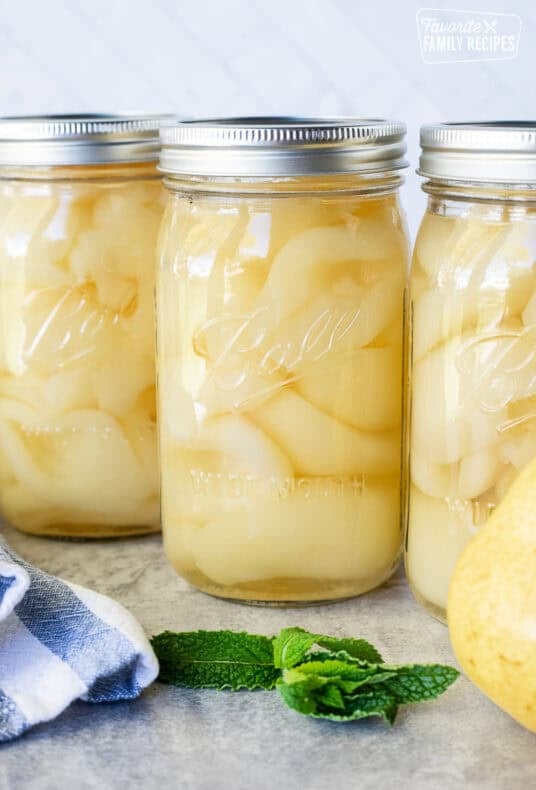
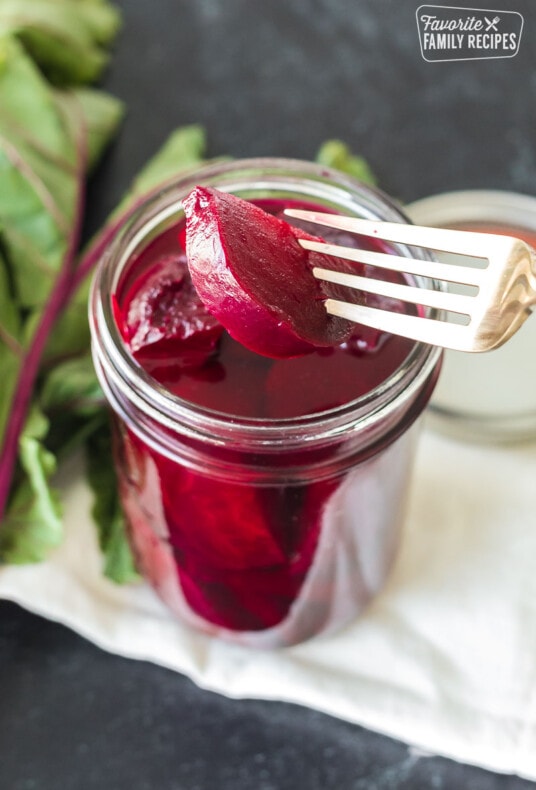
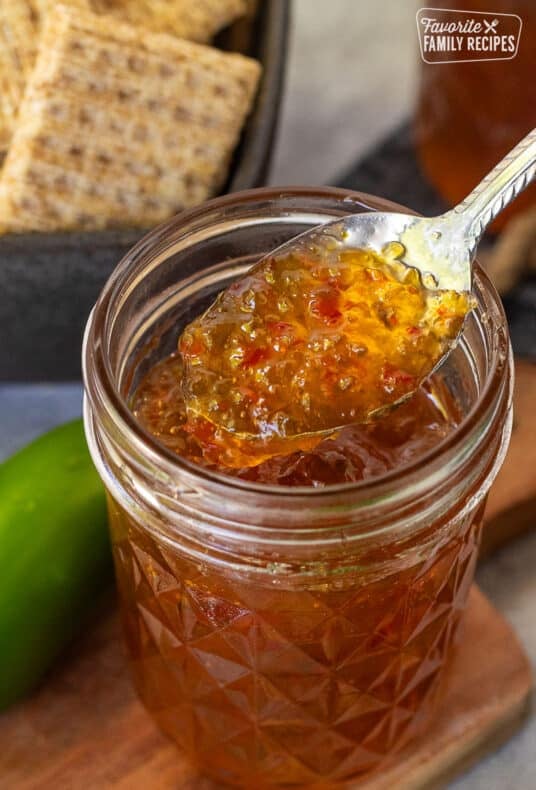
This Sweet Pickles Recipe takes a little planning, but the daily steps are simple and the finished pickles are well worth the wait. They are crisp, sweet, tangy, and full of the old-fashioned flavor I remember from family dinners.
Please let me know how your pickles turn out in the comments, and be sure to leave a star rating. I love hearing when one of our family favorites becomes part of your family’s traditions too. 💛🥒
Sweet Pickles Recipe

Ingredients
- 4 pounds pickling cucumbers, 2 to 5 inches long
- 3/4 cup canning salt, or pickling salt
- 6 quarts water, divided
- 2 teaspoons celery seed
- 2 tablespoons mixed pickling spices
- 5 1/2 cups granulated sugar, divided
- 4 cups white vinegar, or apple cider vinegar (commercially bottled with 5% acidity)
Instructions
- Begin the salt brine on Day 1. Wash the cucumbers. Cut a ¹⁄₁₆-inch slice from the blossom end of each cucumber and discard it, leaving approximately ¼ inch of stem attached. Place the whole cucumbers in a clean, food-safe one-gallon container. Combine ¼ cup canning salt with 2 quarts water and bring to a boil. Pour the boiling brine over the cucumbers. Add a suitable cover and weight to keep the cucumbers 1 to 2 inches below the brine. Cover the container with a clean towel and keep it at approximately 70 degrees F.
- Replace the brine on Days 3 and 5. Drain and discard the salt water. Rinse the cucumbers. Briefly boil the cover and weight to sanitize them, then return the cucumbers to the container. Combine ¼ cup canning salt with 2 quarts fresh water and bring to a boil. Pour the boiling brine over the cucumbers and replace the cover, weight, and clean towel. Repeat the entire process on Day 5 using the remaining ¼ cup salt and 2 quarts water.
- Cut the cucumbers and add the vinegar syrup on Day 7. Drain and discard the salt water. Rinse the cucumbers. Briefly boil the container, cover, and weight to sanitize them. Cut the cucumbers crosswise into thick, even slices approximately 1 inch wide, then return the large pieces to the container. Place the celery seed and pickling spices in a small cheesecloth bag. Combine 2 cups sugar and 4 cups vinegar in a saucepan. Add the spice bag and bring the mixture to a boil. Pour the hot syrup over the cucumbers. Replace the cover, weight, and clean towel.
- Add sugar on Days 8 through 13. Each day, drain the syrup and spice bag into a saucepan and reserve them. Add ½ cup sugar and bring the syrup to a boil. Remove and rinse the cucumber pieces. Briefly boil the container, cover, and weight to sanitize them. Return the cucumbers to the container and pour the boiling syrup and spice bag over them. Replace the cover, weight, and towel. Repeat this process once each day for six days, adding ½ cup sugar each day.
- Fill the jars on Day 14. Prepare a boiling-water canner. Drain the syrup into a saucepan. Pack the cucumber pieces into sterile pint jars or clean quart jars, leaving ½ inch of headspace. Add the final ½ cup sugar to the syrup and bring it to a boil. Remove and discard the spice bag. Pour the hot syrup over the cucumbers, maintaining ½ inch of headspace. Remove air bubbles, adjust the headspace if needed, wipe the jar rims, and apply two-piece canning lids.
- Process the jars. Place the jars in the boiling-water canner and process them using the time listed for your jar size and elevation (see notes below). After processing, turn off the heat and remove the jars according to safe water bath canning instructions. Let the jars cool undisturbed for 12 to 24 hours, then check the seals before storing.
Equipment
- 1-gallon food-safe container
- Food-safe cover and weight
- Large saucepan
- Colander
- Pint or quart canning jars with lids
- Boiling-water canner with rack
- Canning funnel
- jar lifter
- cheesecloth
- Kitchen twine
Notes
Boiling-Water Processing Times
Pint jars- 0 to 1,000 feet: 5 minutes
- 1,001 to 6,000 feet: 10 minutes
- Above 6,000 feet: 15 minutes
- 0 to 1,000 feet: 10 minutes
- 1,001 to 6,000 feet: 15 minutes
- Above 6,000 feet: 20 minutes
Recipe Notes
- This recipe follows the NCHFP 14-Day Sweet Pickles ingredient amounts, curing schedule, headspace, and processing times.
- The tested directions allow the cucumbers to be canned whole, in strips, or in slices.
- For large chunk-style pickles, cut the cucumbers crosswise into thick, even slices approximately 1 inch wide.
- Keep the pieces as uniform as possible.
- Leave the cucumbers whole until Day 7.
- Use exactly 4 pounds of fresh pickling cucumbers that are 2 to 5 inches long.
- Begin brining within 24 hours of harvesting when possible.
- Remove ¹⁄₁₆ inch from each blossom end to help prevent soft pickles.
- Leave approximately ¼ inch of stem attached.
- Use canning or pickling salt, not reduced-sodium salt or salt substitutes.
- Use commercially bottled vinegar labeled as having 5% acidity.
- Do not change the cucumber, salt, vinegar, water, or sugar proportions.
- Alum is not needed or included in this recipe.
- Use a clean, food-grade one-gallon container.
- Keep the cucumbers 1 to 2 inches below the brine or syrup.
- Maintain a curing temperature near 70 degrees F.
- Sanitize the container, cover, and weight on the days specified.
- Tie the whole spices in a clean cheesecloth bag for easy removal.
- Add only ½ cup sugar on each of Days 8 through 13.
- Add the final ½ cup sugar on Day 14.
- Use sterile pint jars or clean quart jars.
- Leave ½ inch of headspace in both pint and quart jars.
- Adjust the processing time for your elevation.
- Let processed jars cool undisturbed for 12 to 24 hours.
- Store sealed jars in a cool, dark, dry place.
- Use within one year for the best quality.
- Refrigerate after opening.
- Discard pickles that become slimy, moldy, unusually soft, or develop an unpleasant odor.
Nutrition
Nutrition information is automatically calculated, so should only be used as an approximation.
Love this recipe?
We want to hear from you! Please leave a review.

A fav of mine from years ago. My mother use to make these back in the 70’s when I was young. I ate them like candy!! 🙂 They definitely are not like other sweet pickles. They were so crunchy and tangy and sweet all at once. Im not sure if this is the EXACT same recipe my mother had but I’m going to give them a try. I do know they taste better with age. Ty for sharing 🙂
Let us know what you think, I’m curious how it will compare to your moms.
Do you cover the container while they are brining?
Yes, cover the bucket loosely to protect the pickles while allowing gases to escape. You can also use a clean towel, cheesecloth, or a loose-fitting lid so the brine can still “breathe” and release gases during fermentation. Just make sure the cover is clean and that all cucumbers stay fully submerged under the brine to prevent mold from forming. Hope this helps!
Fabulous pickles! I had never made sweet pickles before; I followed the directions and the pickles turned out better than expected. My family loves them, and another batch is already in progress:)
I love these pickles. My mother made these. I’ve started a batch. The 1 gallon of brine was not enough to cover the pickles so I did 1/2 gal more. I probably have too many pickles? Can I also increase everything else by 1/2 as much more to complete ?
That sounds like it should work fine, but we haven’t tried it that way so I can’t guarantee it will turn out. Let us know how it goes!
If it takes a gallon of brine, why only 6 cups of vinegar solution? It’s not enough to cover the pickles.
My mother made these every summer recipe from 1950 kerr canning book im 83 and srill make them.
I’m making this recipe but very small batch. Can we eat them immediately after the last step or do they need to age at all? I’d like to just put them in the fridge so we can snack on them.
You can eat them right away – I like to let them cool in the fridge after their last boil.
Perfect. Thank you so much! I’m adding the pickling spices, vinegar and sugar today. I can’t wait!
My father made them every year, and I carried on the tradition. The same exact recipe, and they are my family favorite. They are so good! The only difference is our recipe said to add 4 drops green food coloring into the brine on step 5. These are the best!
I love these pickles…just like my aunt would make.
Thank you for this recipe. My son had a word of mouth recipe from his wife’s grandmother without exact measurements. His pickles were always delicious. I wanted to make some, but being OCD and worried about safety, I needed exact amounts. Your recipe is the exact same recipe with the added bonus of exact amounts! I’m so happy! They are soaking in the vinegar sugar solution and will be ready to can tomorrow!!!!!
So you drain after 7 days and cut the cucs into chunks. Do you cover with a brine then or? What do you do after you drain and cut into chunks?
Cut the cucumbers and add the vinegar syrup on Day 7. Drain and discard the salt water. Rinse the cucumbers. Briefly boil the container, cover, and weight to sanitize them. Cut the cucumbers crosswise into thick, even slices approximately 1 inch wide, then return the large pieces to the container. Place the celery seed and pickling spices in a small cheesecloth bag. Combine 2 cups sugar and 4 cups vinegar in a saucepan. Add the spice bag and bring the mixture to a boil. Pour the hot syrup over the cucumbers. Replace the cover, weight, and clean towel.
Then this recipe takes more than 7 days to complete – closer to 2 weeks!
Yep that is right!