
We may earn a commission when you click on the affiliate links in this post.
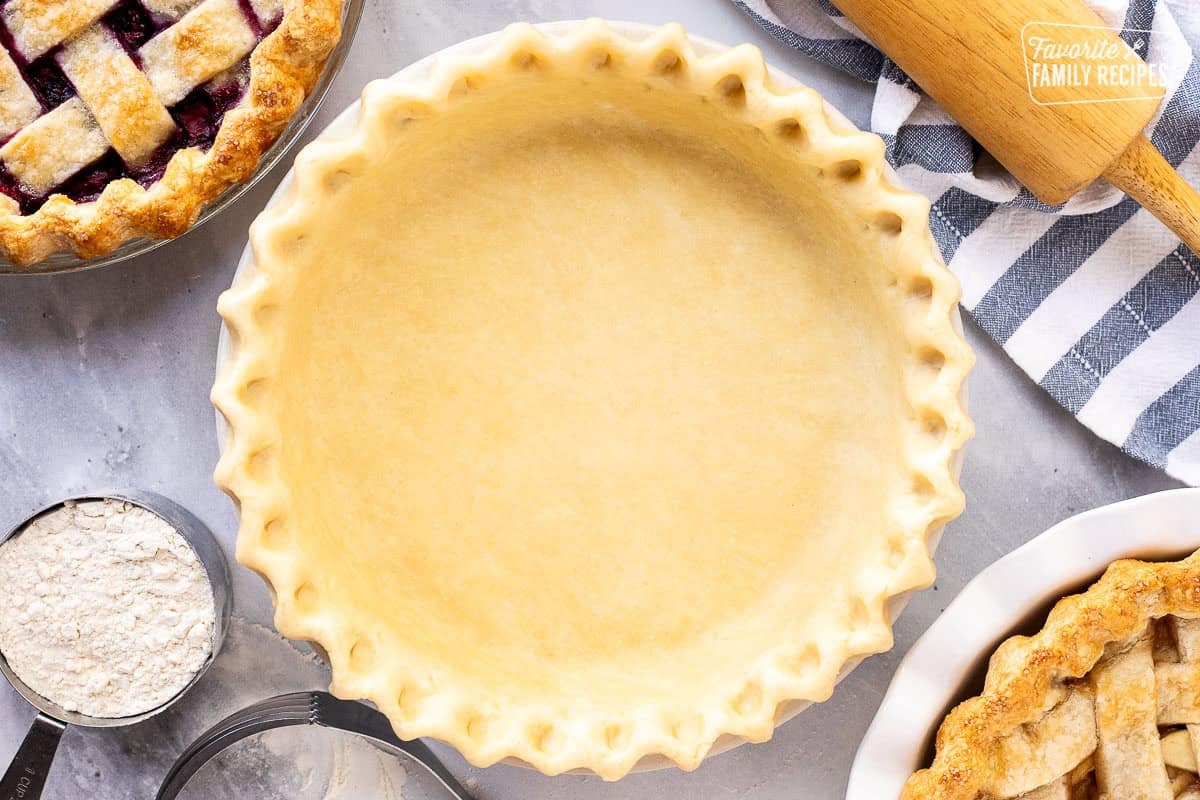
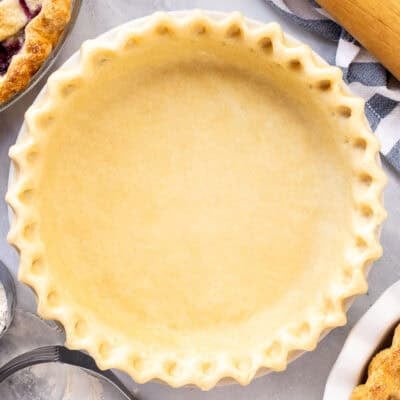
This Homemade Pie Crust Recipe makes a tender, flaky crust for fruit pies, cream pies, and savory pot pies. Made with shortening, egg, and a little vinegar, the dough is easy to shape and makes enough for two single crusts or one double-crust pie.
5 Star Reviews ⭐️⭐️⭐️⭐️⭐️
“Unbelievably delicious crust – easy and so, so good!” – Anna
“This is such a great tutorial! The pie crust came out perfect!” – Christina
My Mom’s Pie Crust
I used to leave the pie making to my mom. Her crust was so good, why mess with perfection? Luckily, she taught us how to make it, and now we can make her recipe for our own families.
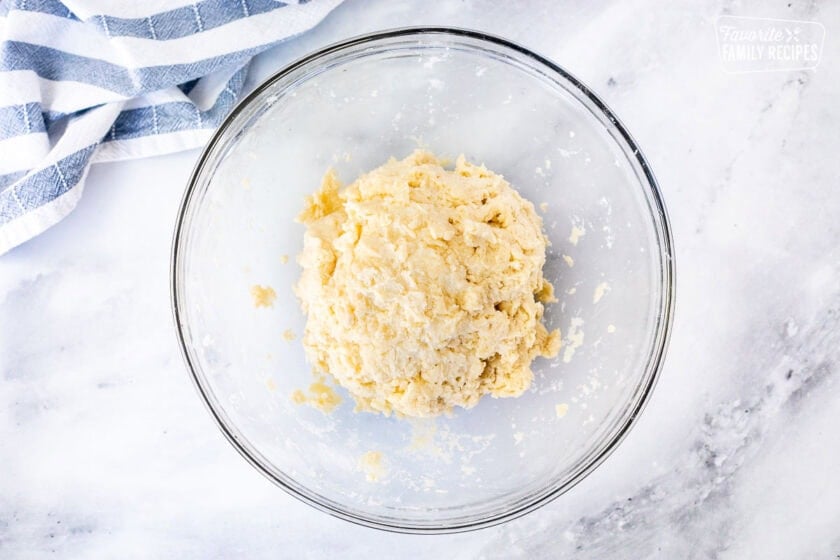
What helped me was learning what the dough should look like at each stage. You don’t need to knead it or make it perfectly smooth. A few little pieces of shortening and a light hand are exactly what you want.
🩷 Erica
Table of Contents
- 5 Star Reviews ⭐️⭐️⭐️⭐️⭐️
- My Mom’s Pie Crust
- Ingredients You’ll Need
- Ingredient Additions and Substitutions
- Supplies You’ll Need
- How to Make Homemade Pie Crust
- How to Crimp The Crust
- How to Pre-Bake Pie Crust
- Pie Crust Top Options
- Recipe Tips
- Frequently Asked Questions
- Make Ahead and Storage
- Pairing Ideas
- Pie Filling Ideas
- Homemade Pie Crust Recipe
Ingredients You’ll Need
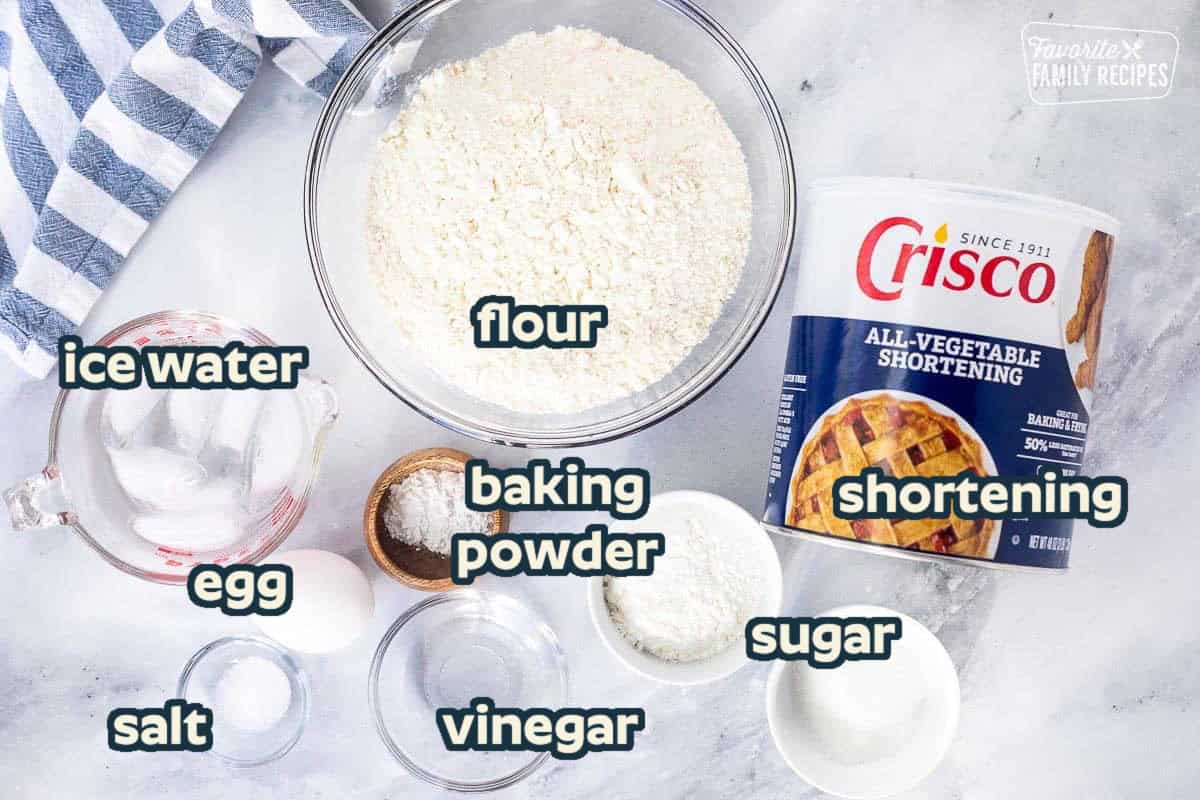
- All-purpose flour: Spoon it into your measuring cup and level it off so you don’t pack in extra flour.
- Salt and sugar: Season the dough without making it too sweet for savory pies.
- Baking powder: Use baking powder, not baking soda, for the small amount of lift in this recipe.
- Shortening: Use solid vegetable shortening, chilled, and add it in two stages as directed.
- Egg: Whisk it with the water and vinegar before adding it to the flour.
- Ice water: Measure the cold water after removing the ice cubes.
- White vinegar: Use plain distilled white vinegar.
Ingredient Additions and Substitutions
- Butter-flavored shortening: Substitute the same amount for regular shortening if you prefer a buttery flavor.
- Butter and shortening: You can also do half butter and half shortening. Keep the butter cold, and expect the dough to handle a little differently than the all-shortening version.
- Gluten-free flour: Use a gluten-free cup for cup flour blend. I like the Namaste gluten-free flour blend at Costco.
- Milk and sugar topping: For sweet pies with a top crust or dough decorations, brush the dough lightly with milk or an egg wash and sprinkle with sugar before baking. Skip the sugar topping for savory pies.
Supplies You’ll Need
- A large mixing bowl and a small bowl for the wet ingredients.
- Measuring cups and spoons, plus a whisk or fork. An adjustable measuring cup makes shortening easier to measure, but a regular cup works too.
- A pastry blender for cutting the shortening into the flour.
- A rolling pin and a lightly floured work surface. A silicone pastry mat with measurements is helpful but optional.
- A pie plate. A standard 9-inch plate works, and the dough can also fit a 9.5-inch plate. Pan depth affects how much dough you’ll need.
- A knife or pastry cutter for trimming edges and cutting lattice strips.
- Foil and pie weights or dried beans if you’re pre-baking the crust.
- Optional small cookie cutters for leaves, stars, or other decorations.
How to Make Homemade Pie Crust
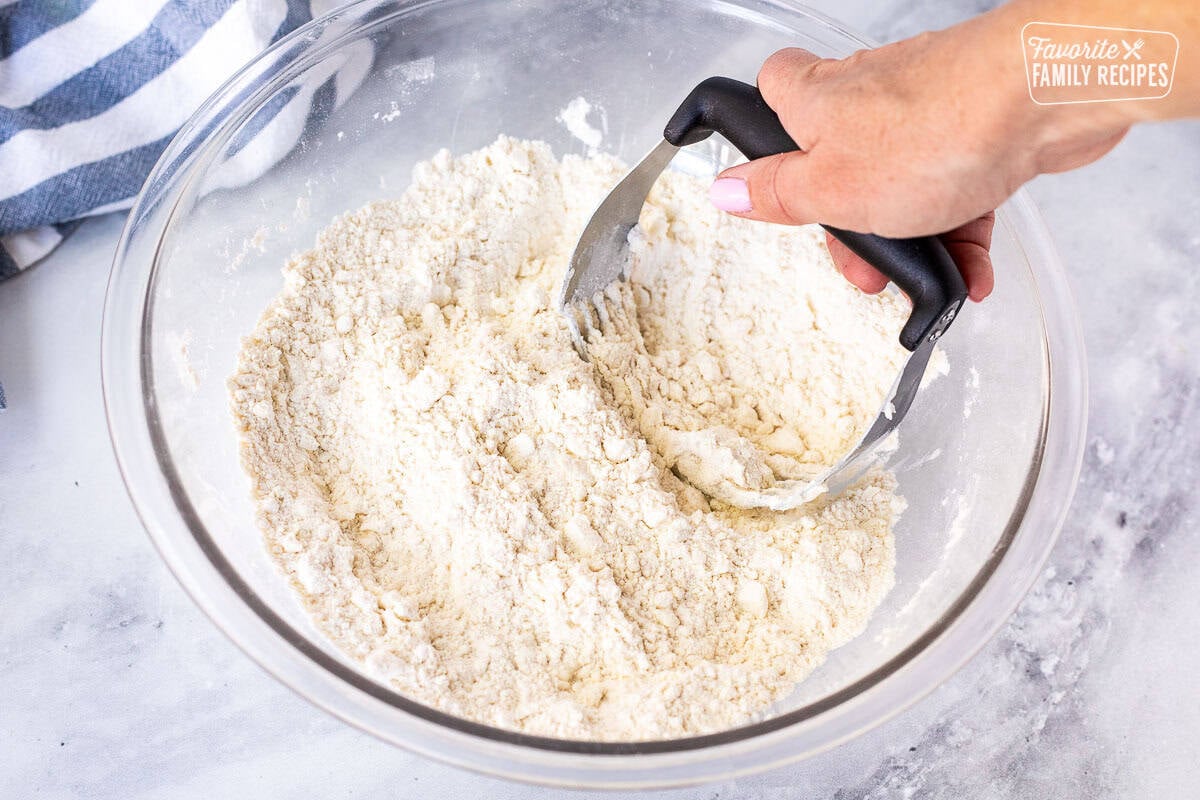
- Mix the dry ingredients. Sift the flour, salt, sugar, and baking powder into a large bowl.
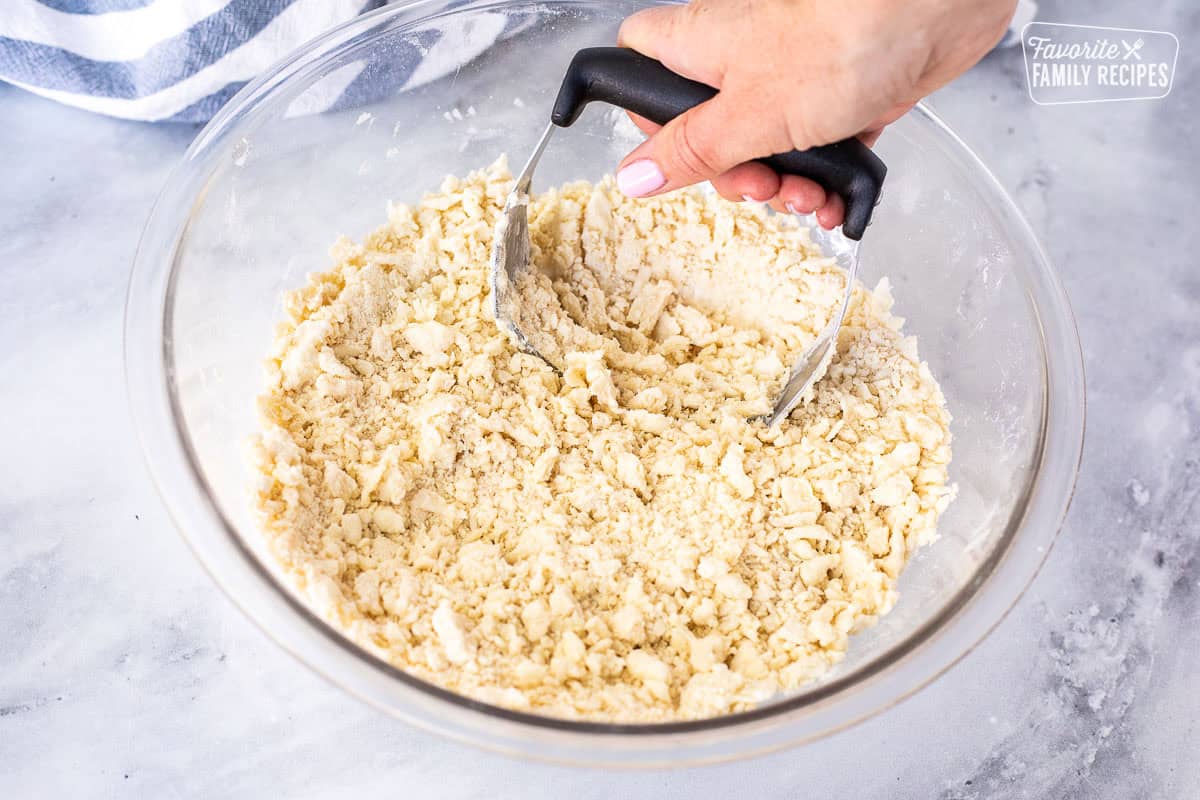
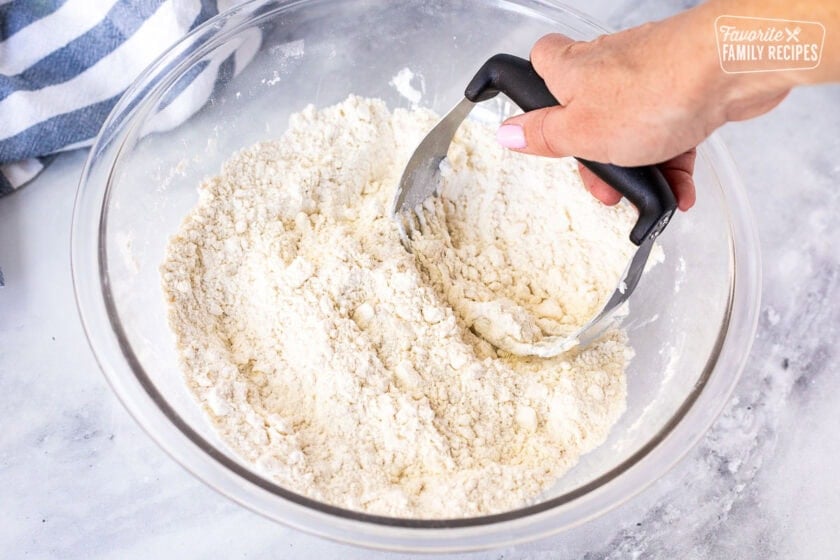
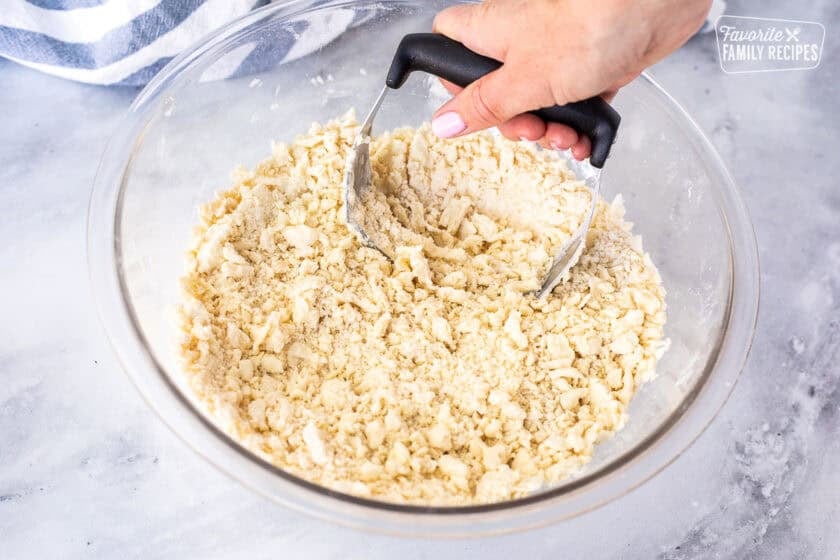
- Cut in the shortening. Work in the first portion until the mixture forms fine crumbs. Add the remaining shortening and cut it in until you have larger, roughly pea-sized crumbs.
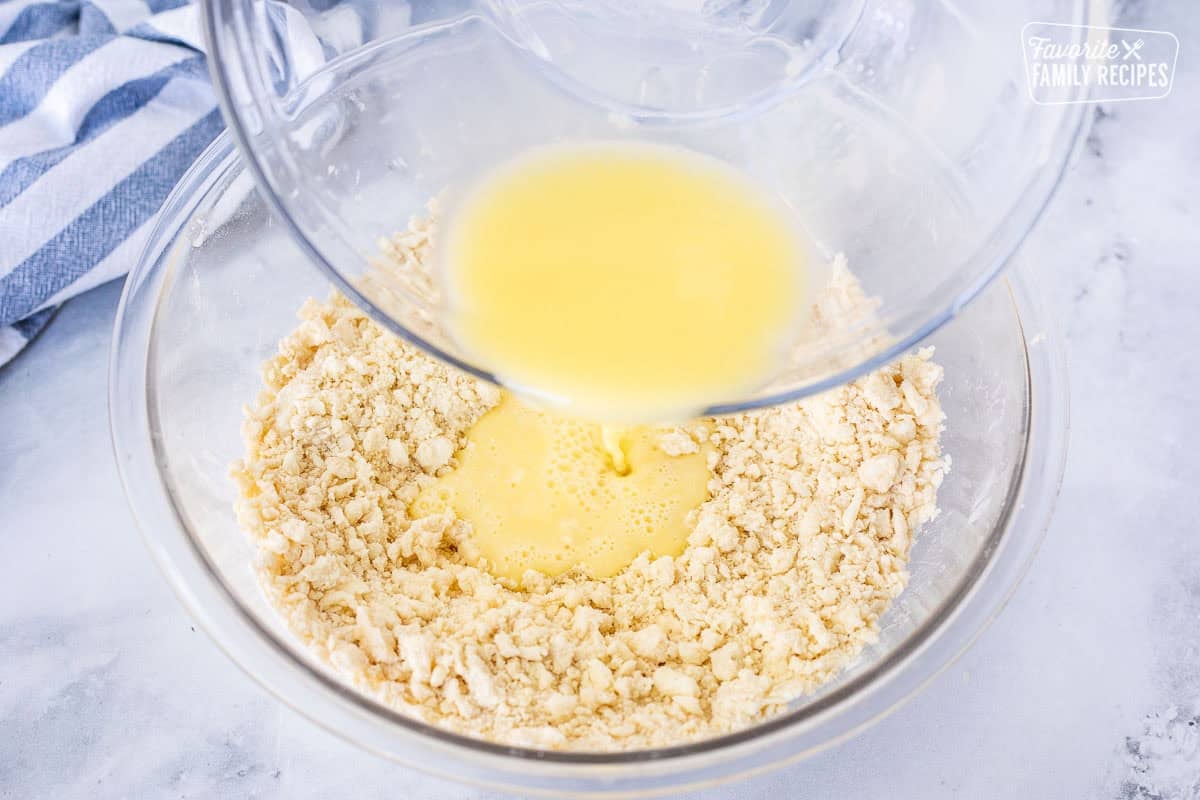
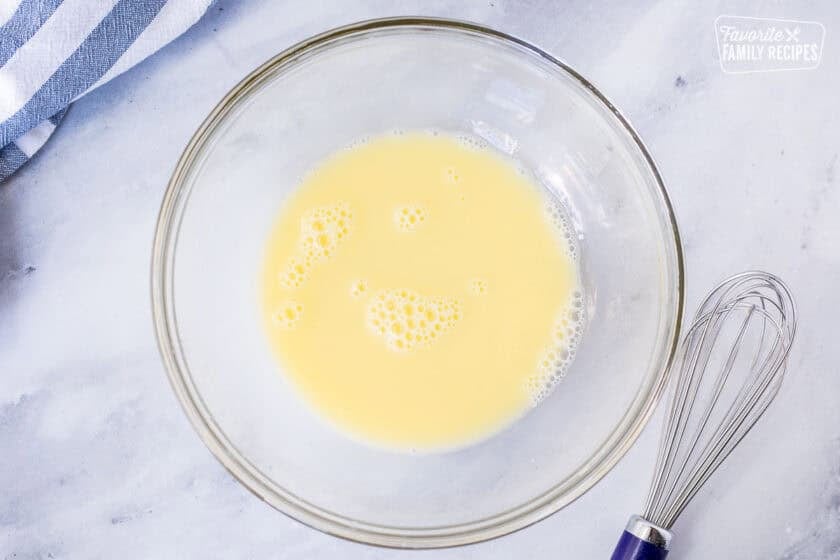
- Add the wet ingredients. Whisk the egg, ice water, and vinegar in a separate bowl. Gently fold them into the flour mixture just until the dough holds together. Don’t knead.
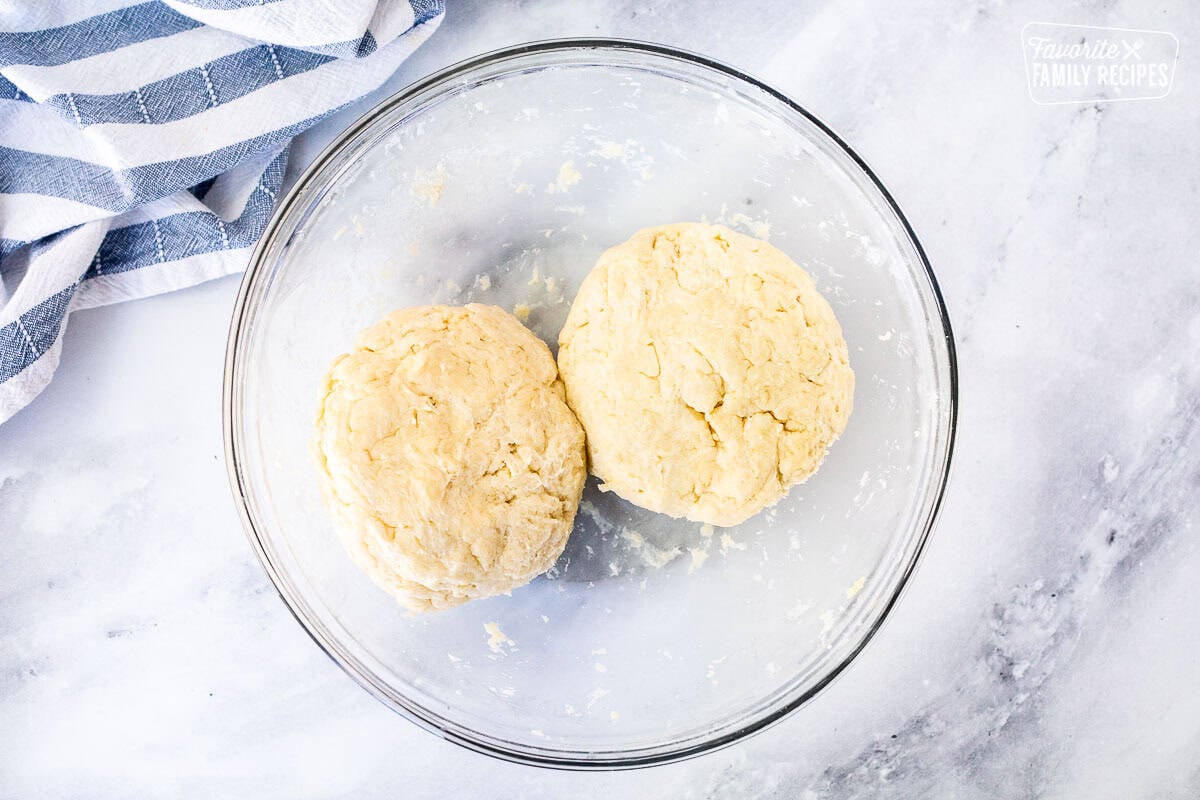
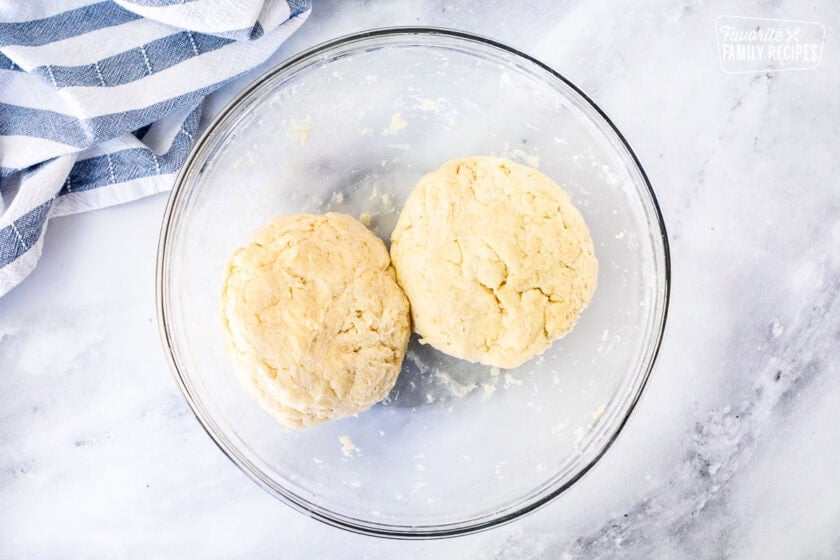
- Divide the dough. Separate it into two portions and gently flatten each into a disk, pressing together any large cracks. Keep one covered while you roll the other.
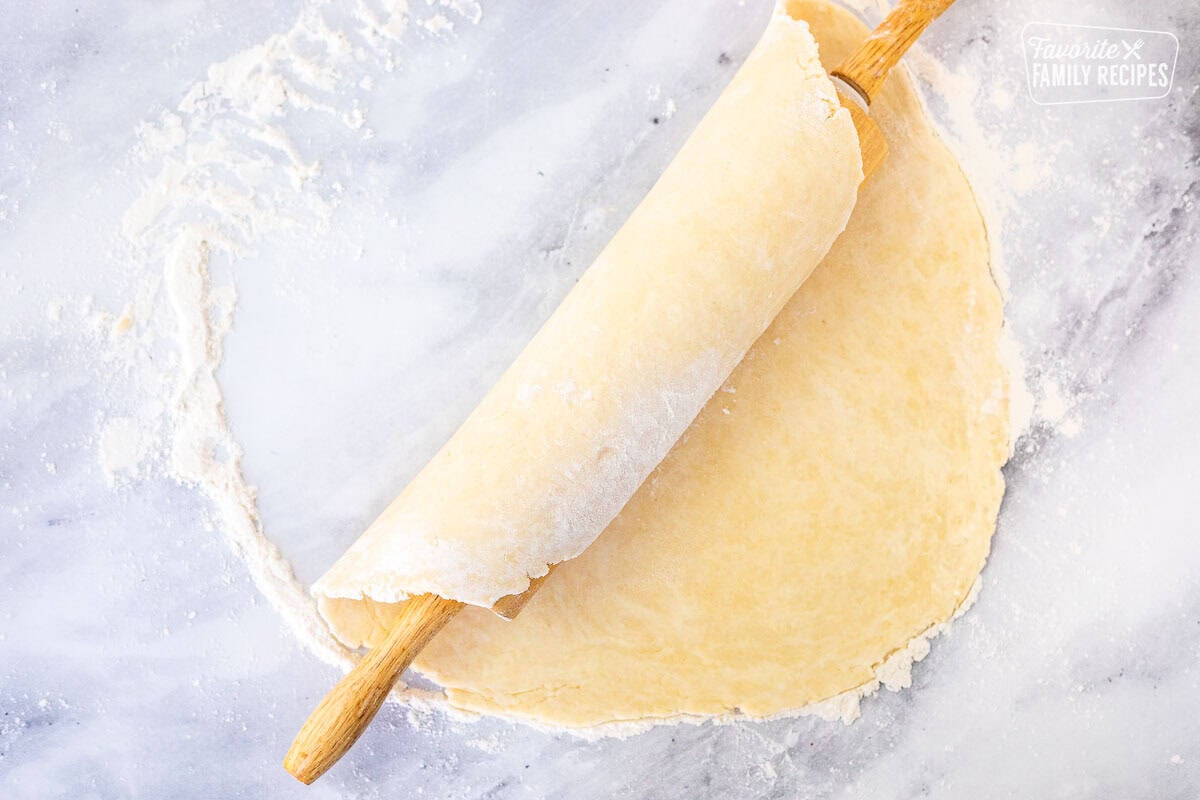
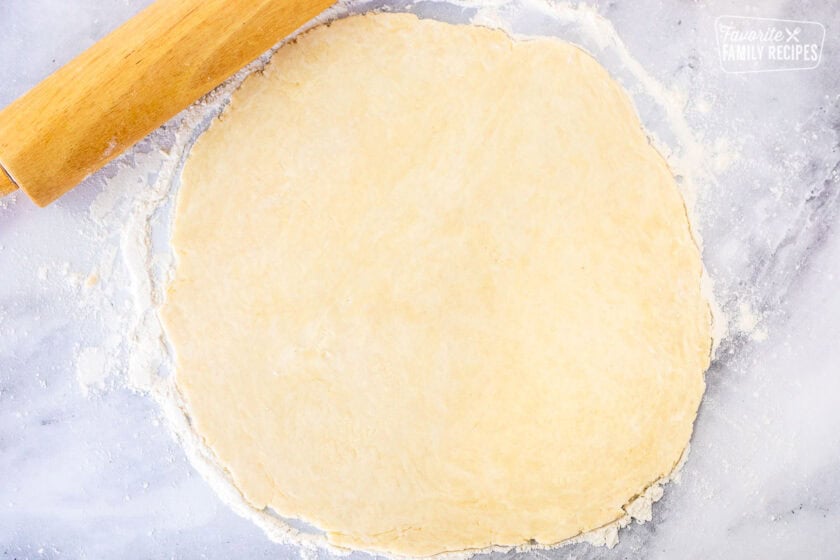
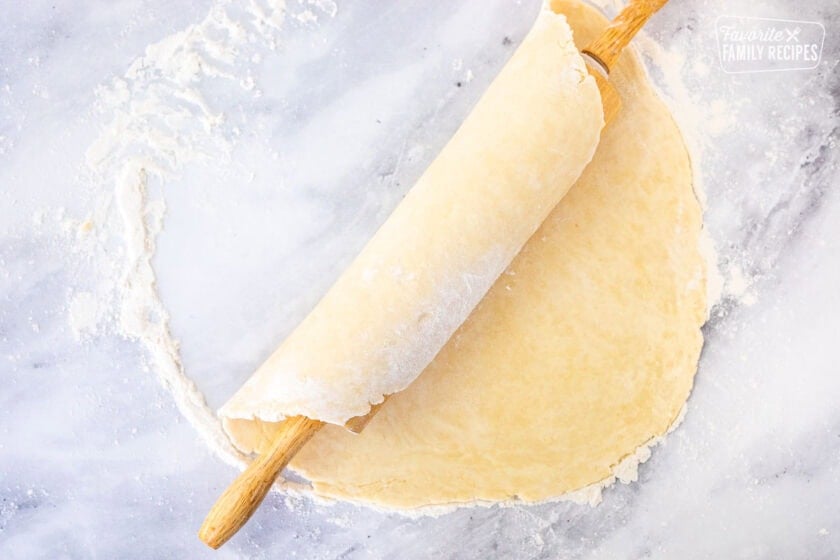
- Roll and transfer. Lightly flour your surface and rolling pin. Roll the dough about ¼ inch thick and large enough to line the plate with a little overhang. Loosely roll it around the rolling pin, then unroll it over the plate and ease it into the corners without stretching.
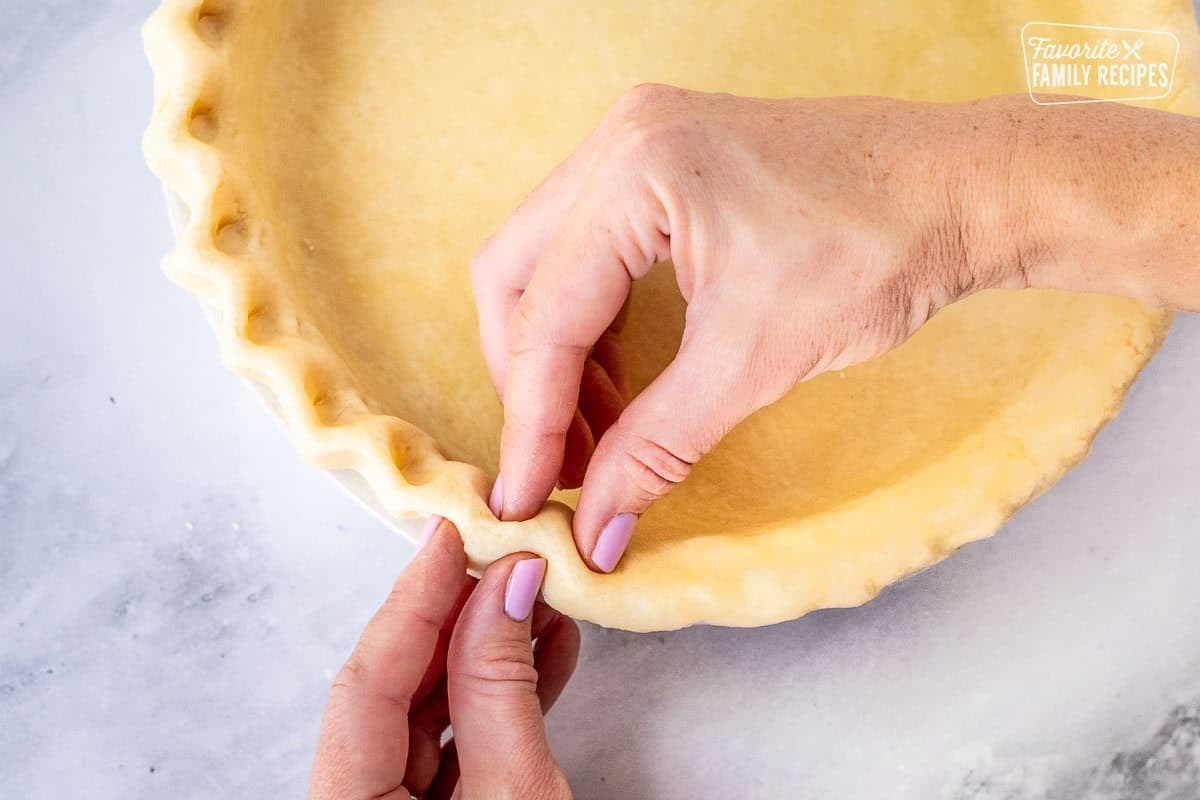
- Finish the crust. Trim and shape the edge. For a filled pie, add the filling and top crust as directed in that pie recipe. For an empty baked shell, follow the pre-baking instructions below.
How to Crimp The Crust
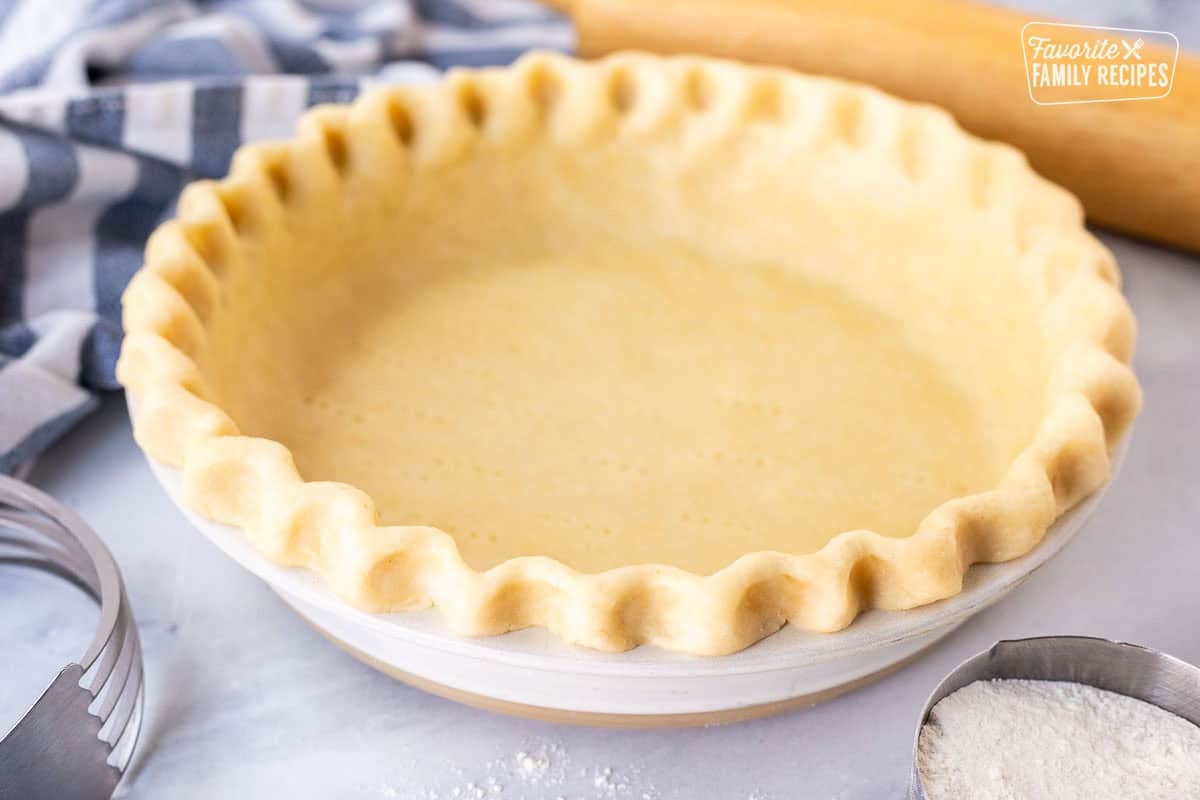
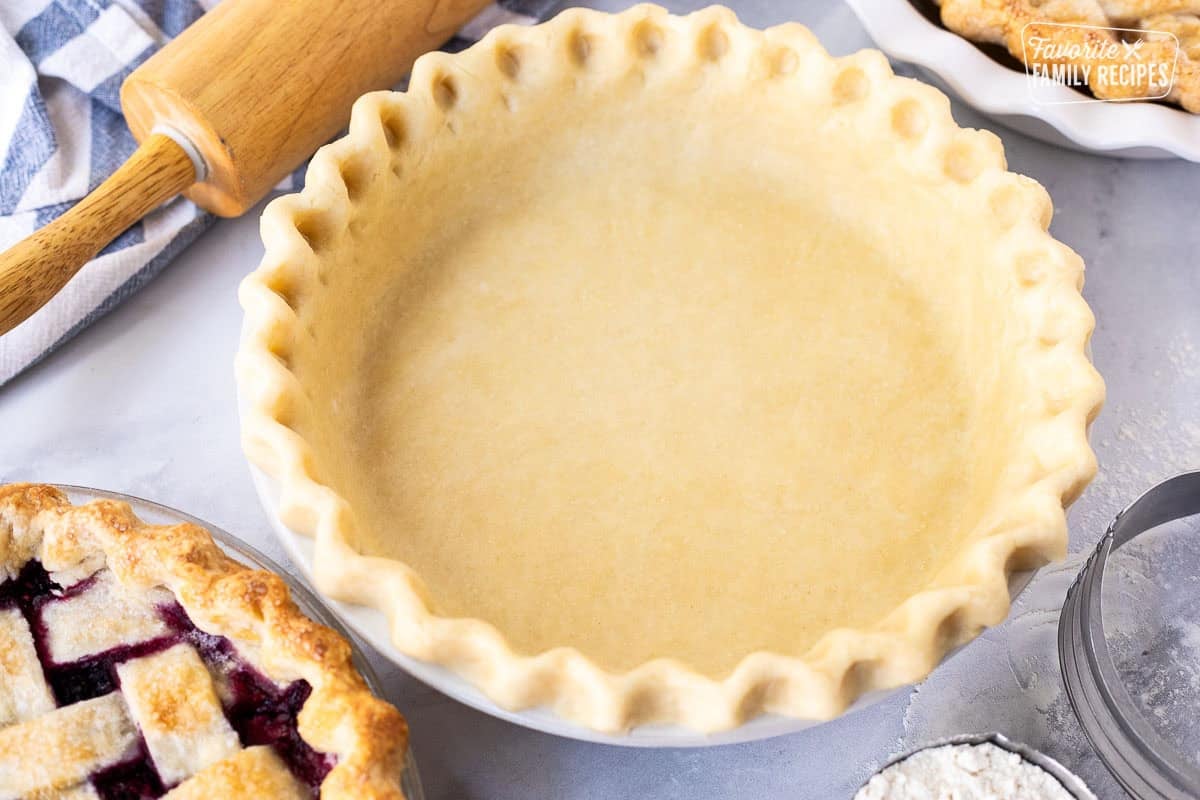
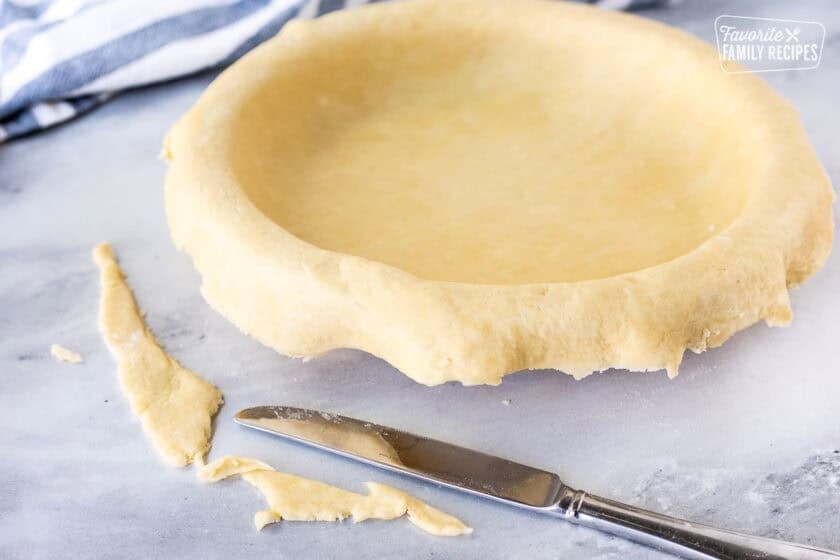
For a single crust, trim the dough to leave about ½ inch beyond the rim, then fold that overhang underneath itself to make a thicker edge.
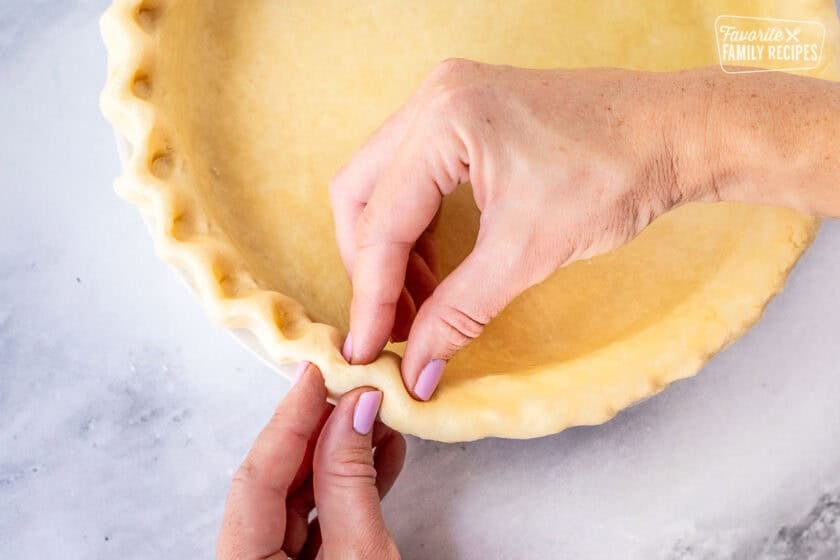
To flute it, hold your thumb and index finger against the outside of the edge. Use the index finger of your other hand to gently push the dough between them from the inside. Repeat around the pie. For an easier finish, press the edge with the tines of a fork.
For a double crust, trim and fold the top and bottom edges together before crimping to help seal in the filling.
How to Pre-Bake Pie Crust
Pre-baking, also called blind baking, means baking the crust before adding the filling. For a no-bake filling, you’ll need a fully baked shell. If your filling will bake in the oven, check its recipe to see whether the crust needs to be partially baked first.
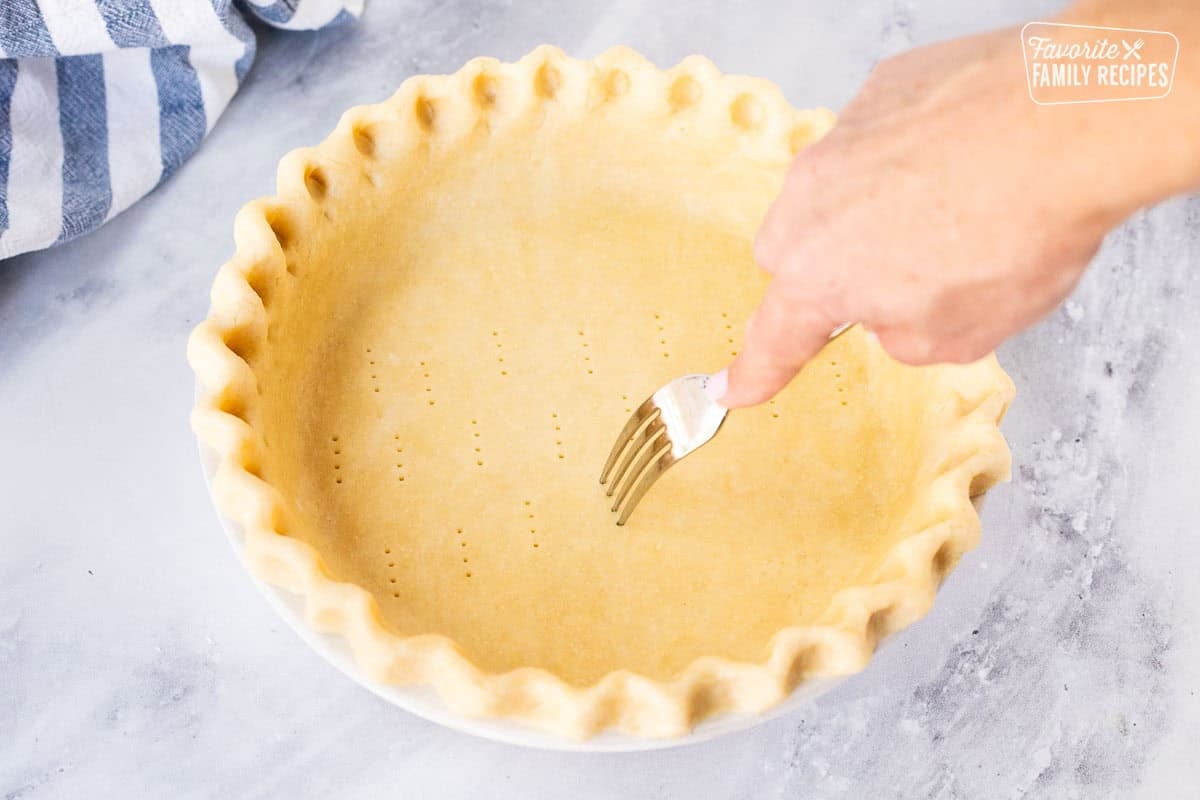
- Prepare the crust. Preheat the oven to 425°F. Fit the dough into your pie plate, trim the excess, and crimp the edges.
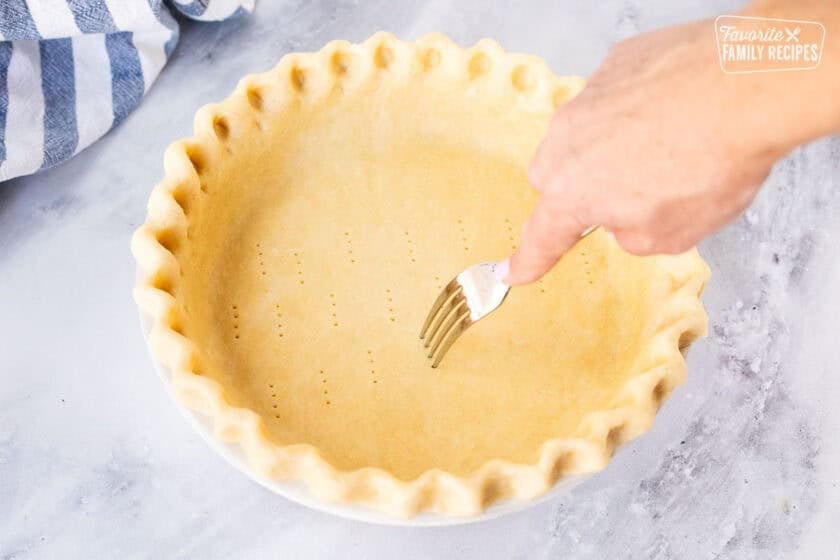
- Prick with a fork. Poke holes across the bottom and sides of the crust to help steam escape and reduce puffing.
- Bake the shell. Bake for about 10 to 12 minutes, checking for doneness. For a partially baked crust, the bottom should look dry and set but still pale. For a fully baked crust, continue baking as needed until the bottom and edges are golden brown.
- Cool before filling. Let the crust cool before adding a no-bake filling, unless the filling recipe directs otherwise.
Optional: Refrigerate the shaped crust for 30 minutes before baking to help reduce shrinking. For extra support, line it with foil and add pie weights or dried beans instead of pricking it initially. Bake until the sides are set, then remove the foil and weights and continue baking to the desired doneness. Using weights may increase the baking time.
Pie Crust Top Options
Choose a top that works with your filling. Fruit pies can use a full crust, lattice, or cutouts, while pumpkin and cream pies usually have an open top.
- Full top crust: Roll out the second portion of dough, place it over the filling, and seal it to the bottom crust. Cut several slits in the top so steam can escape.
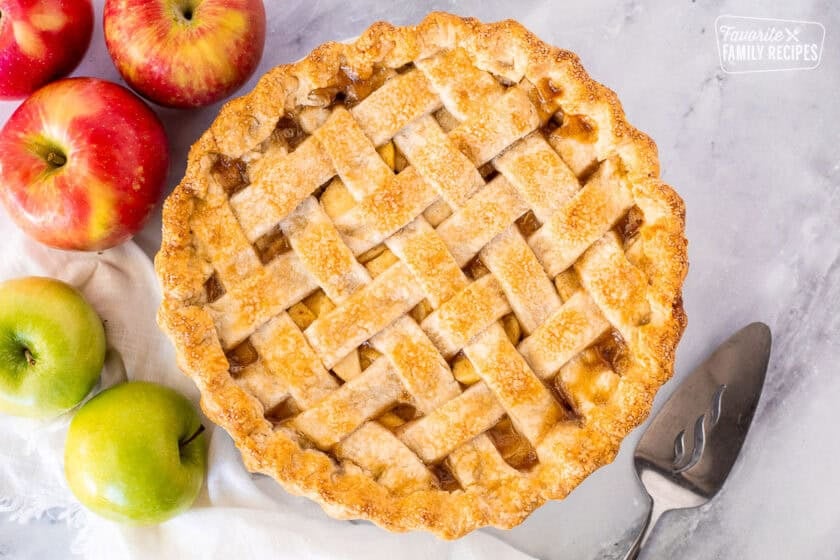
- Lattice top: Cut the dough into even strips. Lay half across the filling, then weave the remaining strips over and under them. Trim and seal the ends at the rim.
- Decorative cutouts: Use small cookie cutters to cut shapes from the rolled dough. Arrange them over a fruit filling with spaces between them, or attach them around the edge with a little water.
- Open top: Use just the bottom crust and finish it with a fluted or fork-pressed edge. Save the second portion of dough for another pie.
We’ve used acorn and leaf cutters around our Pumpkin Pie for a simple fall design.
Recipe Tips
- Use a light dusting of flour when rolling. Too much extra flour can make the crust dry.
- If the dough becomes sticky or greasy, cover and refrigerate it until firm enough to handle. Adding more flour won’t fix warm shortening.
- Patch small tears instead of starting over. Press a small piece of dough over the tear with a little water to help it stick.
- Protect the edges if they brown early. Cover just the rim with a pie shield or strips of foil while the rest of the pie finishes baking.
- Follow the filling recipe’s baking directions. Apple pie, pumpkin pie, and chicken pot pie don’t all need the same oven temperature or baking time.
Frequently Asked Questions
The edges of your pie crust may brown before the center finishes baking. To protect them, cut a square of foil slightly larger than your pie and fold it in half twice. Cut off the corner where the folded edges meet, then unfold it to create a hole in the center. Place the foil over the pie so it covers the crust’s edges but leaves the middle exposed, and gently tuck it around the pie plate.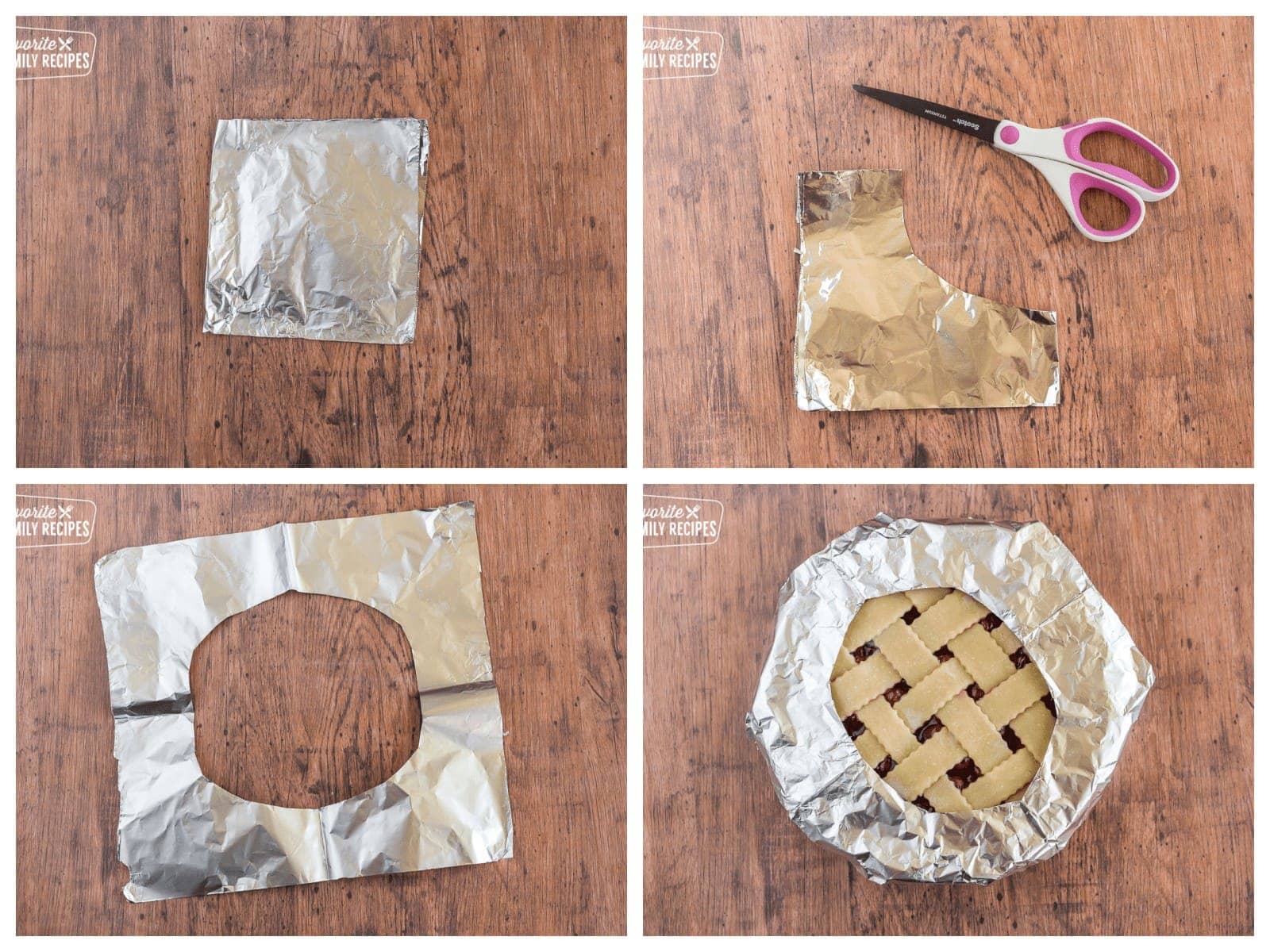
Shortening makes a tender crust and helps the dough hold its shape during baking. It’s also pliable, which makes this pie crust recipe with shortening a useful starting point if you’re learning to roll and decorate pie dough.
Yes, use short pulses to cut in the shortening in the same two stages. Stop while you can still see larger crumbs after the second addition. Transfer to a bowl and fold in the wet ingredients by hand so you have more control over the mixing.
The small amount gives the pastry a little lift. It’s part of this recipe’s formula, even though many pie crust recipes don’t use it. Baking soda isn’t an interchangeable substitute.
Make Ahead and Storage
Make ahead: Wrap the dough disks tightly and refrigerate for up to 2 days. If they’re too firm to roll, let them soften just enough to roll without cracking while keeping the dough cool.
Freezing: Wrap each disk tightly, place it in a freezer bag, and freeze for up to 3 months. Thaw overnight in the refrigerator before rolling.
Baked shells: Cool completely before wrapping and freezing for up to 3 months. Handle gently, since a baked shell is fragile, and thaw before filling.
Filled pies: Follow the storage directions for the filling. An empty crust and a pie filled with custard, cream, or meat have different storage needs.
Pairing Ideas
My favorite pie topping is vanilla ice cream, especially French vanilla. You can also add homemade whipped cream, a drizzle of caramel sauce.
For Thanksgiving, serve it in your favorite pie after roasted turkey, mashed potatoes, turkey gravy, and cranberry sauce.
Pie Filling Ideas
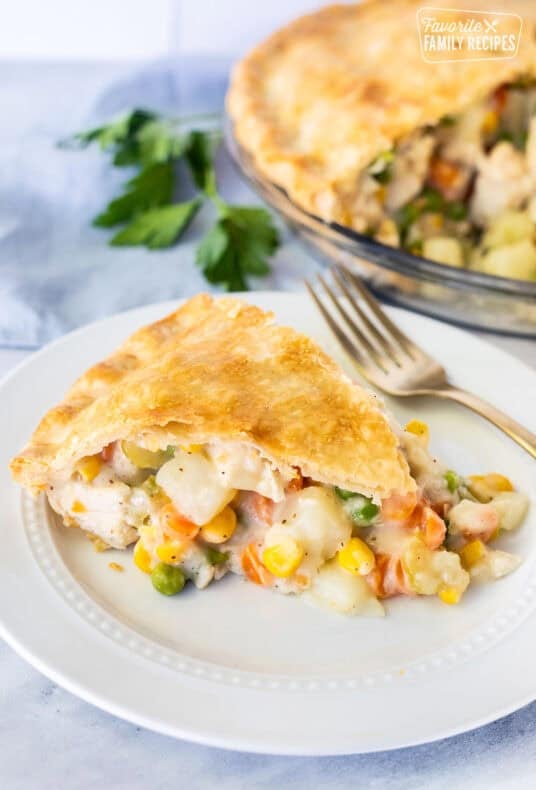
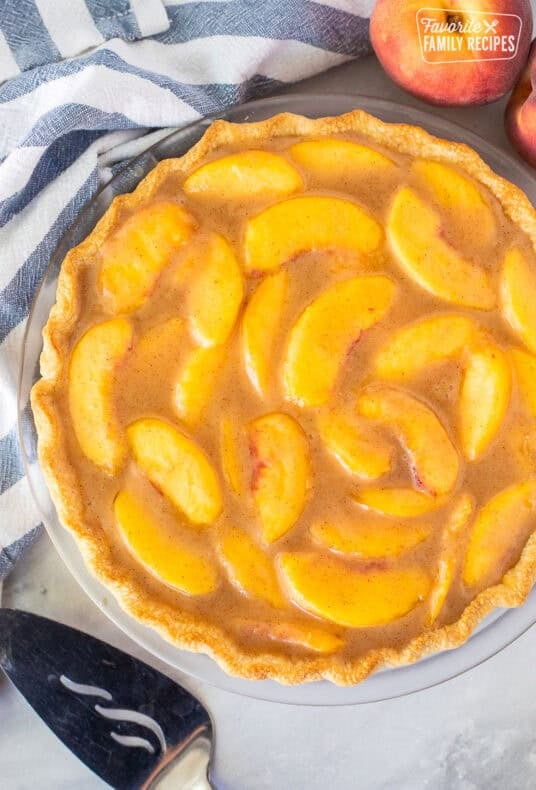
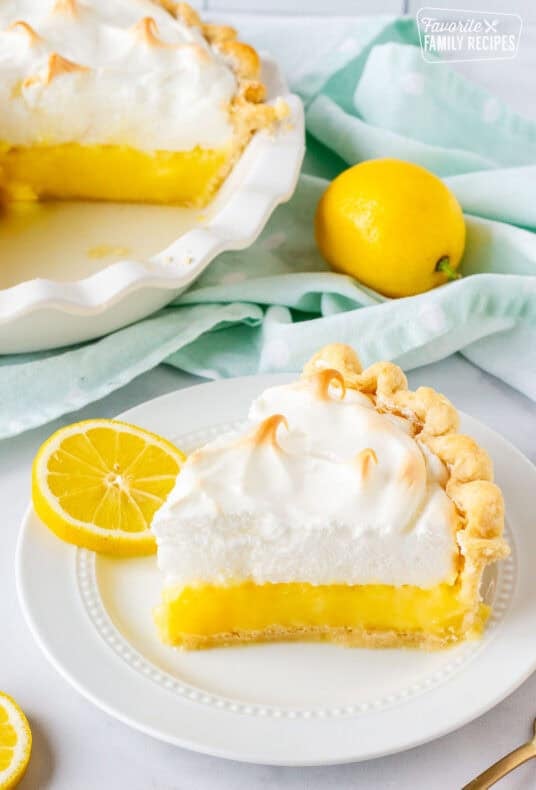
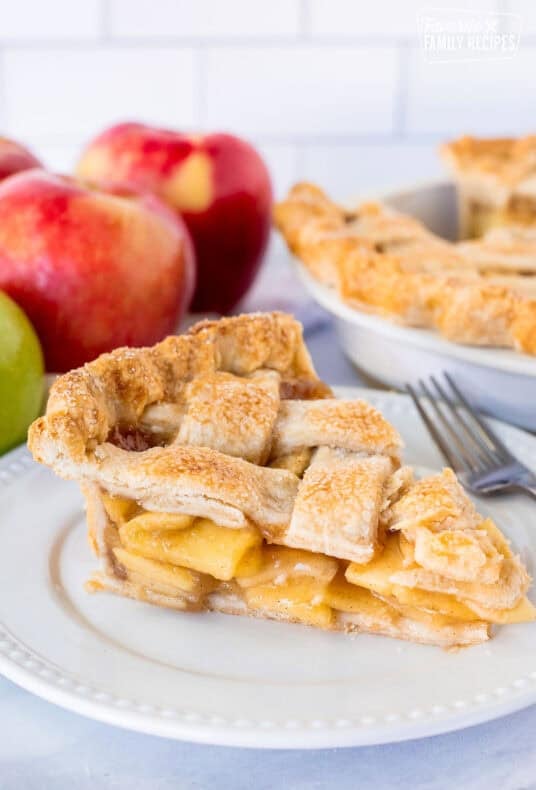
Have you tried this homemade apple pie? Leave a comment and a star rating below. I’d love to hear how it turned out! 💛🥧🍎
Homemade Pie Crust Recipe
Video
Ingredients
- 3 cups all-purpose flour
- 1 teaspoon salt
- 1 tablespoon sugar
- 1/2 teaspoon baking powder
- 1 1/4 cup shortening, divided
- 1 egg
- 1/2 cup ice water, yes, really ice cold water – it needs to be extremely cold
- 1 tablespoon white vinegar
Instructions
- Preheat oven to 425 degrees (if pre-baking your crust). In a large bowl, sift together all dry ingredients. Add ½ cup of shortening and cut it in with a pastry blender or with your hands. Work all of the fat into the flour mixture until fine crumbles form.

- Add the rest of the shortening and cut it again. Make sure it is evenly and fully blended in. It should form larger crumbles this time.
- In a small bowl, whisk egg, ice water, and vinegar.
- Add the egg mixture into the flour mixture. Use your hands to fold the ingredients together. DO NOT OVER MIX. Mix just until the dough comes together.
- Divide the dough into halves and form a ball with each half. Push the dough down to compress the cracks. Cover the half you aren't working with with plastic wrap so it doesn't dry out.
- Flour a large surface and a rolling pin. Slowly roll out the dough. Smooth out any cracks. Roll the dough until it is 2 inches larger in diameter than the pie plate. It should be about ¼ inch thick.
- Use the rolling pin to roll up the pie dough and transfer it to the pie dish. Don't stretch the dough. Gently mold the crust into the pie plate.
- Trim edges with a butter knife. Press the dough so that it extends slightly past the edges of the plate because it will shrink a little while baking.
- Roll and crimp edges of the pie dough creating a beautiful design for the crust.
- If pre-baking the crust, poke holes in the crust with a fork and bake for 10-12 minutes.
- If not pre-baking, add your filling and top crust if desired. Bake according to type of pie until crust is golden brown and filling is cooked through.
Equipment
- Pie Plate (9-inch or 9.5-inch)
- Rolling Pin
- Pastry Blender
- Mixing Bowls
Notes
- Cut the shortening into the flour in two stages and stop mixing once the dough holds together.
- A standard 9-inch or 9.5-inch pie plate can work; deeper pans need more dough.
- The pre-baking time is a checkpoint. Don’t stop while the bottom is raw or damp.
- Butter-flavored shortening can replace regular shortening in the same amount.
- Refrigerate wrapped dough for up to 2 days or freeze for up to 3 months. Thaw frozen disks in the refrigerator.
- To make this gluten-free sub for a cup for cup gluten-free flour blend.
Nutrition
Nutrition information is automatically calculated, so should only be used as an approximation.
Love this recipe?
We want to hear from you! Please leave a review.

What size pie plate does this require? I only have a 9.5 inch…
This pie crust should fill a 9.5 inch!
Unbelievably delicious crust – easy and so, so good!
Will try this recipe-thanks. Haven’t found a full-proof recipe yet. The others I’ve tried are a hit and miss.
I hope it is a success! This is the most tried and true recipe we have tested!
This crust really is perfection! So simple to make too!. Thanks for all of the great tips!
Loved the step by step instructions! Thanks for such an easy to follow recipe that turned out perfectly. Can’t wait to use it again for Thanksgiving pies!
This was so easy and perfect for the pie I made! Thanks!
This is so easy to make and I get a perfect pie crust every time!
Just in time for the holidays! Loved this crust. Thanks for sharing!
Making pie crust is definitely not easy. Thanks for sharing this simple approach, my crust was perfect. I’m excited since I’ll be doing some more baking for Thanksgiving.
Awesome! Thank you for sharing <3 love it!
Definitely not complicated or intimidating! Love how easy this was to make for a new baker!
This was amazing, so buttery and perfect. This is the best pie crust I have ever tried, and it’s easy. I plan on using this recipe again for my pecan pie next week!
My grandma was one of the best pie makers I ever knew. She always used shortening in her crusts. Perfect results every single time. Great recipe!
Thank you for all the tips on how to make the perfect pie crust! This was my first time and it came out awesome!
This is such a great tutorial! The pie crust came out perfect!
It had been a while since I made a homemade pie crust and your recipe and tutorial made it easy for me! The result was fantastic. Thanks!
Pie is my absolute favorite food and I am loving this crust! I cant wait to make it!
Pie crust really can be difficult, but this recipe is fail proof! Great tip on using the shortening!
I know in your gluten-free apple pie recipe you said that the substitute flours just didn’t taste the same; but have you tried this recipe with a gluten-free flour?
Yes if you get a good cup for cup gluten free flour. We like the Namaste Gluten Free flour blend that you can find at Costco.